AMA ESD data shows nearly two fold increase in children with speech and language impairments since COVID
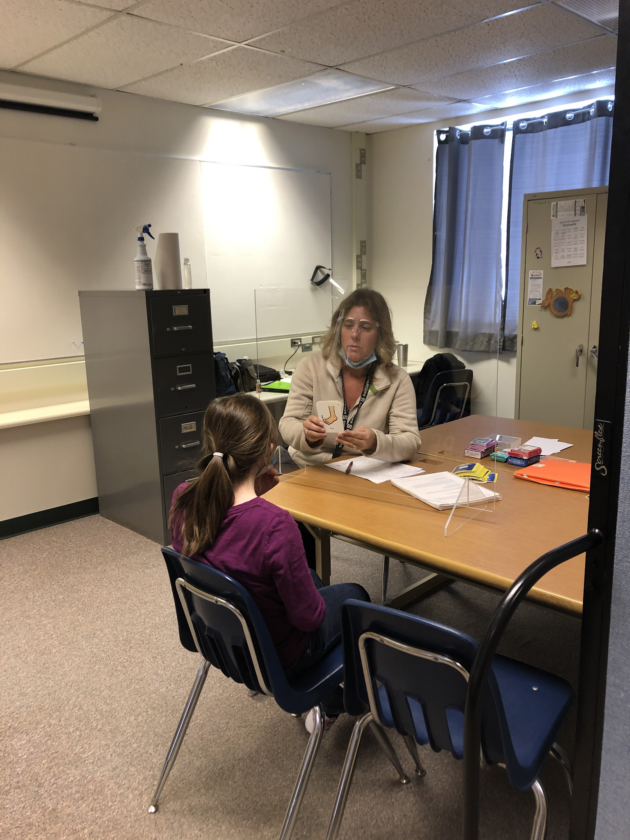
Courtesy Photo Alpena Montmorency Alcona Educational Service District Speech Therapist Heather Loyer provides speech therapy to a child in this photo.
ALPENA — The effects of isolation and limited socialization during COVID are beginning to show up in an increase in speech and language impairments among children.
Data from Alpena Montmorency Alcona Educational Service District (AMA ESD) shows that there has been a nearly two-fold increase in the number of children with speech and language impairments since COVID began. In fall 2018, The AMA ESD reported 88 children with speech and language in impairments. In fall 2024, that number skyrocketed to 180.
Mary Zann, AMA ESD director of special education discussed the impact that COVID had on students.
“Students had limited time outside of the home, so they spent more time in the home,” Zann said. “They had a decrease in peer modeling so that opportunity for turn taking, back and forth conversational experience, that supports language development.”
Without those experiences, or with very limited access to them, children can experience delays in speech and language development.
“When we were wearing masks that also limited students’ access to be able to see visual cues,” Zann said.
Students were unable to observe facial expressions like movement of the mouth to form letters and sounds. Additionally, an increase in screen time can reduce conversation and interactive communication with others.
“So being at home during COVID, reduced time with school, I think that impacted our students,” Zann said.
Younger students would have had a delay in early intervention and screening during COVID during the period when there was no access to appointments or the ability to go to doctors.
“But it also created opportunity for parents to have more time with their children, and so I think that gave them the ability to become aware of some concerns and notice that there may be some delays in their children, and so the advocacy also increased,” Zann said.
She said there was an increase in referrals and more parents were reaching out for support.
“I think it will take some time before those numbers level out,” Zann said.
She said there are students with speech and language impediments across the board, but the numbers of upper elementary and junior high students are a little higher right now.
“The students that were in elementary age when COVID hit are upper elementary, junior high age, so that makes sense that our junior high numbers are high,” Zann said.
Speech and language impediments can include differences in how a student communicates and how they understand communication.
“Can their peers understand what they’re saying?” Zann said. “Can they understand what their friends are saying to them? Can their family understand what they’re saying? That’s what we’re working to help them (with), to access their education.”
When a parent has concerns about a speech or language impairment, depending on how old the child is, the AMA ESD will collaborate with their teacher and the team in the school building to support the student.
There are assessments that may be appropriate, and AMA ESD speech pathologists could conduct screeners or full assessments to determine if special education is appropriate.
For children that are not yet in school, AMA ESD provides speech therapists to support those students.
“That’s really our goal is to get our students–help them be successful in school so they can continue to grow,” Zann said.
Local News

A night of dark sky viewing at Negwegon, Aug. 15
Alley closure in Alpena
ALPENA - Starting today, the alley behind John Boys Restaurant between 9th Avenue and 10th Avenue will be closed ...

Alpena students make history at MATE ROV World Championship
Taylor Street reconstruction
ALPENA - Today, the City of Alpena’s contractor, MacArthur Construction, will begin the reconstruction of Taylor ...
AMA ESD data shows nearly two fold increase in children with speech and language impairments since COVID