Celebrating the 50th Anniversary of the Alpena Bi-Path
Courtesy art
ALPENA – Public art most often conjures images of sculptures or murals, but architecture and engineering are also among the most enduring artistic expressions. Bridges and a harbor light form part of the iconic landscape quintessential of Alpena’s architectural landmarks along the Alpena Bicentennial Path (Bi-Path).
These structures remind us that the river and lake shaped Alpena’s development and identity. The Thunder Bay River carried the logs that fueled the lumber boom, supported the ships that connected the city to the Great Lakes economy, and eventually became the scenic centerpiece of a modern recreational waterfront.
Today, the Bi-Path allows residents and visitors to rediscover the river and shoreline in new ways–walking, biking, and exploring spaces that echo opportunities the river and lake have offered for generations.
So much of the Alpena Bi-Path is centered on the river and its path. After all, the original concept for the Alpena Sculptured Bikeway and Walkway was to mirror the river’s path from the harbor through town to Duck Park.
A few iconic architectural sites bridging the river, the lake, and Bi-Path along the way include the following:
Alpena Light – Guiding Commerce and Navigation (1914)
At the mouth of the Thunder Bay River stands one of Alpena’s most recognizable historic structures–the Alpena Light, located at the end of the harbor pier. The current lighthouse, built in 1914, replaced earlier wooden lights that had served vessels entering Thunder Bay since the 1870s.
Constructed of cast iron, the lighthouse guided commercial vessels safely into the harbor during Alpena’s busiest shipping years. Lumber schooners, freighters, and passenger vessels relied on its beacon as they navigated the waters of Lake Huron and entered the river to load cargo or deliver goods to the growing city.
Originally painted black, the lighthouse was repainted red in the 1950s, creating the familiar landmark visible today from the marina and public pier. Recognizing its historical significance, the structure was added to the National Register of Historic Places in 2006.
Today, the Alpena Light continues to stand guard at the river’s entrance, linking Alpena’s maritime past with the recreational waterfront that defines the harbor today.
Second Avenue Bridge – Connecting a Growing City (1939)
Further upriver, one of the most important pieces of infrastructure in Alpena’s development spans the Thunder Bay River: the Second Avenue Moveable Double Leaf Bascule Bridge.
Completed in 1939 and designed by engineer Clifford E. Paine of Chicago, the steel bridge replaced several earlier crossings that had connected the north and south sides of the city since the nineteenth century. Earlier structures included wooden bridges built in 1865 and 1873, a steel swing bridge in 1886, and even ferry crossings used before permanent bridges were available.
The bascule bridge–whose movable leaves can raise to allow boats to pass–represents a classic example of twentieth-century bridge engineering. Its construction allowed both road traffic and river navigation to coexist during Alpena’s industrial years.
Still carrying daily traffic today, the bridge has undergone rehabilitation projects in 1988 and again between 2016 and 2017. Listed on the National Register of Historic Places, it remains an essential link between the two halves of the city and a reminder of Alpena’s evolving transportation history.
Rotary Island Mill Bridge – Engineering in Motion (2007)
Completed as part of the second phase of the Thunder Bay Maritime Heritage Trail, the Rotary Island Mill Bridge connects historic Rotary Island with the mainland along the Bi-Path.
This pre-engineered steel truss arch bridge was designed by R.S. Scott and engineered by Mark Straley. Its superstructure was constructed off-site and floated into position–a notable engineering achievement. Final construction was completed by Hardman Construction of Ludington, Michigan.
The bridge measures approximately 10 feet high, 14 feet wide, and 94 feet long. Built of steel and concrete, it reflects modern engineering practices while complementing the historic and natural landscape of the river corridor.
The Red Bridge – Linking Education and Culture
While some bridges tell the story of industry, others symbolize connection in a different sense. The Red Bridge, located between Alpena Community College and the Besser Museum for Northeast Michigan, represents the intersection of education, culture, and recreation.
Constructed by Alpena Community College to span a historic drainage ditch that once served nearby rail lines, the pedestrian bridge provides a gateway between two important institutions of learning. It replaced an earlier railroad crossing and today allows students, museum visitors, and pedestrians to move easily between the college campus and museum grounds.
Painted bright red in 2016–echoing a similar structure at Dow Gardens in Midland–the bridge adds both utility and visual character to the landscape. Walking across the bridge reminds visitors that connections between institutions, disciplines, and communities are as important as the physical bridges that link them.
Covered Bridge and Water Tower – A Community Dream (2015)
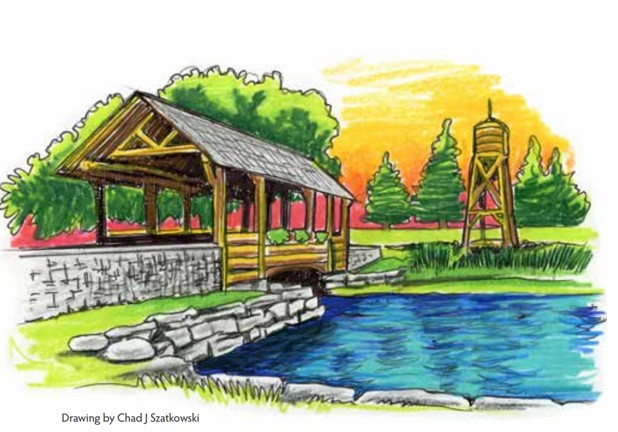
One of the most distinctive features along the Alpena Bi-Path, and again a reflection of community spirit, is the covered pedestrian bridge connecting Duck Park to Island Park across the Thunder Bay River Wildlife Sanctuary.
Completed in 2015, the bridge was built through the vision and craftsmanship of local builder Michael Kendziorski, with support from the Kendziorski family and the broader community. Constructed of hand-hewn red pine, jack pine, stone, and cedar shake shingles, the structure evokes the craftsmanship of traditional covered bridges while blending beautifully with the surrounding natural landscape.
Crossing the bridge offers a unique sensory experience. Visitors hear their footsteps echo across the wooden floor as the river flows quietly below. The bridge invites travelers to pause–to reflect on the past, present, and future.
Adjacent to the bridge stands a distinctive wooden water tower, adding another architectural element to the park landscape and reinforcing the sense that this crossing is not merely functional but symbolic–bridging both space and time within the heart of Alpena.
A Path Connecting Past and Future
Originally conceived as part of the nation’s Bicentennial celebrations, the Alpena Bi-Path was designed to bring together art, recreation, and community engagement. Fifty years later, it continues to fulfill that vision in ways perhaps even its founders could not have imagined, connecting people and place in time – both past and present – and bridging worlds and perspectives.
As residents and visitors travel the pathway today, they move through a living timeline of Alpena’s history–from a harbor light and bridges to parks, sculptures, murals, historic architecture, and beautiful landscapes.
The river still flows to that beautiful lake as it always has. And while the story along the banks of the river and lake continues to evolve, the Alpena Bi-Path provides even greater accessibility for those who wish to recreate and enjoy all the forms of art in our beautiful natural surroundings.
Lifestyles

Alcona County Library events

Cost of Fourth of July cookout reflects inflation increase, MI remains below national average

Happy 65th anniversary Harry and Judi

Daisy day

Investing in local students, one scholarship at a time