
Roses by other names
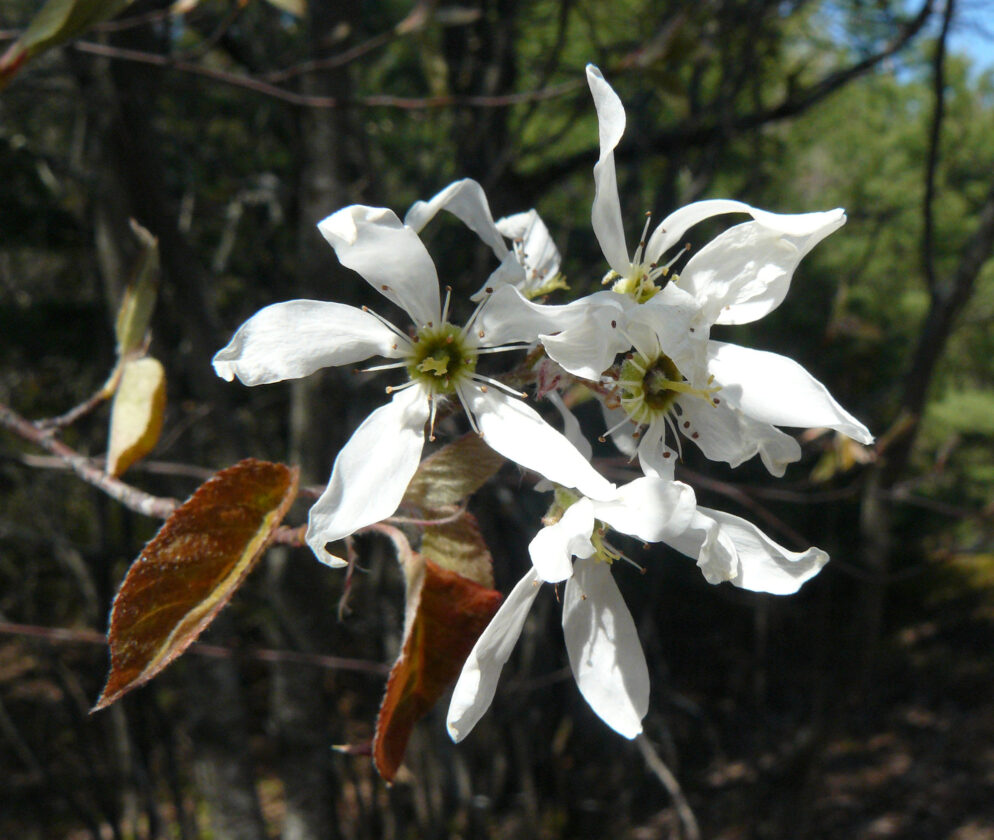
Courtesy photo This is a photo of Black cherry flower clusters.
The rose family is globally huge. About fourteen Michigan trees fall into this family, along with many shrubs and herbs. Although, the roses are a minor component of the forest landscape. And, yes, they all have conspicuous blooms and similar fruits, but not as showy as our familiar garden rose.
Cherries, apples, pears, and plums fall into the Rosaceae family. While wild varieties exist, most of what we might know comes from domesticated and farmed fruit trees, a large industry in Michigan. However, fruit farms are not part of the forest inventory, as agriculture is not considered forestry. And, most of the species and cultivars are exotic to North America. Some of the domesticated species have migrated into forests, or forests have overtaken abandoned fruit orchards.
Black cherry is, by far, the most common and largest Michigan tree in the rose family. Its volume eclipses that of all the other family species by a factor of forty. Black cherry is ranked number ten among all Michigan tree species volumes. It’s also the only rose tree that has commercial value, mostly for cabinetry, a beautiful wood with hues that mature with time. Its Michigan range spreads from Indiana to Lake Superior.
Other wild cherries (Prunus spp.) include pin (or fire) cherry and chokecherry. True cherries have clusters of bright white flowers in the spring. Their twigs have a specific bitter taste due to various phenolic acids and strong tannins. All have edible fruit, although some folks might argue the palatability of chokecherry.
Non-cherry rose species include mountain ash, hawthornes, and serviceberries. Often these trees fail to escape the shrub stage, but many meet the definition of a tree, which is defined by the Society of American Foresters as a single woody stem five inches in diameter and least fifteen feet in height at maturity.
In early spring, the serviceberries or juneberries (Amelanchier spp.) display conspicuous white blooms in the understories of certain forest types. You may have noticed them while driving down the highway.
Mountain ashes (Sorbus spp.) include both native and alien species. All have dusky-white clumps of flowers which develop into bright orange fruits. Note that mountain ashes are not true ashes and are not vulnerable to the ravages of the emerald ash borer.
The hawthornes (Crataegus spp.) are a complex genus, also with both native and alien species. They often grow in and around former settlements, homesteads, cemeteries, and hedgerows. The long thorns provide a great identification clue.
All the rose family have fruits with fleshy tissues surrounding the pits or seeds. These fruits are favorites among a wide variety of birds and other wildlife. Watching bird behavior following a meal of fermented fruit can be quite entertaining. The sweet and nutritious fruit are a seed disbursement strategy. Birds can carry the seeds miles before pooping them out.
Ecologically, the trees in the rose family require both forest disturbance and full sunlight for the seedlings to mature. Fire and wind were historically the principal disturbance agents. Currently, clearcutting and the invasion of abandoned farmland are more common.
Taxonomically, the plant family Rosaceae belongs in the order Rosales. Other families among the Rosales include Russian and autumn olive (an invasive), mulberries (one native another alien), Osage orange, buckthorns (another nasty), and the elms.
Well-known woody shrubs include raspberries and blackberries, Spiraeas, shrub hawthorne/cherry/serviceberry, potentilla, wild rose, and many others. Including all the herbaceous species, roughly 150 members of the Rosaceae occur in Michigan.
Michigan News

Gov. Whitmer honors educators during Teacher Appreciation Week

Bergman applauds VA For record-setting investment to end veteran suicide, highlights work still ahead
Roses by other names

Alpena Township Board deadlocks on proposed blight tax

Michigan farmers face bankruptcies, other financial challenges
