Nessel files brief urging Supreme Court to stay restrictions on abortion drug Mifepristone
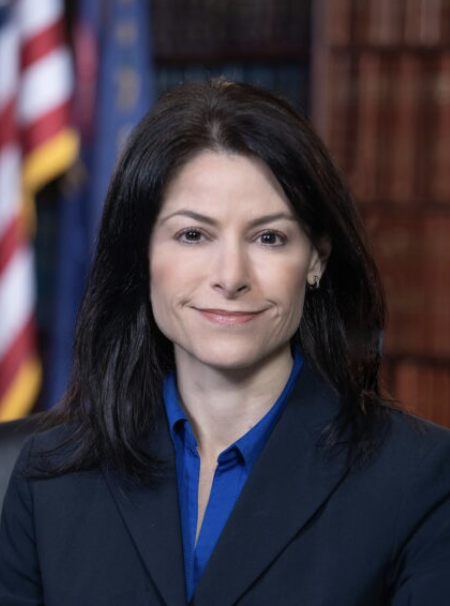
Dana Nessel
LANSING – Michigan Attorney General Dana Nessel is expressing relief after the U.S. Supreme Court temporarily restored access to Mifepristone, a safe and effective abortion medication. The decision comes after the U.S. Court of Appeals for the Fifth Circuit issued a ruling that would have reinstated a medically unnecessary in-person dispensing requirement for Mifepristone, even though it can be safely provided through telehealth. Earlier today, Attorney General Nessel joined a coalition of 22 states and the District of Columbia in filing an amicus brief (PDF) urging the U.S. Supreme Court to stay the lower court’s ruling.
“For more than 25 years, Mifepristone has been used safely and effectively in the United States and globally,” said Attorney General Nessel. “It is part of the most common method for early-term abortion care in the United States and is the standard for treating early miscarriages. Let me be clear, the decision from the Fifth Circuit is not based in fact, science, or medicine; it is based on politics. The result would have been disastrous to women’s health, creating unnecessary barriers for women seeking maternity health care, especially those in rural America who don’t have access to obstetrics clinics or hospitals. I am relieved that the U.S. Supreme Court acted quickly to stay this decision, and I will continue to stand with women in Michigan and across the nation.”
Mifepristone, when used in combination with misoprostol, is the standard medication used to terminate a pregnancy through 10 weeks. Since the U.S. Food and Drug Administration (FDA) approved Mifepristone in 2000, an estimated 7.5 million people in the United States have used the medication safely. Medication abortion now accounts for 63 percent of all abortions in the formal U.S. health care system, with approximately one in four abortions provided via telehealth. Studies have consistently found Mifepristone to be safe and effective.
In 2023, after an extensive review, the FDA eliminated the in-person dispensing requirement for Mifepristone as medically unnecessary. That decision followed years of evidence, including during the COVID-19 pandemic, showing that Mifepristone could be safely provided without requiring patients to appear in person. The FDA’s action allowed providers to offer Mifepristone through telehealth and enabled patients to obtain the medication through certified mail-order pharmacies and other approved channels, expanding access for patients who face significant barriers to in-person care.
A Michigan Senate Fiscal Analysis completed in 2025 found that 21.7 percent of Michigan counties are maternity care deserts, defined as a county with zero hospitals or birth centers offering obstetric care and zero obstetric providers. In Michigan, approximately 32,000 women of childbearing age live in a maternity care desert. Telehealth has become an increasingly important way for patients in Michigan to access all forms of healthcare, including abortion care, with the share of abortions provided through telemedicine growing from five percent in 2022 to 27 percent in 2025.
Joining Attorney General Nessel in filing today’s brief, which was led by the attorneys general of New York, California, the District of Columbia, Massachusetts, and Washington, are the attorneys general of Arizona, Colorado, Connecticut, Delaware, Hawai’i, Illinois, Maryland, Minnesota, Nevada, New Jersey, New Mexico, North Carolina, Oregon, Rhode Island, Vermont, and Virginia, as well as the Governor of Pennsylvania.
Michigan News

Bald eagle success story faces new threats
Nessel blocks administration from exerting federal control over elections
Peters, Bergman lead Michigan delegation in calling on Small Business Administration to approve disaster declaration

Brush up on Great Lakes beach safety

Enjoy the outdoors but keep tabs on tenacious ticks