
Sanctuary Lecture: Freshwater acidification with Charles Azzarito
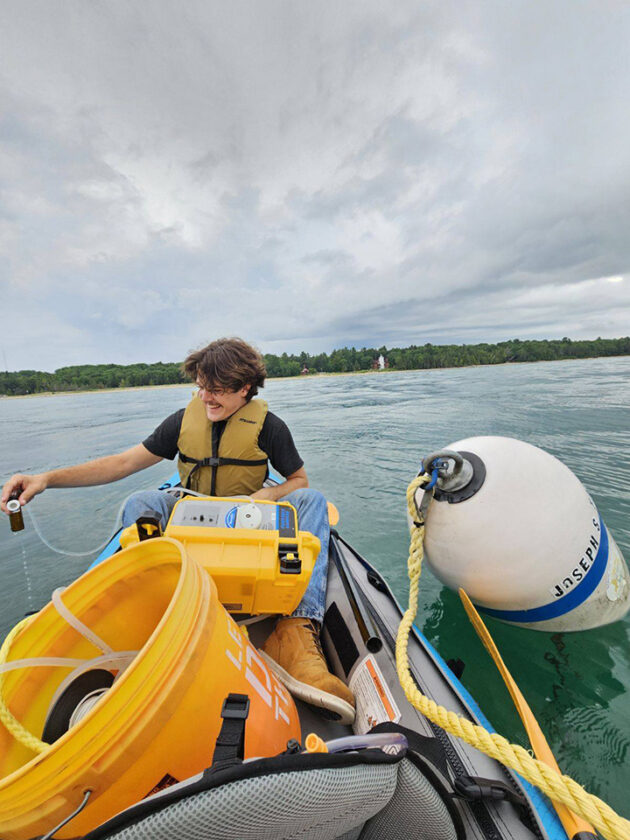
Courtesy Photo Charles Azzarito, NOAA Ernest F. Hollings Scholar, collects a freshwater acidification sample this summer at the Joseph S. Fay shipwreck site in the Thunder Bay National Marine Sanctuary.
ALPENA — Ernest F. Hollings Scholar Charles Azzarito has been an intern with the Thunder Bay National Marine Sanctuary since Memorial Day, and he will present a free lecture on Thursday titled, “My Time in Thunder Bay and What I Learned About Freshwater Acidification.”
The program is part of the Sanctuary Lecture Series. Doors open at 6:30 p.m. and the presentation is at 7 p.m. on Thursday at the Great Lakes Maritime Heritage Center, 500 W. Fletcher St., Alpena.
One of the perks of the Ernest F. Hollings Scholarship is choosing from the 17 National Marine Sanctuaries to do an internship. , As a Florida native who had never been to Michigan or the Great Lakes before, Azzarito chose Thunder Bay National Marine Sanctuary because he wanted to take part in the first-ever freshwater acidification research happening in Lake Huron.
“I’m originally from Fort Lauderdale,” said Azzarito, who will be a senior at Florida State University this fall. He is majoring in anthropology and underwater archaeology.
At this lecture, he will share the latest research happening in the National Oceanic and Atmospheric Administration’s ongoing Freshwater Acidification Monitoring Project. Attendees will learn about freshwater acidification, how changing levels impact the Great Lakes ecosystem, and how the public can get involved.
“It’s about freshwater acidification,” Azzarito said. “NOAA has the Ocean Acidification program, where they monitor the ocean’s pH levels and see how much excess carbon emissions are impacting the chemical makeup of the ocean. What happens is, gas gets absorbed into the water, it reacts with the water, making carbonic acid, and that carbonic acid can lower the pH of the system.”
He said this is the third year in a five-year study to collect samples in Lake Huron, which are then sent to the Great Lakes Environmental Research Laboratory in Ann Arbor for analysis.
NOAA’s Ocean Acidification program monitors pH, dissolved carbon (pCO2), conductivity, temperature, and other measurements of Earth’s ocean due to climate change. As carbon gas emissions are absorbed by large bodies of water, which normally act as carbon sinks, the pH of these water systems change.
“Ocean acidification, the concern there is really a food chain problem,” Azzarito explained. “All the animals in the ocean have evolved to live at a certain pH, and if the system acidifies to a certain point, certain animals aren’t going to be able to live … so we’re going to see their numbers decline, and that will cascade up the food chain. There’s the same concern for the Great Lakes.”
TBNMS and the Great Lakes Environmental Research Laboratory are currently working to expand the Freshwater Acidification Monitoring project throughout the Great Lakes region. This is the third year of a five-year study collecting water samples from various shipwreck sites in Lake Huron. The results from this research will establish a baseline for future freshwater acidification monitoring.
“If the system were to acidify, and again, this is the first study of its kind, so this is really gatheirng that data right now,” Azzarito said of the freshwater acidification monitoring. “If the lakes were to acidify, that would really have a huge impact on shellfish, for example, because they rely on this calcium carbonate chemical to build their shells, and if the system acidifies, there’s less of that, meaning there’s less shellfish, which means there’s less fish who eat the shellfish, which has economic impacts, it has ecosystem impacts, and it has impacts on humanity as a whole.”
He explained that this data and research is being done to “see where we’re at with the Great Lakes, specifically Lake Huron.”
Reach Darby Hinkley at dhinkley@thealpenanews.com or call 989-358-5691.
Local News
Chillin’ chipmunk
The Katherine V: A bygone era of gill net fishing
Sandcastle building contest ready to roll
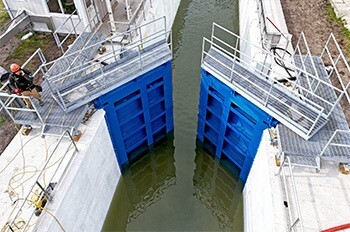
DNR reopens the Cheboygan lock

Lots to do on Fourth of July Weekend
Starlite Beach splash park hours extended
ALPENA - The City of Alpena will be extending the hours of operation of the Starlite Beach splash bark beginning ...