
Technology, shipbuilding keep sailors safe in historically dangerous November
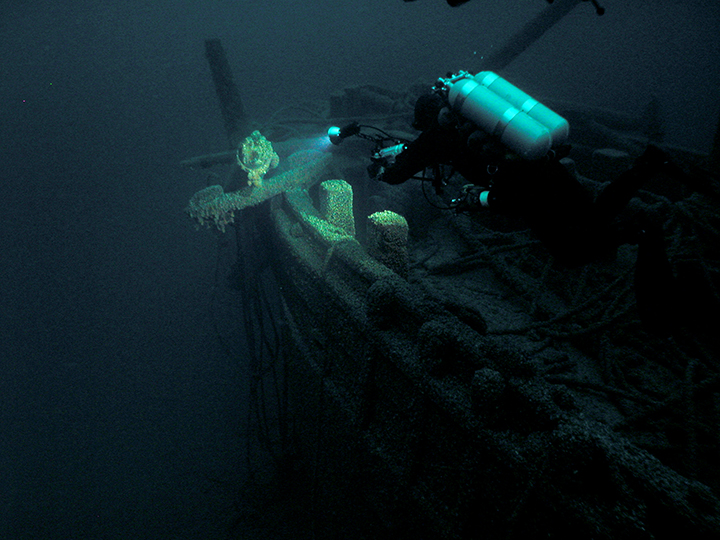
Courtesy Photo A diver swims by the Cornelia B. Windiate, a schooner that sank in November 1875, in this photo provided by the Thunder Bay National Marine Sanctuary.
ALPENA — November is historically a perilous month for those who sail on the Great Lakes, although shipwrecks were more frequent in the earlier days of shipping than they are now.
Maritime historian Pat Labadie estimates that, of the nearly 200 shipwrecks within the Thunder Bay National Marine Sanctuary boundaries, 40 to 50 of them sank in November.
The Nordmeer is the most recent freighter to wreck in the sanctuary’s boundaries during November. It was a German cargo freighter that ran aground after miscalculating a turn, wrecked on Nov. 19, 1966, seven miles northeast of Thunder Bay Island.
Labadie believes advancements in shipbuilding have helped prevent wrecks.
At the turn of the 20th century, wooden sailing crafts were retired to underwater graveyards, and new ships were constructed out of iron and steel, Labadie said. He said construction with the new materials was “the biggest step to reinforcing and making ships’ hulls more safe” and “pretty reliable.
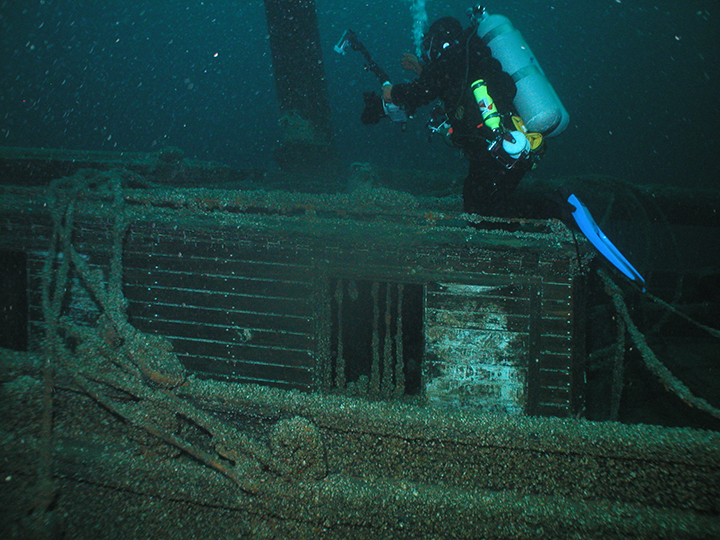
Courtesy Photo A diver swims by the Cornelia B. Windiate, a schooner that sank in November 1875, in this photo provided by the Thunder Bay National Marine Sanctuary.
“There are exceptions, but very, very few of them,” he said. “That’s why the wrecks are so infrequent.”
Advancements in weather forecasting have also helped ships as they navigate throughout the lakes.
At the time of the “White Hurricane” — a three-day storm that lasted from Nov. 7 to 10, 1913 — forecasters would send telegraphs to stations along the Great Lakes and volunteers would raise flags and lanterns to warn sailors of deteriorating conditions.
The “White Hurricane” remains the largest inland maritime disaster in U.S. history, according to the National Oceanic and Atmospheric Administration. Nine ships sank and more than 200 sailors were killed between 6 p.m. and midnight on Nov. 9, 1913. The bulk freighter Isaac M. Scott sank a day later in the storm, with all 28 souls on board.
“The Scott was a 504-foot steel freighter built in 1909 and lost in 1913 with a cargo of coal 10 miles east of Thunder Bay Island,” Labadie said. “It’s upside down. It just rolled over in that gale.”
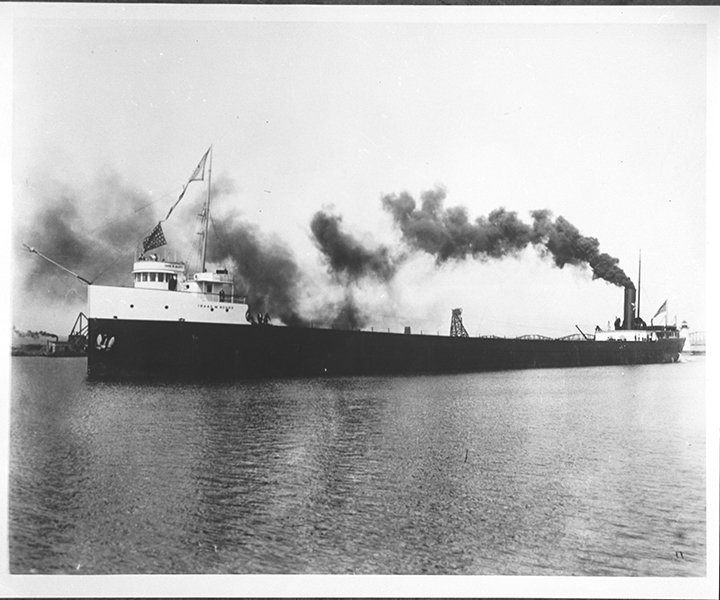
Courtesy Photo The bulk freighter Isaac M. Scott is pictured in this photo provided by the Thunder Bay National Marine Sanctuary. The ship sank on Nov. 10, 1913 during the “White Hurricane.”
The “White Hurricane” was one of the motivating factors for the creation of the National Weather Service, according to NOAA.
It helped shape modern systems of shipping communication, weather preparedness, and storm preparedness. Weather forecasters now have access to computer models, weather satellites, and radar, which help forecasters make the most accurate predictions.
In November, the wind comes from different directions, but normally out of the north and northwest, and that can make it difficult to get into docks like Stoneport in Rogers City, Mike Merrick, who retired as captain from the Cason J. Callaway in 2015, said.
“It will blow and it won’t stop,” he said. “I don’t know if it’s the colder water that makes it seem harder, but the waves seem to hit a lot harder in November than they do in July and August.”
He said modern freighters have electronic navigation and charting. A captain can now look at a screen and tell exactly where the boat is.
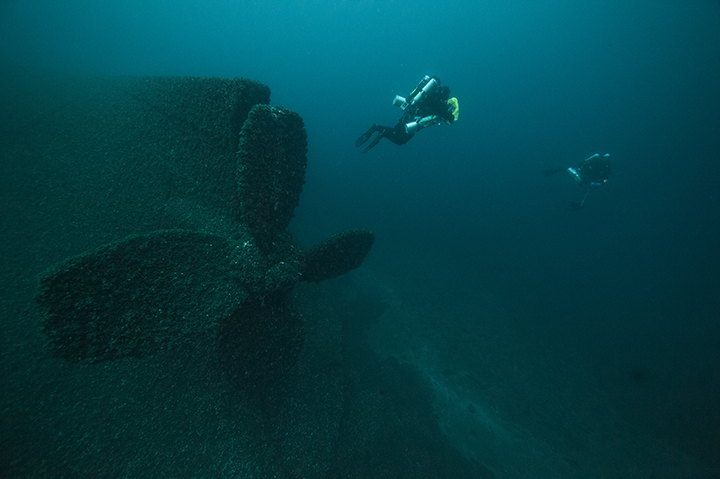
Courtesy Photo Divers swim by the Isaac M. Scott, which sank on Nov. 10, 1913, in this photo provided by the Thunder Bay National Marine Sanctuary.
“It’s a really great tool. It helps for navigation purposes, but it also helps if you’re varying from your normal courses for watching out for shallows,” he said. “When you’re shore hopping — trying to avoid the heavy weather and the wind — you’re getting close to shore and now you have to watch out for shallows, rocks, and different shoals.”
Merrick said ships also have better survival equipment, including survival suits, life rafts, and emergency positioning indicating radio beacons — or epirbs — that detach from a ship and emit a signal to let rescuers know the epirb’s position.
Merrick said captains also have to be mindful of freezing spray, which can sink a boat. Spray from waves, rain, or snow can accumulate on a ship, weigh the vessel down, and cause it to sink.
That is what archeologists believe happened to the Cornelia B. Windiate in November 1875. The schooner was overloaded with 21,000 bushels of wheat when “spray from huge waves may have coated the schooner with layers of ice, adding crushing weight to the heavily loaded ship,” according to an article on ThunderBayWrecks.com. “Handing the vessel likely became difficult and then impossible.”
The Windiate is thought to have settled slowly to the bottom of the lake — about 185 feet beneath the surface — because the schooner remains upright with its masts intact.
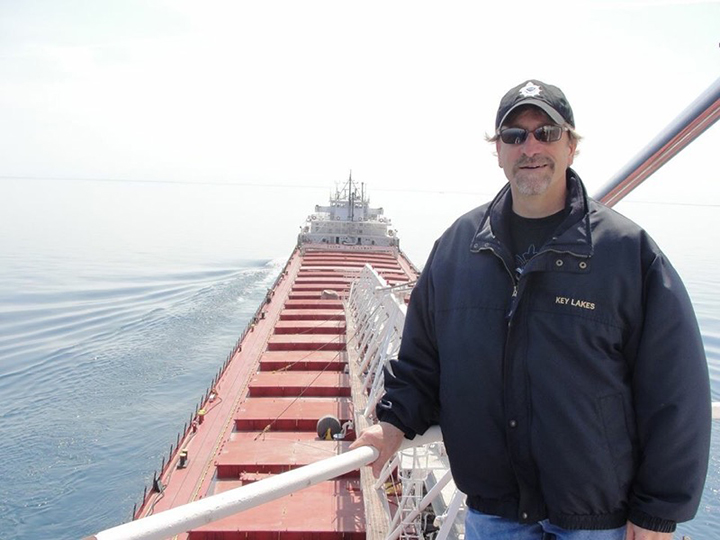
Courtesy Photo Mike Merrick, a retired captain of the freighter Cason J. Callaway, is pictured aboard the ship.
No signs of the eight crewmen have ever been found.
Crystal Nelson can be reached at 989-358-5687 or cnelson@thealpenanews.com.
-
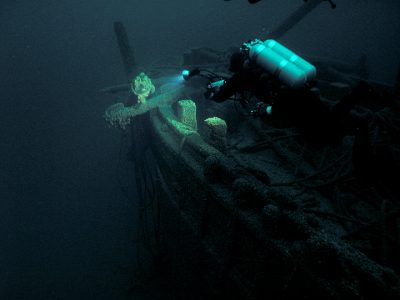
- Courtesy Photo A diver swims by the Cornelia B. Windiate, a schooner that sank in November 1875, in this photo provided by the Thunder Bay National Marine Sanctuary.
-
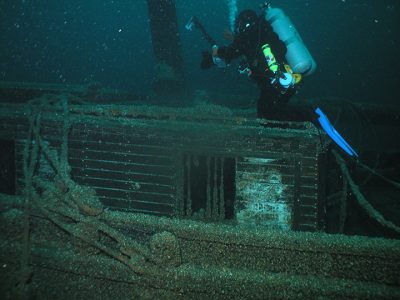
- Courtesy Photo A diver swims by the Cornelia B. Windiate, a schooner that sank in November 1875, in this photo provided by the Thunder Bay National Marine Sanctuary.
-
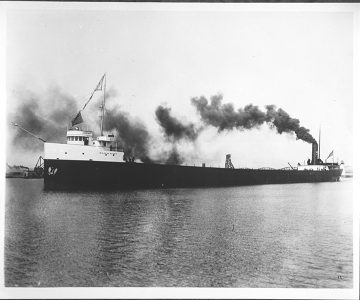
- Courtesy Photo The bulk freighter Isaac M. Scott is pictured in this photo provided by the Thunder Bay National Marine Sanctuary. The ship sank on Nov. 10, 1913 during the “White Hurricane.”
-
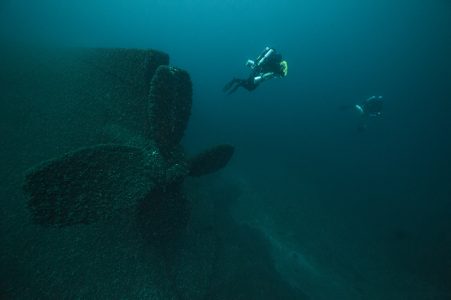
- Courtesy Photo Divers swim by the Isaac M. Scott, which sank on Nov. 10, 1913, in this photo provided by the Thunder Bay National Marine Sanctuary.
-
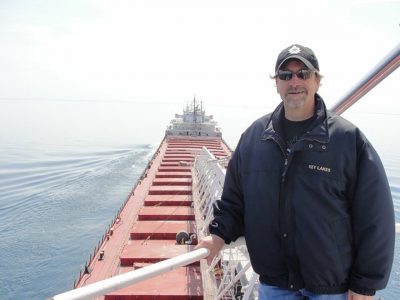
- Courtesy Photo Mike Merrick, a retired captain of the freighter Cason J. Callaway, is pictured aboard the ship.
-
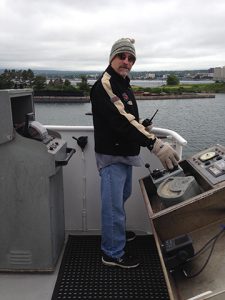
- Courtesy Photo Mike Merrick, a retired captain of the freighter Cason J. Callaway, navigates the boat through the Soo Locks.
-
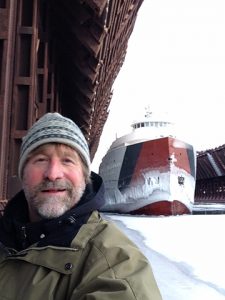
- Courtesy Photo Mike Merrick, a retired captain of the freighter Cason J. Callaway, is pictured in front of the ship.
-
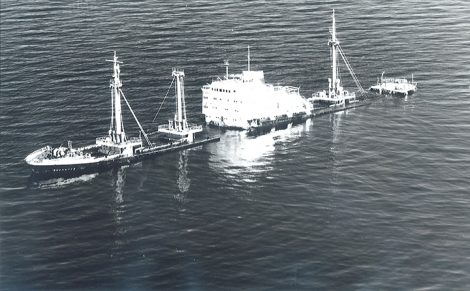
- Courtesy Photo The German freighter Nordmeer, which ran aground on Nov. 19, 1966, is seen in this 1967 photo provided by the Thunder Bay National Marine Sanctuary.
-

- Courtesy Photo Divers swim by the German freighter Nordmeer, which ran aground on Nov. 19, 1966 in this photo provided by the Thunder Bay National Marine Sanctuary.
-
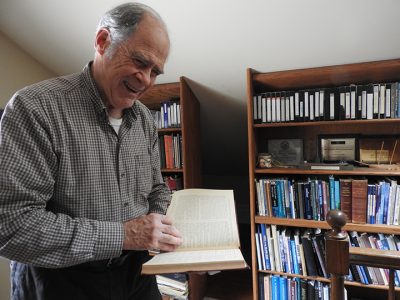
- News Photo by Crystal Nelson Maritime historian Pat Labadie thumbs through a book in his home library recently in Alpena. The book explains the requirements needed for a ship to be insured.
-
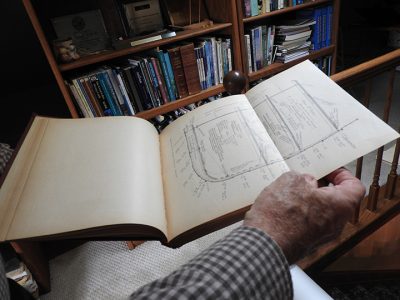
- News Photo by Crystal Nelson Maritime historian Pat Labadie thumbs through a book in his home library recently in Alpena. The book explains the requirements needed for a ship to be insured.
-
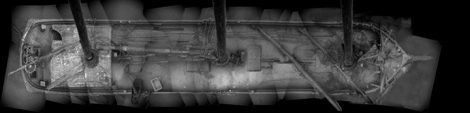
- Courtesy Photo Multiple images of the Cornelia B. Windiate were pieced together to show the wreck in this photo provided by the Thunder Bay National Marine Sanctuary.
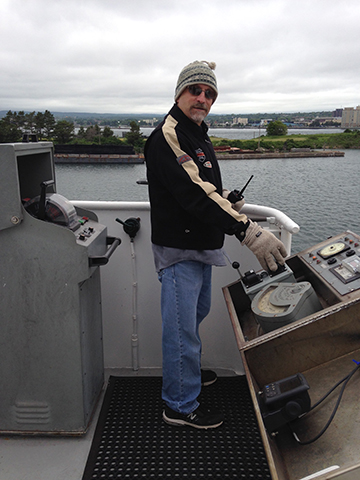
Courtesy Photo Mike Merrick, a retired captain of the freighter Cason J. Callaway, navigates the boat through the Soo Locks.
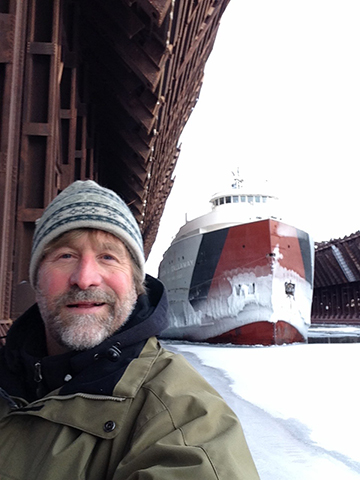
Courtesy Photo Mike Merrick, a retired captain of the freighter Cason J. Callaway, is pictured in front of the ship.
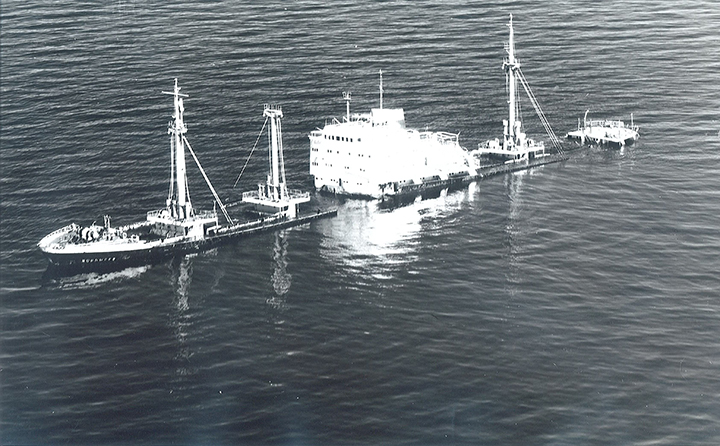
Courtesy Photo The German freighter Nordmeer, which ran aground on Nov. 19, 1966, is seen in this 1967 photo provided by the Thunder Bay National Marine Sanctuary.
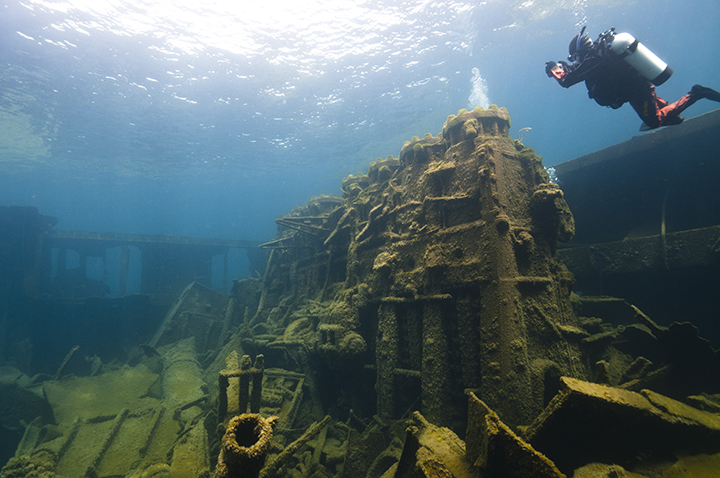
Courtesy Photo Divers swim by the German freighter Nordmeer, which ran aground on Nov. 19, 1966 in this photo provided by the Thunder Bay National Marine Sanctuary.
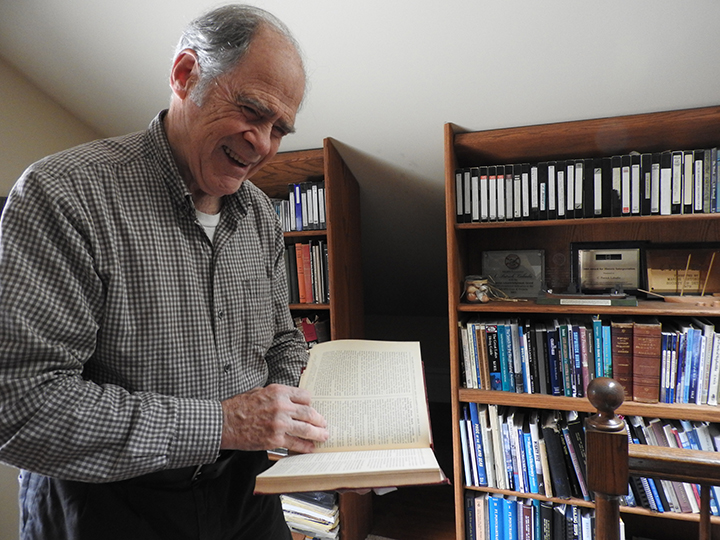
News Photo by Crystal Nelson Maritime historian Pat Labadie thumbs through a book in his home library recently in Alpena. The book explains the requirements needed for a ship to be insured.
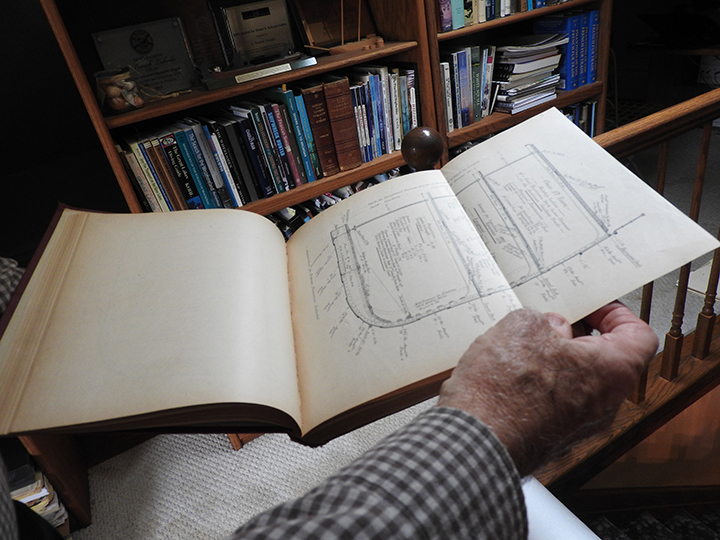
News Photo by Crystal Nelson Maritime historian Pat Labadie thumbs through a book in his home library recently in Alpena. The book explains the requirements needed for a ship to be insured.
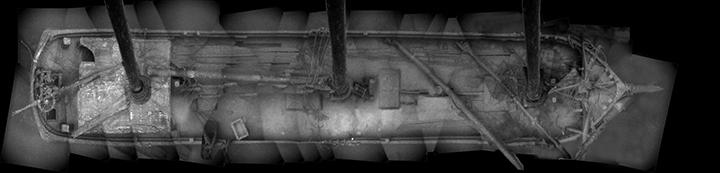
Courtesy Photo Multiple images of the Cornelia B. Windiate were pieced together to show the wreck in this photo provided by the Thunder Bay National Marine Sanctuary.
Lifestyles

Boys and Girls Club of Alpena celebrates 100 years with Great Futures Gala

Fun run for fireworks
Fun at play practice
Posen VFW breakfast
POSEN — The Posen VFW Posen Post 6804 will host a breakfast on April 26 from 8 a.m. until noon. There will be ...
Habitat names Wolff volunteer of the year
Thunder Bay National Marine Sanctuary advisory council to meet
ALPENA — NOAA’s Thunder Bay National Marine Sanctuary Advisory Council will meet on April 28 from 6 p.m. until ...