
Meteor lights up Northeast Michigan skies
Trending
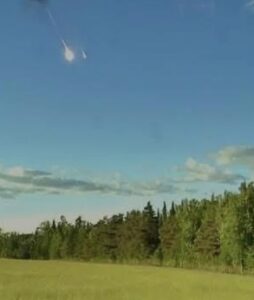
ALPENA – A brilliant fireball streaked across the night sky over Northeastern Michigan on Friday, prompting numerous eyewitness accounts from across the region and sparking excitement among stargazers and weather watchers alike.
National Weather Service (NWS) Meteorologist Joe Delizio confirmed that there was an influx of reports to the NWS office in Gaylord, which serves Alpena and surrounding areas.
"There were multiple reports from throughout northern Michigan of a meteor, including Cheboygan, Posen, Hubbard Lake, and Oscoda, all in the evening hours on June 19," Delizio said. "Additionally, reports were made from as far as the southeastern portions of the Upper Peninsula through a large portion of northern lower Michigan"
The timing was consistent across all reports. "All of these sightings are from the 8:15 p.m. to 8:20 p.m. time frame," Delizio added.
Based on the descriptions provided, NWS officials assessed the object's nature.
"From the way it was described in reports, and how high it was in the sky, it was most likely a meteor," Delizio explained.
The event quickly gained attention beyond official channels. Michigan Storm Chasers, a popular group that monitors severe weather and sky phenomena, shared video captured by their weather cameras showing the fireball's path. The object produced a thunderous boom according to multiple reports from northern Michigan, likely a sonic boom as the meteor broke the sound barrier upon entering earth's atmosphere.
The American Meteor Society (AMS) logged the incident as Event 4482-2026, compiling more than 90 eyewitness reports from Michigan, Ontario, and parts of Ohio. Many observers noted fragmentation, suggesting the meteor broke apart during its fiery descent through the atmosphere. This aligns with the NWS assessment and adds to a notable uptick in fireball activity observed across the country in 2026.
Despite the proximity and reports from neighboring communities, the NWS indicated it received no direct accounts from Alpena, but some people posted on Facebook that they had heard the sonic boom.
A search on the AMS page for the event also indicates that no reports were made from that area. This doesn't necessarily mean locals missed the show, many residents along the Lake Huron shoreline may have witnessed it but reported through other channels.
According to NASA, fireballs like this occur when meteoroids (small rocky or metallic fragments from asteroids or comets) enter Earth's atmosphere at high speeds, often tens of thousands of miles per hour. Friction causes them to heat up and glow brightly, sometimes fragmenting and creating audible effects, also known as a sonic boom. While most burn up completely, larger events can occasionally drop meteorites, though no confirmed recoveries have been reported from this event., as of Monday.
According to information published by the Journal Record on June 16, the event on Friday comes amid a broader pattern.
Michigan has seen several notable meteors in recent weeks, including a widely observed one on June 1 that generated nearly 200 reports across multiple states. According to AMS, there has been a measurable increase in significant fireball reports so far this year, with events drawing 50 or more witnesses becoming more frequent.