DNR checks in on inland fisheries with lake and stream surveys
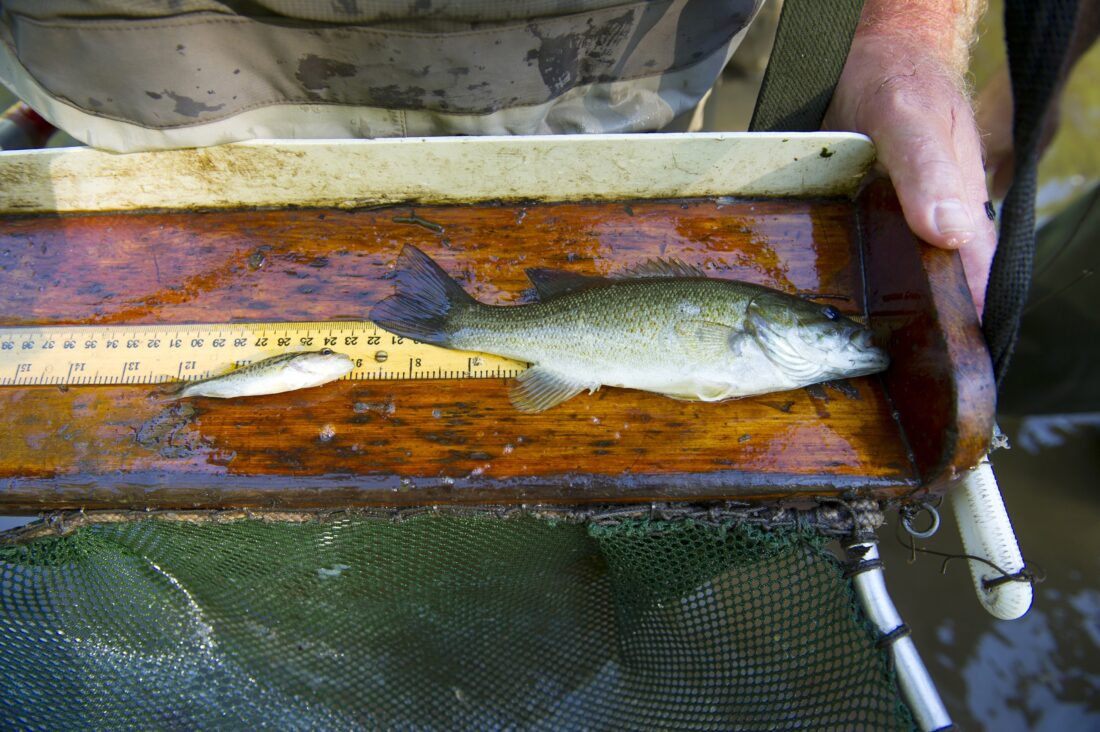
A stream restoration project employing a technique called "toe wood". Wood and fiber mats are strategically constructed along the stream bank to improve fish habitat and improve the natural processes of the stream, including promoting a gravel bottom. This fish survey took place 1 year after the construction project on Highbanks Creek in Barry Co. - a tributary to Thornapple Lake.
If you were out on the water last year, you might have noticed something interesting: crews with nets and measuring boards, catching and documenting fish. In 2025, Michigan Department of Natural Resources fisheries management units completed more than 350 fisheries surveys across the state. Staff completed 225 surveys of inland lakes and 127 surveys of streams.
“The fisheries management units performed inland fisheries surveys to evaluate if management actions, like fish stocking or habitat improvement projects, had the desired effect,” said Jim Francis, DNR Fisheries Division Lake Erie basin coordinator. “Survey data helps us understand whether our management actions resulted in better recreational fishing in certain areas or improved the overall health of a lake or stream.”
These surveys help track inland fisheries populations, evaluate stocking efforts to increase angler opportunities or address concerns from the public, all of which is critical for effectively managing the state’s diverse fisheries.
Fixed status and trends sites are specific locations where researchers regularly collect data to monitor fish populations and habitat conditions over time. At those sites for key species — usually trout in coldwater streams and smallmouth bass in warmer waters — fish population abundance is estimated and in-stream habitat data is collected annually on a three-year rotation. The DNR also performs random site surveys, which are intended to give a species snapshot and show relative abundance.
Discretionary surveys, which usually account for 50% of the department’s annual survey effort, are used to answer questions or address current concerns that may have been raised by a local biologist, angling group or lake association. Such surveys might also be conducted to assess habitat suitability for threatened and endangered fish species.
The DNR’s ability to regularly complete fisheries surveys requires sufficient, sustainable, long-term funding. But due to funding shortfalls, critical fisheries management activities, like surveys, are at risk of reduction.
“Under our current funding level, an inland lake in Michigan is likely to be surveyed only once every 90 years,” said DNR Fisheries Division Chief Randy Claramunt. “This affects our ability to deliver on our public trust responsibilities to Michiganders and needs to be addressed.”
The fisheries management work that these surveys inform is valuable not only to the DNR, but to partner organizations, anglers and all Michigan residents and visitors.
“Fisheries managers use the information resulting from all types of surveys to strategize actions, detect early indicators of invasive species, recognize developing threats to fish and habitat health, and much more,” Francis said. “Anglers rely on information from these surveys when planning fishing trips, and a number of partners depend on survey findings to inform strategic efforts such as habitat protections. Healthy, high-quality aquatic ecosystems and waters benefit everyone.”
Local News

SkellaFit welcomes paralympian and Army veteran Bobby Body as bench press coach

Bird rehabilitation center cares for injured owls
DNR checks in on inland fisheries with lake and stream surveys
Building national symbols of independence through community effort

Friends of Thunder Bay National Marine Sanctuary receives Outstanding Contributor Award from Economic Generator Network