
Lake Huron’s phenomenal walleye fishery
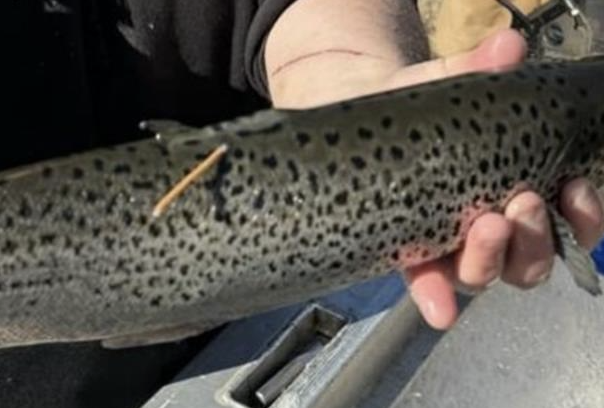
Courtesy photo This is a photo of a walleye with a fin tag on it.
In my last column, I explored the history of Lake Huron’s walleye fishery, its collapse, and how the disappearance of alewives in 2003-04 paved the way for its eventual recovery. The overwhelming majority of Lake Huron’s walleye are born in Saginaw Bay, but walleye have tails and they use them! This means anglers in Oscoda, Harrisville, Alpena, Presque Isle, and even Rogers City enjoy the benefits of Saginaw Bay’s walleye recovery. We know this because tens of thousands of Saginaw Bay’s walleye have been tagged where they spawn in the Tittabawassee River in Midland. I reported that tag returns by anglers have revealed how far these walleye roam after spawning each year (they spawn around April 1). But last column (oops!) I referred to the tags on walleye as spaghetti tags. Wrong! Almost all walleyes are tagged with metal clamp-on jaw tags. These are a small piece of metal clamped around the walleye’s jaw bones. To remove them, it helps to have a set of long-nose plyers to unwind the tag. Then you will see the tag number and information about how to report the tag to the DNR. Spaghetti tags are more often seen on trout and salmon. The images show what each of the two tags look like.
The easiest way to report a tagged fish is just google “report tagged fish Michigan”. A State of Michigan website called “Marked Fish – DNR Reporting” will pop up. Here you will find a super-easy form for you to record the information the DNR needs from your catch. By reporting your tagged fish, you are partnering with research biologists in their stewardship of our fish populations, helping them to understand our walleye population. Some of that information is related below.
Local News
Chillin’ chipmunk
The Katherine V: A bygone era of gill net fishing
Sandcastle building contest ready to roll
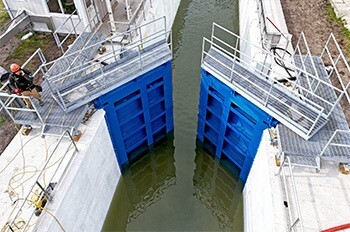
DNR reopens the Cheboygan lock

Lots to do on Fourth of July Weekend
Starlite Beach splash park hours extended
ALPENA - The City of Alpena will be extending the hours of operation of the Starlite Beach splash bark beginning ...