Hospitality and tourism industry scrambling to find seasonal summer help
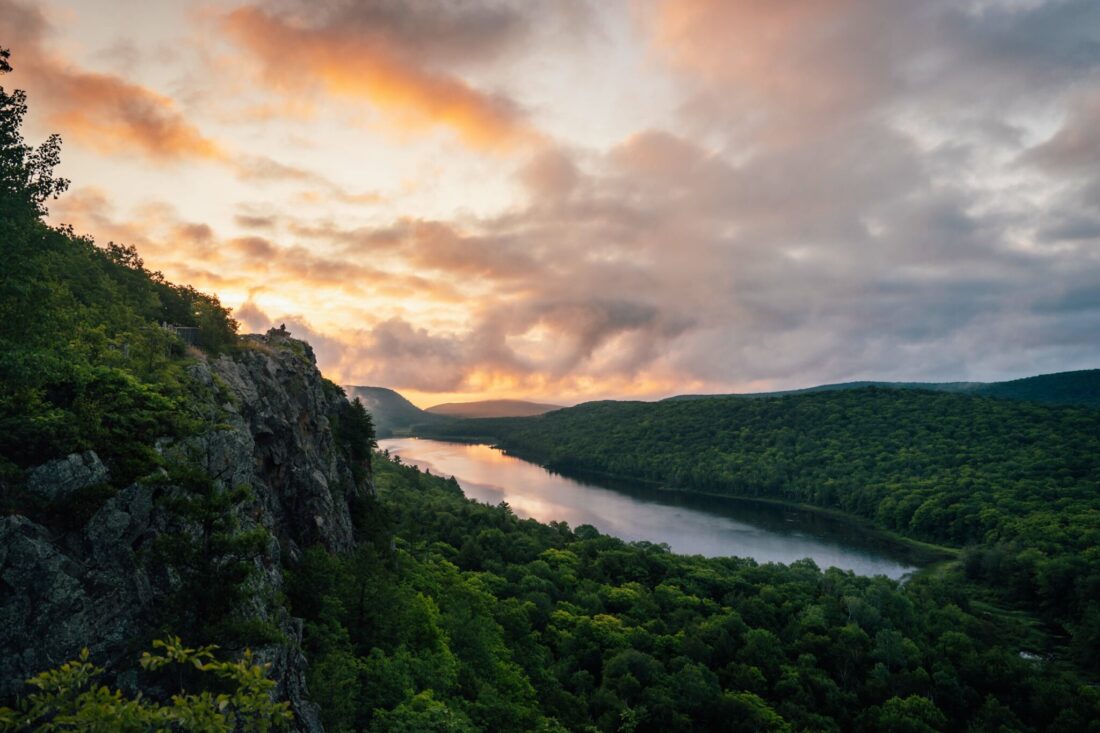
Courtesy photo by Pure Michigan Lake of the Clouds in the Porcupine Mountains.
LANSING – Michigan’s tourism industry is preparing for another busy season, with strong visitor demand expected across the state.
However, industry experts warn that staffing challenges remain a key concern.
In tourism-dependent destinations such as Mackinac Island, preparing for the onrush of visitors depends heavily on seasonal workers.
The island relies on about 5,000 temporary employees each year.
“Seasonal workers are absolutely the backbone of everything we do here on Mackinac Island. Without them, quite simply, there is no tourism season,” said Tim Hygh, the executive director of the Mackinac Island Tourism Bureau.
The scale of that demand becomes clear during peak months.
Mackinac Island draws about 1 to 1.2 million visitors annually, with traffic peaking from late June through Labor Day weekend.
“We need hospitality workers most, including hotel front desk, housekeeping, food and beverage staff across our restaurants and bars,” Hygh said.
“Basically, if a visitor touches it, we need someone staffing it,” he added.
Industry experts say these staffing challenges are not unique to any one destination.
“That’s always been the case in Michigan, especially for smaller seasonal businesses in northern parts of the state,” said Jeff Beck, an associate professor in the School of Hospitality Business at Michigan State University.
“They often struggle to find enough workers to properly serve guests,” he said.
In Northern Michigan, tourism leaders say visitor activity has increased dramatically, especially over the past five years.
“About 80% of visitors come from within roughly an eight-hour drive of the Upper Peninsula, including Michigan, Ohio, Indiana, Illinois, Wisconsin and Minnesota,” said Tom Nemacheck, the executive director of the Upper Peninsula Travel and Recreation Association.
Nemacheck pointed to some of the region’s most popular destinations, including Pictured Rocks National Lakeshore, Mackinac Island, the Keweenaw Peninsula, Porcupine Mountains and Sault Ste. Marie.
He said attracting visitors to the region involves a wide range of marketing efforts.
“We use advertising, social media, billboards and streaming platforms, along with influencer partnerships. There are about 15 different ways we reach people,” he said.
Similar patterns are seen across Michigan, where Pure Michigan officials say the state’s tourism campaign continues to attract visitors ahead of the upcoming season.
A 2025 report from SMARInsights found that advertising influenced 1.5 million leisure trips to Michigan, generating $2.8 billion in visitor spending and more than $171 million in state tax revenue.
“The 2025 findings show the campaign continues to influence travelers to choose Michigan, helping more people discover the people, places and experiences that have established our state as a premier four-season destination,” said Kelly Wolgamott, the vice president of Pure Michigan, part of the Michigan Economic Development Corp.
Its most recent economic impact report, reflecting 2024 data, showed tourism was one of the key industries in Michigan.
The industry supported more than 350,000 jobs, about one in every 17 statewide, and drew over 130 million visitors.
Those visitors generated more than $30 billion in direct spending, resulting in $54.8 billion in total economic impact for Michigan’s economy.
But as visitor numbers grow, businesses are feeling pressure to find enough workers.
Hygh said, “Housing is far and away our number-one challenge.”
“We compete not just with other Michigan destinations, but with resort communities across the country for a relatively small pool of workers willing to commit to a seasonal lifestyle.”
He added that limited space on the island makes affordable housing scarce, forcing employers to work harder to attract staff despite competitive wages.
To address those challenges, some businesses are changing how they operate.
Beck said, “Many have had to adapt by adopting technology so more services can be self-serve.”
He added that where possible, employers have also addressed that problem by providing housing or room and board because they know they won’t be able to find enough local workers.
Some businesses are also turning to international workers.
“There are entities across the state that bring in internship students from Ireland and other European countries, giving them the opportunity to experience the United States while working in hospitality roles,” Beck said.
On Mackinac Island, attracting young workers from abroad is also part of the solution.
“We’ve seen renewed interest from college students and from international workers through J-1 visa programs, which have historically been vital to us,” Hygh said.
“I’m cautiously optimistic about this coming season.”
Local News

Hoitenga supports flexibility for Northern Michigan schools impacted by storms and flooding

U.S. Fish and Wildlife to survey Great Lakes tributaries to search for invasive sea lampreys

Lake Huron walleye: The new centerpiece of Michigan’s Great Lakes fishery

Montmorency County police update
America at 250: First Transcontinental Railroad had immediate impact on nation that continues to be felt today