New book dives into history of ‘phenomenal’ Great Lakes ship architect
Courtesy photo
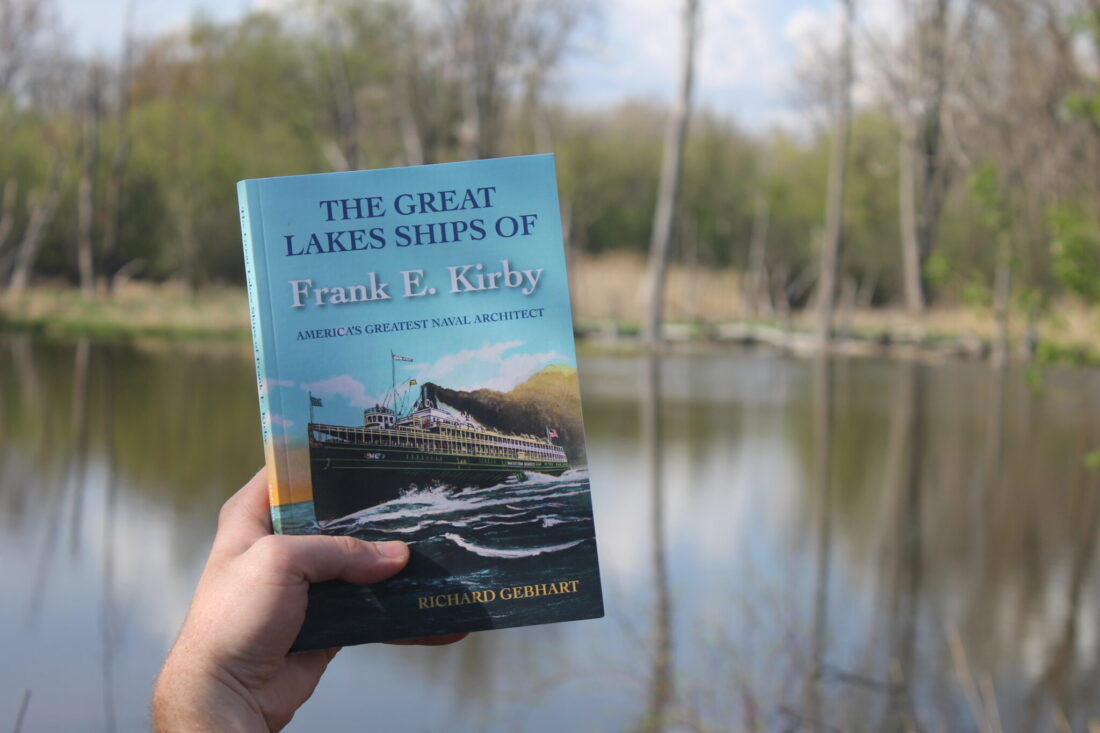
LANSING – A new book, “The Great Lakes Ships of Frank E. Kirby” (Michigan State University Press, $29.95), explores the life of a prolific Midwestern naval architect whose vessels once carried passengers who are still alive today.
Kirby was a naval architect in the early 20th century who designed steamboats such as SS Milwaukee Clipper, SS Columbia and SS Ste. Claire. Though no longer operational, these three ships are the only Kirby boats still remaining today.
As of today, the SS Columbia can be found in Buffalo, while the SS Ste. Claire is at Detroit’s Riverside Marina after a 2018 fire that consumed its wooden decks. The ship’s current owner hopes to refurbish the vessel. The Milwaukee Clipper is docked on Muskegon Lake and is presently a ship museum.
Another famous Kirby boat, the SS City of Detroit III, was scrapped in 1956, but its English Gothic Room – a part of the ship located on the upper deck and used as a men’s smoking room -was preserved and located on Belle Isle in the Dossin Great Lake Museum.
In the book, author Richard Gebhart describes a profile of Kirby as “long overdue.”
That’s because no one has gotten around to writing about him, said Gebhart, a former director of the White River Light Station lighthouse museum in Whitehall.
Still, Gebhart, a Great Lakes History lover and writer, took on the challenge and began authorship of a book recounting some of the most famous naval architectural contributions of the 20th century.
Gebhart said the idea for the book came about after he repeatedly noticed Kirby’s name scattered throughout maritime documents. He had been combing through those materials while working on novels.
Curious, Gebhart asked friends in the maritime history world if anyone had written about Kirby.
The answer came back from Jay Bascom, the editor of “Scanner,” the journal and newsletter of the Toronto Marine Historical Society.
“In our correspondence while I was gathering information about Kirby, I asked him if he was aware of any biography about Kirby, and he said he wasn’t. When he was working on something relative to a Kirby boat, he said all he had were notes and crib sheets [cheat sheets students used when taking written exams] in his ship profile folders.”
Gebhart explained that Kirby was a designer who rose during a major shift in shipbuilding history.
Moving from wooden hulls to iron and steel – all steam-powered – Kirby worked on almost every type of vessel on the Great Lakes and beyond.
“He became an international figure because of his great prowess,” Gebhart said.
While researching and writing about Kirby, Gebhart was contacted by Kirby’s great-grandson, Nick Kirby, who visited and brought family treasures, troves and interviews that Nick’s grandmother conducted with Kirby before he died in 1929.
“I was floored, and it was really emotional when they came too,” Gebhart said. “It was like we had blood that we didn’t know, and it was just a soul-touching moment for both of us.”
“The thing that I’m most amazed about is that it’s taken so long for somebody to write about him because the entire light he shot on Great Lakes shipping history over a half-century is just astonishing.”
Gebhart said he hopes someone with money stumbles across the book and can use it the right way to restore these boats to their former glory.
“There couldn’t be a better place right now than the Detroit Riverfront with all the renovations,” Gebhart said, adding, “it’s screaming to get those things back there.”
Lifestyles

HPC Credit Union supports Brown Trout

America at 250: An Age of Innovation

Alcona County Library events

Cost of Fourth of July cookout reflects inflation increase, MI remains below national average

Happy 65th anniversary Harry and Judi