
Paid leave right thing to do
At some point in all of our lives, we will find ourselves in a situation in which we need to step away from work to recover our own health or to care for a person we love.
When my grandfather had to enter home hospice care many years ago, I was fortunate to be working for an organization that afforded me the flexibility to take paid time away to care for him. He was one of the people I loved most in this world — he stepped up to be a primary caregiver for me as a child when I needed him most — and I was able to be there for him at the end, when he needed me most.
I feel grateful that, in that time of stress, sadness and loss, I was able to focus on him without worrying about making ends meet or keeping my job.
And, yet, I know that is not how it goes for everyone.
As of 2022, 75% of civilian workers did not have access to paid leave in the U.S., and, here in Michigan, 63.3% of Michiganders are ineligible or unable to afford 12 weeks of unpaid leave.
They are, therefore, in danger of losing their job or livelihood if they or a family member becomes seriously ill, or when they need to care for a newborn or adopted child.
They are often faced with impossible choices, being forced to decide between putting food on the table or taking needed leave. That not only exacerbates already stressful personal situations and can harm a family’s financial wellbeing, but it also has a negative impact on the attraction and retention of employees in our state’s workforce and hurts our economy.
Thankfully, Gov. Gretchen Whitmer has, once again, shown her strong support for Michigan workers and families by announcing that one of her legislative priorities for the fall is a push for a paid family and medical leave program, with bills already introduced in the state House and state Senate.
That type of program would provide workers with guaranteed paid leave when they cannot work because of serious health or caregiving needs, and, if it becomes a law, Michigan would join a growing number of states — 13 in total, as well as Washington, D.C. — that already have paid leave laws.
Here at the Michigan League for Public Policy, we are proud to be longtime advocates for guaranteed paid leave, and we know it would be a game-changer for our state. It would result in stronger economic security and better health outcomes for families while also making Michigan more competitive in attracting and retaining talent for the state’s workforce at a time when Michigan’s population has stagnated and is projected to decline in the future, in part because of people moving out of state for jobs.
We also know that a paid leave program would help in addressing current racial disparities, with Black and Hispanic workers less likely than white and non-Hispanic workers to have access to paid leave. Eleven percent of Black workers reported an unmet need for leave for family or medical reasons — compared to only 6% of white and Asian workers — in a 2018 nationwide survey exploring employees’ experiences with the Family and Medical Leave Act. Women of color are also less likely than white women to hold jobs with family-friendly workplace policies and are overrepresented in the low-wage job market. Those disparities only compound the racial wealth gap in our country, which is a direct result of systemic racism and barriers to wealth-building, including the historic, racist practice of redlining.
Paid family leave after childbirth also leads to many health benefits for infants, including a reduced risk of infant mortality. And mothers who receive paid family leave are less likely to experience symptoms of postpartum depression or report parenting stress.
With paid leave, women are also more likely to remain connected to their employers when they might otherwise have left the workforce after giving birth. In Michigan, that is especially important, because our state’s workforce participation rate has been consistently lower than the national rate over the past two decades and remained 2.3 percentage points below the national rate in 2022, at 59.9%.
That, coupled with Michigan’s declining population of working-age adults, is expected to result in a workforce that will likely remain constrained in future decades, according to recent research by the Citizens Research Council and Altarum.
In addition to the clear benefits for people and the economy, paid leave policies also have benefits for businesses, including increased productivity and morale, increased worker retention, and even some reported savings from lower employee turnover. In fact, a study of California’s paid leave program revealed that a majority of businesses — 87% — had no increased costs, and 9% indicated that the program had generated cost savings for their business.
We believe that guaranteed paid leave is not only the smart thing to do for our state, but the right thing to do for Michiganders.
We hope the Legislature follows the governor’s lead in making that a new law, and we hope to see as many people as possible covered under it.
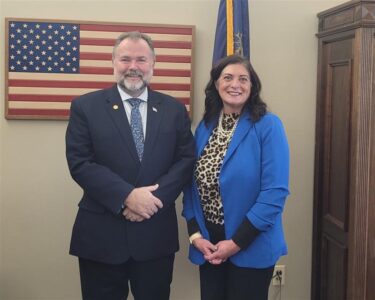
Monique Stanton is president and CEO of the Michigan League for Public Policy.
Editorials and columns
Theft as social justice
Is robbing the Louvre a good idea? Left-wing influencer Hasan Piker and New Yorker writer Jia Tolentino did a ...
MAGA is anti-Christian now
The past few days have featured the vice president of the United States lecturing the pope on morality and church ...

The fairground’s dilemma
Proposal seeks to forgive school closures caused by extreme weather

No confidence
