
Weather spotter training ups public safety

News Photo by Julie Riddle Trained storm spotter Mike Horn illustrates the sparse accumulation in a rain gauge outside his Rogers Township home on Monday.
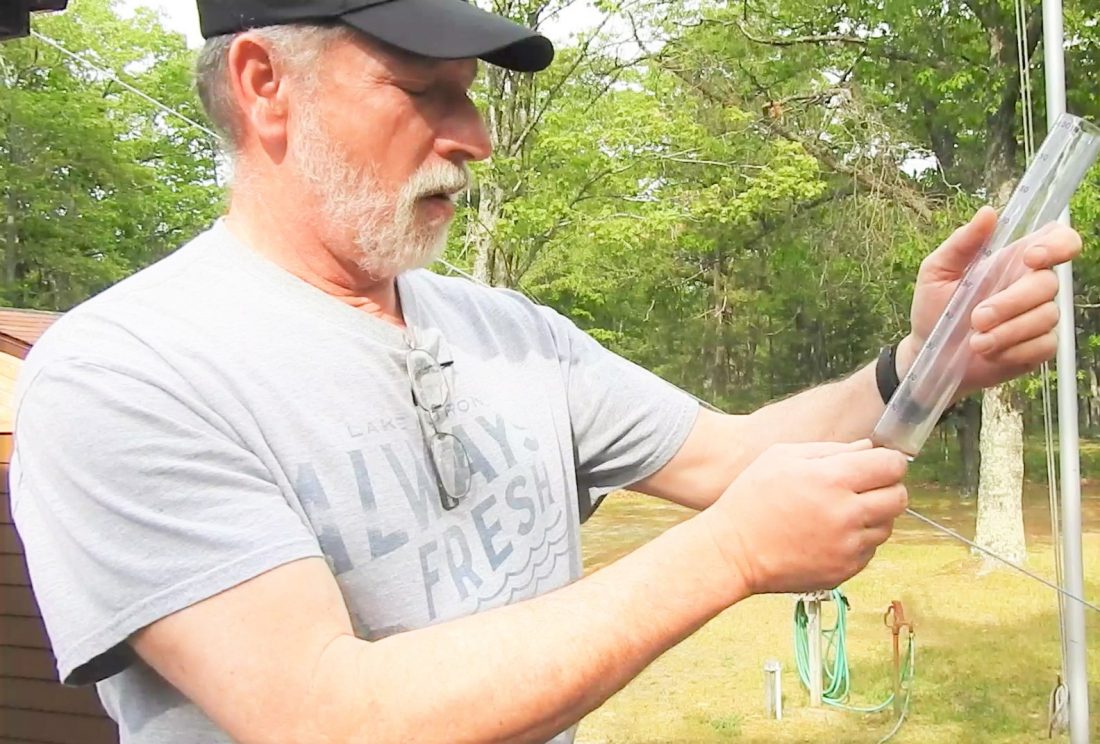
News Photo by Julie Riddle Storm spotter Mike Horn explains a rain gauge outside his Rogers Township home on Monday.

News Photo by Julie Riddle Pat Bak, warning coordination meteorologist with the National Weather Service in Gaylord, explains weather radar capabilities outside the 40 Mile Point Lighthouse north of Rogers City last month.
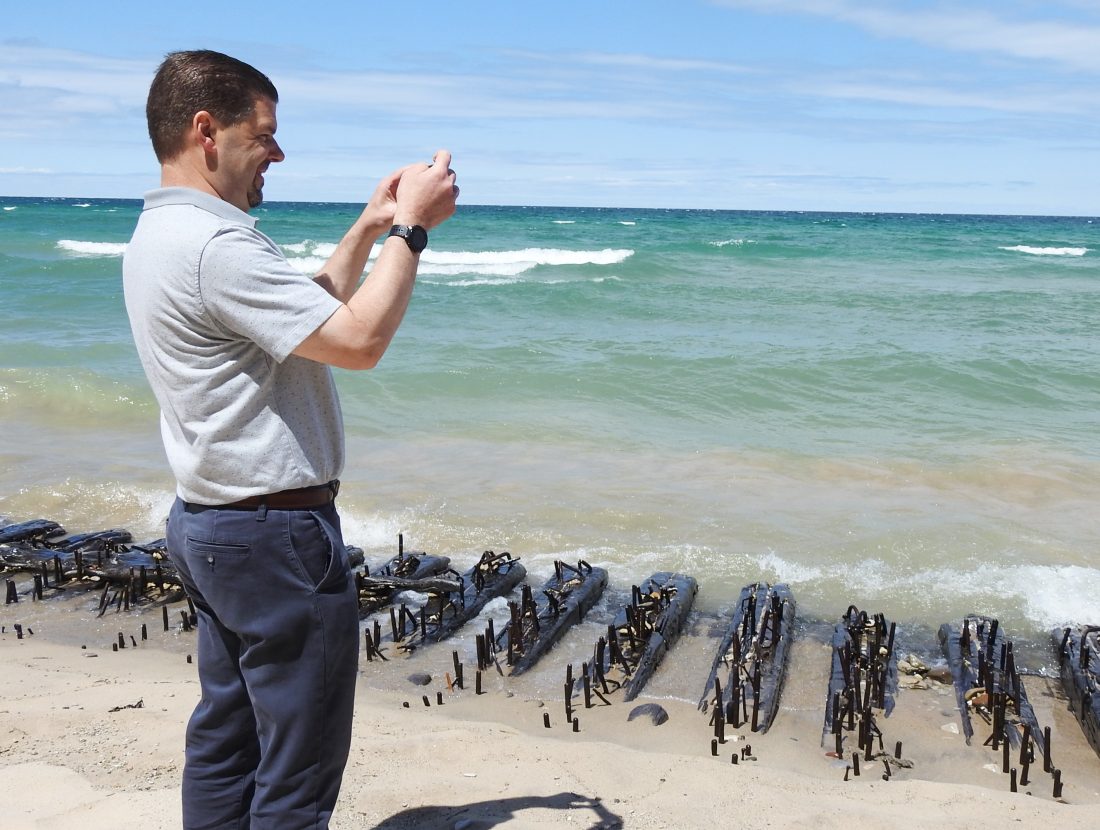
News Photo by Julie Riddle Pat Bak, warning coordination meteorologist with the National Weather Service in Gaylord, visits a shipwrecked portion of the Joseph S. Fay, buried in the sand near the 40 Mile Point Lighthouse north of Rogers City last month.
News Photo by Julie Riddle Trained storm spotter Mike Horn illustrates the sparse accumulation in a rain gauge outside his Rogers Township home on Monday.
News Photo by Julie Riddle Storm spotter Mike Horn explains a rain gauge outside his Rogers Township home on Monday.
News Photo by Julie Riddle Pat Bak, warning coordination meteorologist with the National Weather Service in Gaylord, explains weather radar capabilities outside the 40 Mile Point Lighthouse north of Rogers City last month.
News Photo by Julie Riddle Pat Bak, warning coordination meteorologist with the National Weather Service in Gaylord, visits a shipwrecked portion of the Joseph S. Fay, buried in the sand near the 40 Mile Point Lighthouse north of Rogers City last month.
Trending
ALPENA -- In Northeast Michigan, an on-the-ground militia of trained sky-watchers stands ready to report information flying -- literally -- under the radar.
The National Weather Service Skywarn Storm Spotter program enlists the aid of people interested in weather to act as its eyes and ears, helping to gather information that can't be detected by weather radar.
The program, which includes training sessions in spring and fall, taps into people's natural interest in the weather to keep communities safer, according to Pat Bak, warning coordination meteorologist with the National Weather Service in Gaylord.
Rogers Township resident Mike Horn has been scanning the skies for the National Weather Service since the mid-1980s. More than a hobby, storm spotting can be put to practical use to help his neighbors, Horn said.
His 45 years working on cargo ships trained him to be alert to weather changes and to understand the necessity of accurate information.
Off the East Coast, his ships would seek shelter when big storms hit.
"That was quite exciting enough, thank you," Horn said.
Now, he keeps an eye to the sky, ready to report significant weather happenings to the National Weather Service.
A rain gauge on the deck of his home catches precious little precipitation, lately. A weather station -- like a child’s upside-down toy boat topped by a beanie hat-style propeller -- sits atop a pole in his front yard.
With his instruments, and, even more, with his eyes, Horn can provide "ground truth" to fine-tune the weather service's predictions and safety warnings.
He's never had to report a mammoth storm or deady weather, and that's OK with him, Horn said.
"That would mean it's in my neighborhood," he said. "I'd be just as happy if the bad weather passed me by."
Storm spotter training teaches spotters the difference between types of clouds -- "you don't want to confuse them and cause unnecessary excitement," Horn said -- and provides lessons on weather safety, what to report, and how to report it.
Those reports provide information radar can't -- the type of precipitation hitting the ground, its intensity, and the level of danger it may pose to others, Bak said.
The farther radar travels, the less it can detect weather at lower levels, Bak explained, arms spread like an alligator mouth to show the growing distance between a straight radar beam and the earth curving away below it.
Radar towers -- topped by giant balls with a satellite dish inside, Bak said -- send pulses of energy across Michigan from Gaylord, Grand Rapids, Detroit, and Marquette. That energy bounces off precipitation in the air, the strength of the energy returning to the tower indicating the intensity of the clouds, rain, snow, or other precipitation.
Even at a great distance, radar beams can detect thunderstorm clouds billowing tens of thousands of feet into the sky. Lower-hovering cloud cover may not appear on a radar map, however, and radar can't confirm the weather activity happening beneath the clouds.
Trained spotters can report whether a storm is producing large hail or a large amount of small hail, torrents of rain or only sprinkles. They can report whether the snow clouds picked up by radar are producing flakes or the sleet or freezing rain that occurs when winter precipitation partially melts on its way through warm air pockets.
Spotters' on-the-ground reporting adds credibility to radar-driven information, with studies showing the public reacts better to warnings confirmed by spotters, Bak said.
Ironically, weather may keep people from attending spring storm spotter training sessions, between late-season snow preventing safe travel and sunny spring days luring would-be spotters outside, according to Bak.
This spring, virtual training sessions attracted many people who wanted to know how to read and report the weather, from firefighters to retirees to parents with children in tow.
The National Weather Service storm spotter web page offers introductory information to help weather watchers share their observations.
"Some people are going to stare at the sky, anyway," Bak said. "Why not tell us what you see?"
To learn more about storm spotting for the National Weather Service, visit weather.gov/apx/spotter.