
State rushes permits as homeowners battle rising Lake Huron waters
Trending
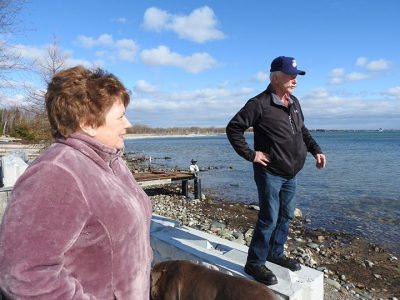
ALPENA - Frank and Marge Rosinski bought their lakefront property on Bear Point Road in 1987, just as the waters began to recede after the last time the levels of Lake Huron peaked.
But now, "in a matter of two years, it just turned around and came right back," Frank Rosinski said recently. "The other bad thing that happened last year is we had all of that rain, so, with the high water table, the rainwater had no place to go. Our lawn was just saturated. It was like walking on a sponge from basically August all the way to November."
The rising levels of the Great Lakes is damaging homes and public property throughout the state. In Northeast Michigan, beaches along Lake Huron are eroding, lakefront homes are in danger of flooding, and some municipal harbors were damaged by ice.
Alpena and Rogers City have spent $10,000 and $4,000, respectively, to repair damaged municipal property.
Repairs or preventative measures to area homes are paid entirely by homeowners. The state environmental agency said it's seen a big spike in permit applications for shoreline protection measures.
Rosinski said he first noticed the water levels rising about a year ago, but then, suddenly, last fall, the water reclaimed about 80 feet of their yard, ripped out many of their shrubs and trees, and encroached upon their house.
When a strong east wind blows, he said, the waves push debris right up to their deck.
"That's why I put the blocks in place," Rosinski said of the seawall he installed after obtaining a permit from the Michigan Department of Environment, Great Lakes, and Energy.
The Rosinskis were only able to get blocks on a portion of the property last fall. The weather prevented them from erecting the seawall on the east end of the property.
Once the seawall is completed, the couple hopes it will prevent further erosion, allow debris to deposit in front of the blocks, and, ultimately, save their house.
SPIKE IN PERMITS
Homeowners who live on the lakeshore and need to take measures to save their homes or infrastructure are required to get a permit from EGLE before changes can be made to the shoreline.
EGLE spokesman Nick Assendelft said the agency's seen "a stark increase" in the number of permit requests during the first quarter of this fiscal year. The permits allow homeowners to make changes such as installing a seawall, breakwater, or riprap.
EGLE issued 730 such permits during the entire 2019 fiscal year, but has issued 510 just in the first quarter of the 2020 fiscal year.
"If that number for the first quarter holds up, we're anticipating the volume is going to be a lot greater than it was last year," he said. "One thing we also did is we deployed our staff so we can process some of these permits."
Earlier this month, the U.S. Army Corps of Engineers said the water levels on each of the Great Lakes remain very high going into spring as Lakes Huron, Michigan, and Superior surpassed record levels established in February 1986.
The Corps is urging those impacted by the high water levels in 2019 to prepare for similar or higher levels this year.
Water levels typically peak in the summer or early fall, it said.
'IT ALL DEPENDS'
Though he got permission for some work, Frank Rosinski said EGLE wouldn't allow him to install the seawall into the water to recover some of the land that was underwater.
The couple doesn't know whether the seawall will be enough to save their home.
"It all depends on how much higher the water comes," Marge Rosinski said.
Frank Rosinski said they don't have flood insurance because they would never be able to collect it. The insurance doesn't consider the natural rise and fall of the Great Lakes a flood.
"There's nothing you can do," he said. "That's why we're trying to do some preventative stuff right now."
Assendeft, of EGLE, said the state encouraging homeowners who are impacted by high water -- or who think they might be affected in six months -- to start talking with the agency today, because there's a big demand for contractors.
"If you wait until the last minute, you might get your permit, but you might not be able to find a contractor," he said. "We're really urging homeowners to make sure they reach out to us soon -- early -- to get the process going and hopefully get that permit approved and in hand so when they're ready to do the work, everything is ready to go."
Crystal Nelson can be reached at 989-358-5687 or cnelson@thealpenanews.com.
For more information
Visit michigan.gov/highwater for more information about shoreline protection permits and the permitting process.