
Lake Huron walleye: The new centerpiece of Michigan’s Great Lakes fishery
Trending
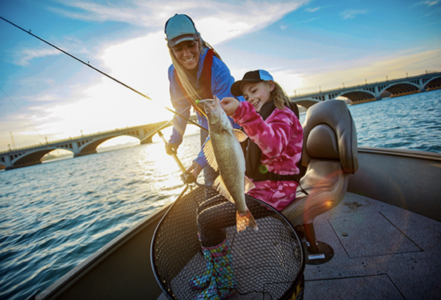
LANSING -- Walleye are now the most harvested species in the Michigan waters of the Great Lakes, followed by yellow perch. These findings are part of the 2025 Statewide Angler Survey Program, also known as "creel survey," estimates recently announced by the Michigan Department of Natural Resources Fisheries Division.
This trend has been developing due to shifts in the food web of Lake Huron, and to a lesser extent, Lake Michigan, with the invasion of dreissenid mussels, which are members of the family of small, freshwater, aquatic, bivalve mollusks.
Alewives disappeared from most of Lake Huron in 2003, after zebra and quagga mussels became established in the lake, where they consume much of the phytoplankton that is the base of the food chain. Since salmon and trout depend on alewives for food, their populations in Lake Huron have greatly contracted.
These changes have been beneficial to some species, however. In the absence of alewives, which prey on the eggs and fry of other species, some native fish species have seen substantial improvements in reproduction in Lake Huron, including lake trout and walleye.
With alewife predation on walleye fry no longer a constraint, natural reproduction of walleye has soared in Saginaw Bay. This, coupled with the importance of walleye in the Michigan waters of Lake Erie and of Green Bay in Lake Michigan, means that the Great Lakes now offer an even bigger variety of fishing opportunities - and walleye is the centerpiece.
"These new statistics are a reflection of the popularity of walleye in Michigan," said Doug Schultz, Lake Huron Basin coordinator for the DNR. "The loss of invasive alewives in Lake Huron ultimately paved the way for recovery of some key species which, per the recent creel survey report, our anglers have been taking full advantage of. These popular fisheries have immense value to the surrounding communities."
One of these key species is lake trout, which are also approaching their recovery targets in Lake Huron. Lake trout, once devastated by sea lamprey predation and alewife effects, are now a mainstay feature of the open-water fishery on Lake Huron.
The survey results indicate Lake Huron now accounts for more than half of all the fishing effort in the Michigan waters of the Great Lakes. This is largely driven by the recovery of the walleye population in Saginaw Bay, which is now estimated to number more than 14 million fish aged 2 years old and older.
"When weather conditions allow, such as in 2025, the popular ice fishery that takes place each year on Saginaw Bay can provide a noticeable increase in fishing effort and harvest, contributing up to half the year-round effort during good ice years," said Dr. Jeff Jolley, Southern Lake Huron unit manager for the DNR.
The bay also offers recreational opportunities for other popular species, including smallmouth bass, yellow perch, northern pike and others.
"Within Lake Huron, Saginaw Bay now accounts for nearly 80% of the fishing effort - 42% of all of Michigan's Great Lakes recreational fishery," Jolley said. "The U.S. Fish and Wildlife service estimates an average expenditure of $155 per Great Lakes fishing trip. If we apply that estimate to fishing trips on Saginaw Bay, that means the fishery on the bay generated over $60 million in economic activity in 2025."
Overall, recreational fishing in Michigan is estimated to generate nearly $4 billion in economic activity.
The annual Statewide Angler Survey Program generates estimates of harvest and fishing effort, focused primarily on the Great Lakes. DNR staffers known as creel clerks interview anglers at the end of fishing trips to find out what they caught.
"It's an expensive program," Schultz said. "But it gives us essential information to manage the fishery."
The DNR manages over 38,000 square miles of Great Lakes waters, in addition to nearly 11,000 inland lakes and more than 52,000 miles of rivers and streams. Without the valuable data provided by the Statewide Angler Survey Program, it would be impossible to make informed management decisions for these extensive fisheries.
Guiding DNR decision-making on Saginaw Bay is the new walleye and yellow perch Recreational Management Plan for Saginaw Bay, developed in consultation with stakeholders and finalized in 2024. This plan, focused on the two most harvested species in Michigan's Great Lakes waters, has informed management actions, such as spawning reef restoration beneficial to walleye and lake whitefish.