MDHHS and MDARD urge residents to avoid mosquito and tick bites during flood cleanup
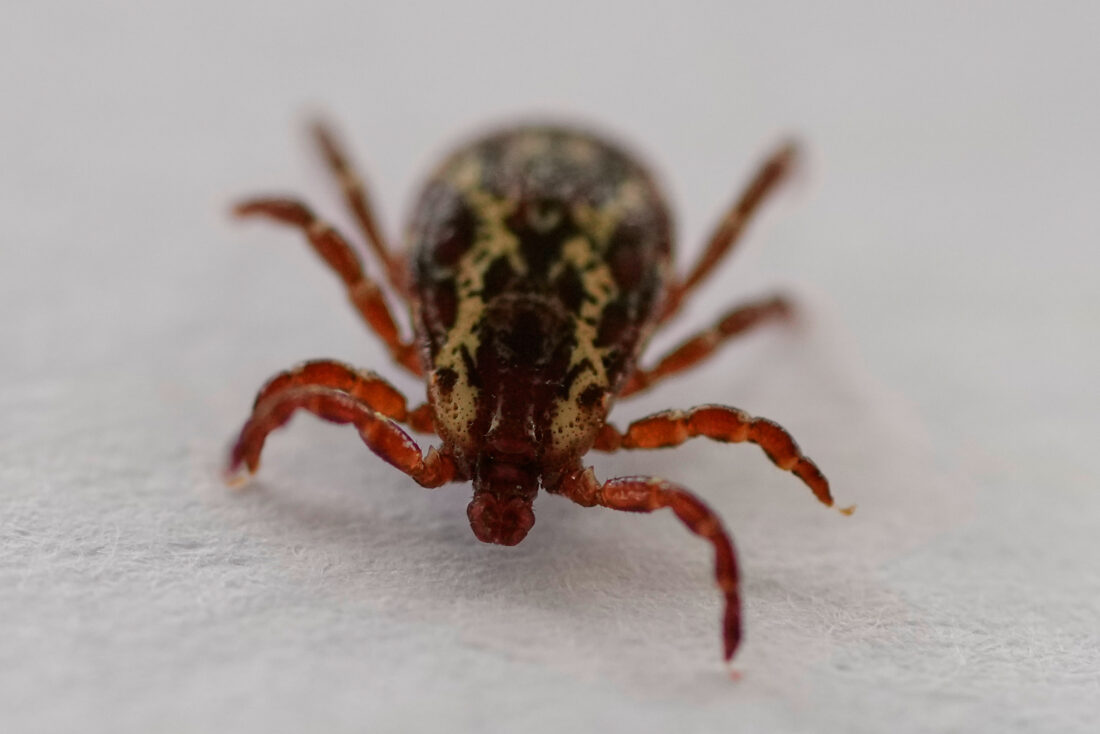
An American Dog Tick is seen in Chincoteague, Va., Wednesday, April 29, 2026. (AP Photo/Carolyn Kaster)
MICHIGAN — As communities across the state begin cleaning up after recent flooding events, the Michigan Department of Health and Human Services (MDHHS) and Michigan Department of Agriculture and Rural Development (MDARD) urge residents, in a press release on May 4, to take precautions against mosquitoes and ticks to protect themselves and their animals.
“Preventing tick and mosquito bites is the best way to avoid diseases including Lyme disease, West Nile Virus and Eastern Equine Encephalitis,” Dr. Natasha Bagdasarian, chief medical executive, said in the release. “Use insect repellent and wear long-sleeved shirts and long pants when outdoors to help prevent bites. If you find a tick attached to your body, promptly remove it, monitor your health and consult with a medical provider if you become ill.”
According to MDHHS, mosquito-borne viruses are transmitted through the bite of a mosquito that has picked up the virus by feeding on an infected animal. Most people who contract a virus have no clinical symptoms of illness, but some may become ill two to 14 days after the bite of an infected mosquito. Symptoms typically include a high fever, confusion, muscle weakness, and severe headache. More serious complications include neurological illnesses, such as meningitis and encephalitis.
Signs and symptoms of tick-borne disease typically begin one to two weeks after a tick bite, often after being in wooded or brushy areas where ticks commonly live, according to the release. Early symptoms can be nonspecific and include fever or chills, rash, headache, fatigue, and muscle aches. Early treatment with appropriate antibiotics can decrease the risk of serious complications.
“The standing water created after flooding and excess rain makes for ideal breeding sites for mosquitoes and increases the likelihood that ticks will move into new areas. Both insects can carry diseases that affect humans and animals,” Dr. Nora Wineland, state veterinarian, said in the release. “Livestock and pet owners should check their properties for pooled water and take action to empty those pools, use veterinarian-recommended preventives like insect repellants and monitor animals for any signs of illness. Taking a few simple steps now can go a long way in keeping Michigan’s animals healthy and protected.”
MDHHS states the best way to prevent mosquito- and tick-borne illnesses is to reduce the number of mosquitos and ticks around your home and to take personal precautions to avoid bites. Precautions include the following:
ELIMINATE MOSQUITO AND TICK HABITATS
– Remove standing water and fill in areas where water pools to reduce areas that support mosquito breeding.
– Trim back tall grasses and brush around homes, barns/sheds, and along lawn and pasture edges.
– Create a three-foot barrier of wood chips or gravel between property and wooded areas to limit tick movement.
– Keep lawns and pastures mowed and regularly remove leaf litter.
– Stack firewood neatly in a dry area to deter rodents, which are common tick hosts.
USE INSECT REPELLANT
– Apply an Environmental Protection Agency (EPA)-registered repellent on exposed skin.
– Always follow label directions and wear personal protective equipment or clothing when specified by the label.
– Store all pesticides in original, labeled containers out of reach of children and pets.
– Wash your hands and clothes thoroughly after use.
– Bathe or shower as soon as possible after spending time outdoors to wash off and more easily find ticks.
– Wash clothing in hot water and dry on high heat to kill ticks in clothing.
Always check for ticks on yourself and your animals after being outdoors, including in your own yard, according to the release. If a tick is found, safely remove it as quickly as possible. Animal owners should contact their veterinarian about tick preventatives and other treatments to keep their animals safe and healthy.
Local News

Commissioners look ahead to fairgrounds’ future
Heat expected to roll in next week

Alcona County Library events
Prentiss Street closure
ALPENA - On Monday, Prentiss Street, between Harbor Drive and the pier will be closed to all traffic. Prentiss ...

Brush up on Great Lakes beach safety