How salmon helped save our eagles
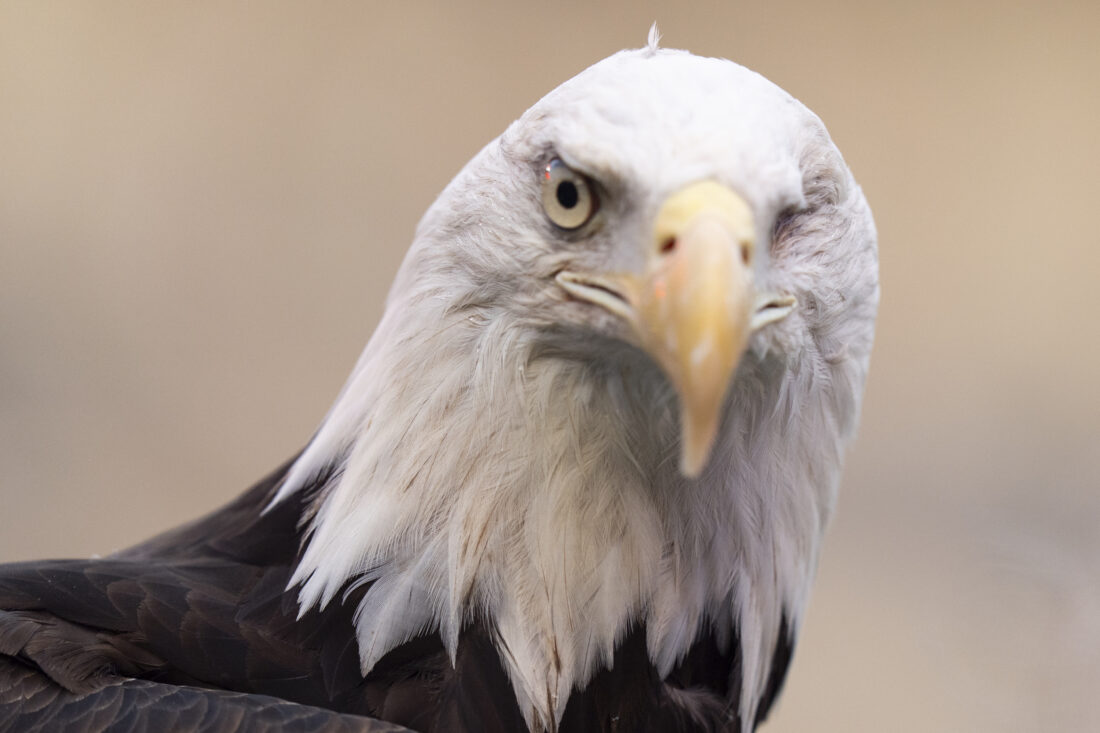
AP file photo of a bald eagle.
You might know how ospreys, eagles, and other fish-eating birds love to eat small salmon, among other fish. There is a lesser-known back story to this: how the introduction of salmon to the Great Lakes contributed to the recovery of ospreys, eagles, cormorants, and gulls. It is also a narration about what a huge difference it makes when citizens like you and me speak up for our natural resources.
There was a time when the Great Lakes had few friends. The sea lamprey, that aquatic vampire of the Atlantic Ocean, had invaded via the St. Lawrence Seaway (one of the unintended consequences of navigation projects) and took down the native lake trout population. Lake trout were the apex predator of the Great Lakes. Without them, another invader from the Atlantic, the alewife, exploded. So did the rainbow smelt. Their vast numbers were only thinned by periodic and massive die-offs that left beaches heaped with dead, decaying fish. Sportfishing was almost nonexistent and commercial fishing was on the ropes. The beaches were unsuitable for swimming unless groomed daily to remove the stinking piles of alewives. Few spoke up for the lakes; most thought them to be lost; Lake Erie was declared “dead”. This is why no one at the time gave a hoot about the Great Lakes.
Then, in 1966, Howard Tanner and Wayne Tody, of the Michigan DNR’s Fishery Division, (then the Conservation Department) did something no one could do today: they decided to introduce Coho and Chinook salmon from the Pacific Ocean to our Great Lakes. Perhaps the public thought the Great Lakes were beyond further damage. Almost no one spoke up to oppose this radical idea. But if the goal was to make use of all those alewives, which it was, the salmon plan worked. These seemingly lost lakes became, overnight, world-class recreational fisheries, worth nearly $4 billion annually to the economy of the Great Lakes area.
Suddenly, the Great Lakes had friends and advocates – thousands of deeply invested recreational salmon anglers.
The lakes would very soon need those friends.
Here is where birds enter the picture. DDT had been implicated in bird mortality and nest failures of fish-eating birds. DDT was the pesticide of choice for control of insects in orchards and gardens and was used widely for controlling Dutch Elm disease and mosquitoes in urban areas. MSU professor George Wallace showed that mass die-off’s of robins on the Michigan State campus were caused by DDT. Rachel Carson popularized his findings in her groundbreaking book “Silent Spring”. DDT today would be labeled a “forever chemical”. Like today’s PFAS-like compounds, DDT is very persistent in the environment.
Moreover, DDT is toxic to a wide array of organisms, not just insects. Birds that ate DDT-treated insects ended up with lethal doses or their eggshells became so thin they could not reproduce. DDT washed into the Great Lakes and became “biomagnified” in predator fish and fish-eating birds. Imagine a “food pyramid”, with prey at the bottom and apex, top predators at the peak. DDT-contaminated small prey are eaten by larger critters and as we move up the food pyramid, DDT concentrations rise. Bioaccumulation had concentrated DDT at the top of the pyramid. Ospreys and eagles were at the top of that pyramid and had almost disappeared. Despite such evidence of environmental damage and widespread public concern, DDT was still in use in 1969.
The game changer was when DDT was found in the flesh and eggs of the introduced salmon. The Great Lakes are public waters, held in trust by the State for its citizens. And the citizens spoke up when the Michigan Department of Agriculture proposed a solution for the DDT problem in salmon: the State must stop stocking trout and salmon in the Great Lakes.
DDT’s appearance in salmon fillets represented the tipping point because now the Great Lakes had advocates, lots of them. Thousands of Great Lakes anglers had invested in the fishery, having purchased large, seaworthy boats, downriggers and other tackle, and were looking at the lakes with great anticipation for their phenomenal summer fishery. Salmon ranging up to 30 pounds and more. Lots of them!
So, the proposal by the State Department of Agriculture that salmon stocking should cease was met with overwhelming condemnation as anglers joined those already protesting the effects of DDT on birds. It was the advocacy of a new coalition now led by anglers that tipped the scales. The Department of Agriculture’s proposal to cease salmon stocking was on April 10. It took only a week for the State Agriculture Commission to reverse course.
Governor Milliken, alarmed by the finding of “danger levels” of DDT in salmon fillets, convened a meeting of Great Lakes governors, urging them to follow Michigan’s lead and ban DDT.
Our natural resources are the property of we, the people. Together, we share a responsibility to stay informed about issues and challenges that might threaten our resources and to speak up when necessary. This is called public resource stewardship. There are few better examples of how public resource stewardship can work than the DDT-in-salmon story.
As most readers know, after the ban, DDT contamination of our fish and wildlife gradually declined. Today levels of DDT are low enough that they do not present a threat to humans. Eagles, ospreys, and other fish-eating birds are reproducing again. So next time you see an eagle, you can thank the salmon and the anglers that fought DDT and defended the Great Lakes in their time of need.
Thank you to Dave Dempsey of FLOW (For Love of Water, Traverse City) for assistance in research for this column.
Be sure to visit the new Besser Museum Fishery Heritage Exhibit this June, where you can learn more about our shared Great Lakes fishery heritage.
Local News
St Matthew to host garage sales
ALPENA — St Matthew Lutheran Church is hosting its annual garage sale on July 31 from 9 a.m. until 3 p.m., Aug. ...
Aid by the Dozen meets
ALPENA — The July meeting of the Aid by the Dozen was held on July 15 at the 19th hole. Lori Zeller was the ...

Northern Strike returns to Michigan
DHD4 reports 12 confirmed cases of cyclosporiasis, one death

Alcona County Sheriff’s Office seeks new law enforcement millage