The collapse and recovery of walleye in Lake Huron, a Saginaw Bay story
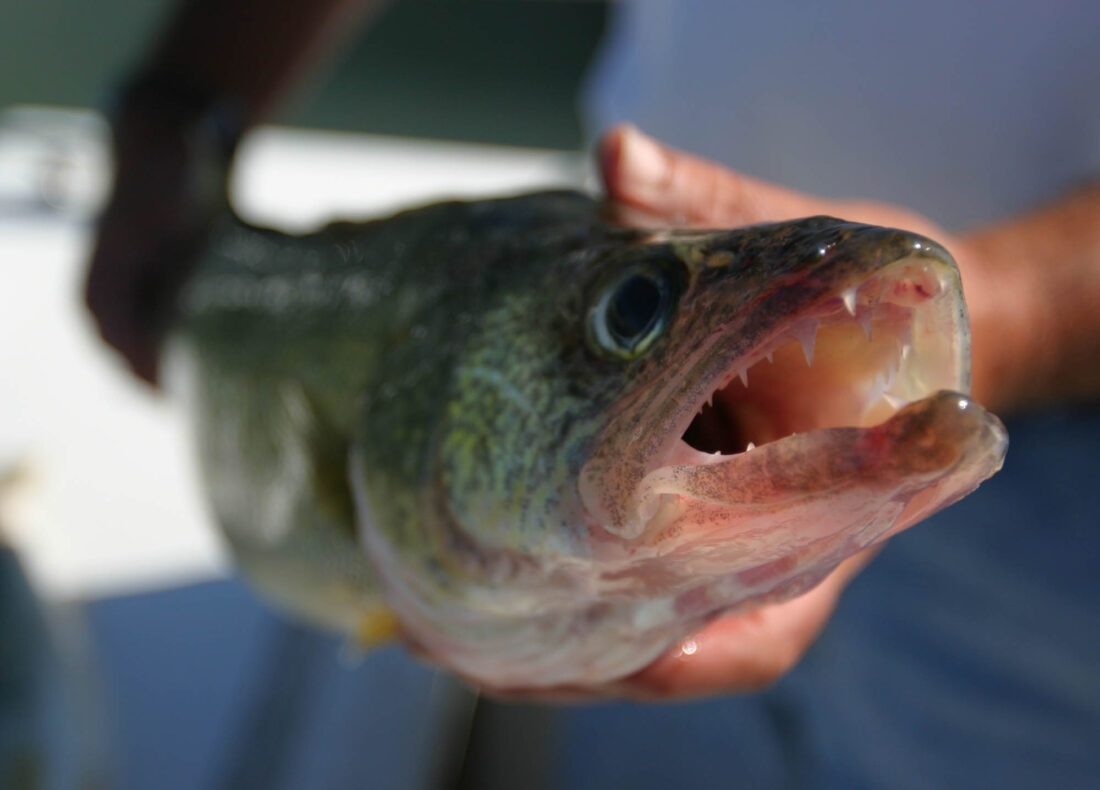
AP file photo Charter Captain Jeff Kuelling holds a walleye taken during a fishing trip
Last column, we looked into the history of lake trout in Lake Huron: how overfishing, sea lampreys, and overabundant alewives caused them to almost disappear and what led to their eventual recovery. Walleye similarly struggled in Lake Huron, so let’s talk about walleye this week.
The main causes of walleye decline were overfishing, water pollution, habitat loss, and billions of alewives. Saginaw Bay had always been the center of Lake Huron’s walleye population, but by the 1950s walleye were almost gone.
The crash
Commercial fishing, mostly with gill nets, peaked during the Second World War; harvest from Saginaw Bay reached a record 2 million pounds in 1942. But at about that time the Saginaw River became inhospitable to walleye and other game fish as untreated industrial and municipal wastes, including massive amounts of sawdust and other sawmill wastes, poured into the river. During the late 1800s, the Saginaw River watershed had been flipped from massive stands of white pine to burned-over pine stumps and agriculture. The resulting erosion filled the river and bay with sediment, covering spawning sites. Spawning success was near zero. By 1951, walleye were almost gone. Walleye are the keystone predator of Saginaw Bay, meaning a healthy walleye population grooms its waters and keeps other fish from becoming too abundant. The absence of walleye opened the door for an alewife explosion in Saginaw Bay.
The remedy
The Federal Clean Water Act of 1976 and other measures to improve water quality gradually restored Saginaw River and Saginaw Bay water quality to the point walleye could again survive there. At about the same time, the Michigan Department of Natural Resources Fishery Division (DNR) converted most gill-net-based commercial fisheries to trap nets and protected walleye from commercial harvest.
Now restocking could begin. The DNR with its local partners began restocking Saginaw Bay with fingerling walleye. The stocked walleye survived remarkably well, and a recreational fishery emerged. But until 2004 reproduction was minimal. There were still too many alewives.
As we saw in last week’s column, alewives are an invasive prey fish that seldom get larger than about 8 inches. I also showed how diets rich in alewives cause thiamine deficiency and reproductive failure in lake trout and salmon (see “Thiamin the Alewives Revenge” in last week’s edition). The mechanism with walleye is much simpler. In Lake Huron, alewives simply ate almost all the recently hatched walleye fry. Alewives spawn in warm, productive bays such as Saginaw Bay, which also serve as nursery areas for young walleye, which after hatching measure only a quarter inch long. With billions of adult alewives converging on Lake Huron’s most
important walleye nursery area, these young walleyes, which were bite sized for adult alewives, had little chance for survival. Year after year, virtually all walleye that hatched in Saginaw Bay and its watershed were scarfed up by alewives.
Then came an unexpected ecosystem change, wrought by yet another invasive species. During the 1990s, Lake Huron was invaded by zebra and quagga mussels, which dramatically altered the food web and diverted food resources away from alewives. Simultaneously, Chinook salmon reproduction sharply increased, outpacing the alewives’ capacity to support them. In 2003, the alewife population collapsed, leading to restored reproduction for walleye and lake trout. Walleye fry now could survive. (But the salmon, lacking their favorite prey, all but disappeared.)
With alewives almost gone, walleye reproduction quickly rebounded. In 2003, the largest year class of young walleye in recent history was recorded. Stocking was no longer necessary, and Saginaw Bay walleye have been on their own – no longer dependent on stocking – since 2006.
The walleye recovery in Saginaw Bay was rapid, sensational, and complete. The Bay’s recreational walleye fishery is now second only to Lake Erie and is regarded among the best in the world. The stunning recovery of Saginaw Bay walleye is regarded as one of the great recovery success stories of the Great Lakes and illustrates that when freed from impediments to reproduction, Great Lakes ecosystems have enormous recuperative powers. And that recovery continues to this day. Last year set a new record for walleye recreational harvest.
The Saginaw Bay walleye are now so numerous they migrate to the shallower waters of the main basin of Lake Huron, including Thunder Bay – most walleye caught in the Alpena area originated in Saginaw Bay. As the population continues to grow, this migration to all parts of Lake Huron is fueling better fishing everywhere along our Huron shores, a subject for a future column.
Be sure to visit the new Besser Museum Fishery Heritage Exhibit this June, where you can learn more about our shared Great Lakes fishery heritage.
Local News

Wound treatment centers recognized for exceptional care

Alcona County Library upcoming events
Community led courts pavilion project completed
Alpena County Commissioners meet Tuesday
ALPENA - The Alpena County Board of Commissioners will meet on Tuesday at 1 p.m. in the Howard Male Conference Room ...
League of Women Voters encourages voters to Use VOTE411.org before Aug. 4 primary
ALPENA - As the August 4 Primary Election approaches, the League of Women Voters of Northeast Michigan (LWVNEMI) ...