Cavitt criticizes MDHHS for plans to divert rural healthcare funds to urban counties
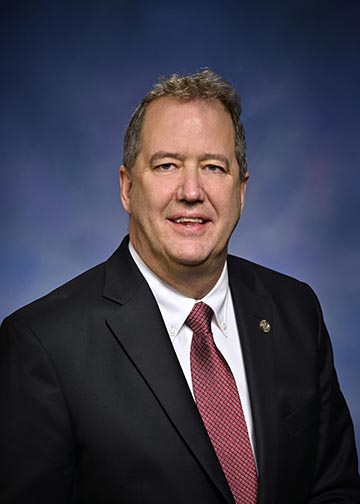
Cam Cavitt
MICHIGAN — State Rep. Cam Cavitt, R-Cheboygan, criticized the Michigan Department of Health and Human Services (MDHHS) on Wednesday for allowing Michigan’s largest counties to qualify for federal rural healthcare grants intended to support struggling rural hospitals and providers.
According to a press release from Cavitt’s office, under MDHHS’s eligibility criteria, some of Michigan’s largest counties – like Oakland and Wayne – are labeled as “partially rural,” making them eligible to receive rural healthcare grants.
“When Lansing talks about being ‘inclusive,’ too often it means Northern communities get left behind,” Cavitt said in the release. “For DHHS to suggest that Wayne County deserves rural funding is an insult to everyone who lives North of Clare. Southeast Michigan has never seen a dollar it didn’t want to siphon off. Wayne County has a population of more than a million people, multiple universities, nationally recognized hospitals, and an army of grant writers. Alcona County has about 10,000 residents and one high school. We simply can’t compete on those terms.”
According to the release, the Rural Health Transformation (RHT) program was created under the One Big Beautiful Bill Act of 2025 to improve healthcare access and outcomes in rural communities. States were authorized to apply for a share of $10 billion in federal funding distributed annually.
The release stated that despite ranking among the top ten states for rural population, Michigan received just $173.1 million, placing it in the bottom ten states nationwide. Neighboring states such as Iowa ($209 million) and Ohio ($202 million) secured significantly more funding. Cavitt and other House Republicans say Michigan’s low allocation reflects a poorly prepared application submitted by MDHHS.
House Republicans argue that MDHHS not only failed to secure adequate federal funding, but then expanded eligibility definitions in a way that allows Michigan’s largest cities and counties to capture a disproportionate share of rural healthcare dollars, according to the release. MDHHS serves as a passthrough agency for RHT grants and under the department’s criteria, any county deemed “rural” or “partially rural” qualifies for funding, allowing any entity within that county to apply so long as the proposal claims to support rural healthcare.
As a result, all of Wayne County – home to roughly 1.8 million residents – qualifies for RHT funding, despite MDHHS identifying only about 100 residents as living in rural areas, according to the release. Grants must be awarded and distributed by December.
Cavitt’s office also stated in the release that House Republicans criticized MDHHS for withholding nearly $19 million from Michigan’s RHT allocation for administrative costs, including $2 million for salaries, benefits, and travel for 12 new positions – averaging nearly $170,000 per employee.
Michigan News
Cavitt criticizes MDHHS for plans to divert rural healthcare funds to urban counties
Bergman helps ACC acquire $3.5 million for innovation center

AAA warns drivers to prep vehicles and plan ahead for safety
U.S. Senate, Peters, pass bipartisan funding bill to help protect Great Lakes

100 vehicles pile up in Michigan crash as snowstorm moves across the country