
The economic pillars of Northeast Michigan
Trending
ALPENA -- To have a healthy local economy, it must be diverse, flexible, and adapt to changes in public tastes and trends.
For most rural communities, the pillars of the economy are manufacturing, agriculture, retail and service, and tourism. Currently, Northeast Michigan has a blend of all of the above, which helps keep the Alpena area's local economy stable.
Most of the economic pillars are strong, but there are also some that have room to grow or have fallen off over the years.
Alpena, which has a long manufacturing history, has seen other sectors of the economy tick upward. Tourism has been bolstered over the last decade, as places like the Great Lakes Maritime Heritage Center, the glass-bottom-boat shipwreck tours, art and culture, and a robust downtown have encouraged visitors to the area.
Alpena was added as a port-of-call for Viking cruise ships, and with a list of attractive excursions, Alpena has become an attractive destination than maybe it was a decade or two ago.
Besides attractions and events that bring people to the area, improved shopping options, an inviting downtown with a diversified business portfolio, and a still growing business corridor on M-32 accommodates people who visit for a day, a long weekend, or longer.
TOURISM
During the warm-weather months, it is easy to see how far people will travel to come to Alpena. Out-of-state license plates are easily spotted while driving or in local parking. From California, Maine, Arizona, to Canada, the significant number of people visiting from outside Michigan is evident.
Marketing and promotion by the Alpena Convention and Visitors Center, the Alpena Downtown Development Authority, and local businesses spread the word of what Alpena has to offer to people across the United States and the globe.
While in Alpena, people can visit shipwrecks, hire a charter captain for a fishing trip, explore and learn at the Jesse Besser Museum for Northeast Michigan, or enjoy a show, concert, or festival on most weekends.
Downtown, people can pick up a map and tour all of the colorful murals, visit Art in the Loft, or see the latest film at the Sanctuary Cinema. Some people choose to relax and unwind at a local park or explore the area's natural resources by hiking, or kayaking.
The summer and fall months are still peak tourism seasons in Alpena, but a conscious effort has been made to add events and entertainment to encourage people to come to Alpena during the winter.
The annual Alpena Ice Festival has become a popular event to enjoy in Alpena as well as the New Year's Eve party downtown. Both events have helped bolster local businesses in the winter months when the holiday rush ends and they wait for Memorial Day weekend when foot traffic picks back up.
Tourism is going to remain a critical part of the local economy moving forward and local small businesses are the ones that tend to benefit most from it.
RETAIL AND SERVICE
Although Alpena lacks many of the corporate big-box chains and restaurants, it still has a solid catalog of national brands and it is still growing. From Walmart to Home Depot, Meijer, Applebees, Starbucks, and Marshalls, there are options for people who like the familiarity of the brand-name stores and restaurants.
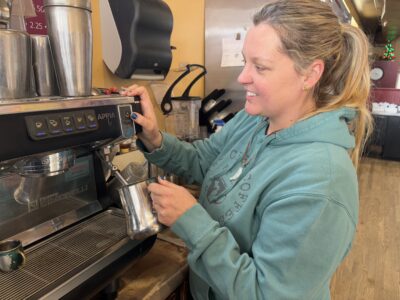
However, it is Alpena's locally-owned businesses that shine and are the driver of the local economy. From a business like Bob's Bullpen downtown to a sporting goods store Clem's Bait and Tackle, there are shops that will fulfill the needs of most.
The addition of the Water Street Commons, which consists of a series of small sheds that showcase businesses downtown, also have helped expand the local-shopping sector and exposed more small businesses to people who may not have heard of them before.
Beyond opportunities for shopping, there are many food options that can satisfy most cravings.
From higher-end restaurant options like the Red Brick Tap & Barrel and the Courtyard Restaurant, to more economically friendly places to eat -- The Black Sheep, JJ's Steak and Pizza House -- the local food scene continues to thrive.
As is the case in many other communities, breweries and wineries have helped support the retail and service industry in Alpena. People often enjoy a cocktail before or after a local event or bounce between them to sample the locally made alcoholic drinks.
People have a robust catalogue of wellness services to choose from such as messages, tanning, and hair salons. There are also opportunities to hire a catering service or have a guitar repaired, and real estate companies, law offices, and banks are critical services that help the local economy.
MANUFACTURING
Since its inception, Alpena has depended on manufacturing for employment and to support the local economy. Manufacturing businesses large and small are still critical to the overall health of the economy, but maybe not as they were a half century ago.
The former Lafarge Plant, which is now named Amrize, continues to be one of the area's largest employers and the Besser Company world headquarters continues to call Alpena home and produce products.
Alpena has experienced growth in smaller manufacturing companies, such as Omni Metalcraft and its subsidies which continue to bolster its presence in Alpena. I2P provides production facilities at the former Kmart store to small start-up companies and the former Alpena Mall is also used as office and storage space. The increasing number of small manufacturing has helped offset the closure of the Fletcher Paper plant and Decorative Panels International, which were two of the largest employers for many years.
The Alpena Community College is also key to local manufacturing, as its curriculum includes programs that can help bolster the local workforce so manufacturing businesses can staff their operations appropriately.
BCubed is another local manufacturer in Alpena that ships its products across the country. The plant constructs small and portable buildings that are fully outfitted to house a fast-food restaurant or coffee shop, similar to the Biggby location in the Meijer parking lot and the Quiznos location near the hospital.
AGRICULTURE
In Northeast Michigan, farming and agriculture of all types are important to the local and global economies.
From potatoes, strawberries, and Christmas trees, to raising cattle, hogs, or even fish, farmers supply businesses and people products they need. They also spend a portion of their income locally for operations which in turn support other local businesses.
In the following stories, each of these economic pillars will be explored in more depth. Each of these business sectors are important in their own way, but all are equally important to have a thriving economy. All it takes is for one of the economic pillars to dip or crash and the impacts are felt throughout all of the others.
Local businesses also play a vital role in making sure local sports and events are supported. Many pay for sponsorships for local little league teams, help promote and host concerts, and make sure annual events like the Michigan Brown Trout Festival has the funds it needs to round out their entertainment lineups and prizes for anglers.
For now at least, Northeast Michigan is in a strong position moving forward, as new businesses open, tourism flourishes, more products are produced locally, and farmers keep food on everyone's table and spend money locally.