
Trending
Northeast Michigan has a housing problem, and it is time we treated it like one. Not as a statistic to lament over coffee, and not as somebody else's job, but as a challenge to be met by all of us who call this corner of the state home.
The problem is not new, and it is not unsolvable. But it will not solve itself. So, consider this column a challenge: to understand how we got here, to see what is already working, and to decide what part each of us will play.
How we got here
For most of the last century, owning a home was the surest path ordinary American families had to stability and wealth. In 1940, fewer than half of households owned the home they lived in. Then the country made deliberate choices: the long-term, fixed-rate mortgage, federal mortgage insurance and the GI Bill. Builders answered with neighborhoods of small, sturdy, affordable houses, and by 1960 roughly six in ten households owned their home.
A house was shelter, but it was also a savings account you lived inside. That equity paid for college, started small businesses and cushioned retirement. Homeowners put down roots. They coached Little League, served on the township board and filled the pews on Sunday morning. The national homeownership rate kept climbing until it peaked at about 69% in late 2004.
The lesson of those years is worth remembering: Homeownership on that scale did not happen by accident. People decided it mattered, and they built it.
The challenge before us
Then came the foreclosure crisis. By 2016, the national homeownership rate had fallen below 63%, the lowest in roughly half a century. It has recovered some since; the U.S. Census Bureau reported 65.5% for this past summer. That is still below the average of the last 25 years, and the averages hide who is being left behind.
Fewer than four in 10 households headed by someone under 35 own their home. According to the National Association of Realtors' 2026 Profile of Home Buyers and Sellers, first-time buyers made up only 22% of purchases, roughly half their historical share. The typical first-time buyer is now 40 years old; in the 1980s, that buyer was in their late 20s. The Realtors estimate that a 10-year delay can cost a family roughly $150,000 in lost equity.
Meanwhile, a record one in 10 first-time buyers paid all cash, with a median age of 54, and a record share leaned on an inheritance. More and more, the path to owning a home runs through having parents who already own one. That should trouble anyone who believes opportunity ought to be earned, not inherited.
Here at home, a housing needs assessment commissioned by Target Alpena found that Northeast Michigan is about 11,000 housing units short, with a vacancy rate below 1%. That shortage has faces. It is the young nurse our hospital needs, the teacher our schools are trying to recruit, the tradesperson who wants to raise a family in the town where they grew up. When they cannot find a place to live, some leave. Our communities lose them, and we all lose with them.
That is the challenge. The question is whether we will meet it.
Not only answers, but solutions
Habitat for Humanity Northeast Michigan accepts that challenge every day. There is no shortage of people who can explain the housing crisis, and the answers are well-known: we need more homes, homes working families can afford, and a way for those families to build wealth instead of watching it slip away. Habitat NEMI is in business to provide not only those answers, but the solutions, with hammers, lumber and a great many willing hands.
Since 1989, we have built more than 200 homes across Alcona, Alpena, Montmorency, Oscoda and Presque Isle counties. Our 6,630 square miles make up one of the largest service areas of any Habitat affiliate in the country. We know rural Northeast Michigan because we live here, worship here and build here.
Our model is a hand up, not a handout. Partner families are selected based on their housing need, their ability to repay an affordable mortgage and their willingness to partner with us. They complete HUD-certified financial counseling, put in hundreds of hours of "sweat equity" building their own home, and then buy that home with a mortgage they can afford. Our homes are not built for profit and are never placed on the open market. They are built for a family, so that family can build a future.
We build both ways: modular homes and traditional site stick-built homes, choosing whichever best fits the lot, the budget and the family. Our Bedford Street homes in Alpena, developed with the Alpena County Land Bank and the City of Alpena, showed that modular construction can deliver quality homes faster and more affordably, while stick-built homes give our volunteers and partner families the chance to raise the walls together. Now we are moving forward with Orchard Pines in Hillman, a 14-home subdivision, and Klann-Fleming in Rogers City, an 18-acre development. Our goal is to build eight to 10 homes every year.
Keeping families in the homes they already have matters just as much. Through our Critical Home Repair program, we serve more than 100 families each year, many of them seniors and veterans. A new roof, a wheelchair ramp or a working furnace can be the difference between staying home safely and being forced out. And our ReStore on US-23 South in Alpena keeps good building materials out of the landfill while helping fund the mission.
But no single organization can close an 11,000-home gap alone.
A challenge to those who shape our housing
So here is my challenge, and it goes first to those with the most power to change the picture.
To our political leaders, at every level: Housing is not a partisan issue. It is the foundation under every other priority you care about, from jobs and schools to healthy families and safe neighborhoods. Measure housing policy not only by how many units get built, but by who gets to live in them. Look hard at the land, the rules and the funding that stand between empty ground and homes working families can afford, and keep lasting affordability at the center of every decision.
To investors: A home is the most important investment most families will ever make. When houses become rentals, getaways or speculative holdings by default, that investment moves out
of reach for the very people who need it most. There is a return that never shows up on a quarterly statement: a family that stays, a child who finishes school in one place, a town that keeps its young people. Put capital to work where it earns that kind of return, through community lenders, housing funds and partnerships like ours.
To developers: We need you. Northeast Michigan cannot close an 11,000-home gap without professional builders. But there is more to building a home than making a profit. A home is not just square footage priced at whatever the market will bear. It is a place where someone will raise a family and grow old. Build the modest, sturdy starter homes this region is missing. Partner with nonprofits on a share of your lots. Measure success by who can afford to move in.
Profit is not wrong. But when it is the only measure, the American homeowner falls. When it is balanced with purpose, the American homeowner rises.
And to every reader: Give an hour, a Saturday or a gift of any size. Shop at or donate to the ReStore. And if you or someone you know needs a safe, affordable place to live, reach out and learn whether Habitat homeownership or home repair might be the right fit.
Faith that builds
At its heart, Habitat for Humanity is a Christian ministry that seeks to put God's love into action. We believe every person deserves a decent place to live, and that a home is far more than walls and a roof. It is where a family gathers around the table, where prayers are said at bedtime, and where children grow into the neighbors and leaders our communities will need.
Whatever good Habitat NEMI has done belongs to our volunteers, donors, churches, foundations, lenders, municipal partners and the families who work alongside us. The rise of the American homeowner was built by people who decided it mattered. Its return will be built the same way. The challenge is in front of us. Let's meet it together. Call 989-354-5555 or visit www.habitatnemi.org.
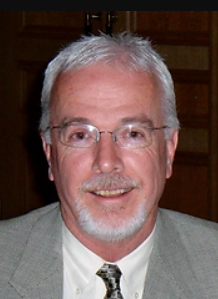
Ted Fines is executive director of Habitat for Humanity Northeast Michigan, serving Alcona, Alpena, Montmorency, Oscoda and Presque Isle counties.