
Trending
A few days ago, my wife and I sat and watched Neil Young sing “Old Man,” a song written decades ago by a young man who looks at an older one and recognizes himself. I have heard it many times over the years, but this time it landed differently. I am closer now to the old man in that song than to the young man singing it. As I listened, two words kept coming back to me: first and last. They have stayed with me ever since, because they describe my life better than anything I could have written myself.
In 10 years of leading Habitat for Humanity Northeast Michigan, I have been first, and I have been last. I have stood at a front door beside a family receiving their keys and felt a joy that words do not hold. I have also sat alone in my office at the end of a long day, reading a letter that began, “We regret to inform you,” and wondering how I would carry that news to the people counting on us.
Neither moment surprised me as much as it might have. Long before I took this job in 2016, my own life had already taught me what it means to finish first and what it means to finish last. I want to share a little of that story, not because it is remarkable, but because I suspect it is more common than most of us admit.
Success came to me early. I did well in school, and I believed the future was mine to claim. I carried that momentum into business in the Detroit area, and for a time it seemed that hard work and good judgment were all anyone needed. Each year seemed to confirm it. I was first, and I quietly assumed I would always stay there.
Then I was forced into bankruptcy. There is no gentle way to describe what that does to a person. It strips away not only what you have built, but much of who you thought you were. Anyone who has walked that road knows its weight: the sense of having let down people who believed in you, and the quiet question of whether you will ever be trusted again.
I did not realize it at the time, but I was being tested. In the middle of it, all I could see was loss. Only later did I begin to understand that God was not finished with me, and that what felt like the end was the beginning of a different kind of education, one no classroom or boardroom could have given me.
The successes had taught me how to work hard. Failure taught me how to be humble. It taught me patience, honesty about my own limits, and compassion for anyone who has ever had to start over. Most of all, it taught me a deeper trust that God is at work even when every plan falls apart. Those highs and lows were preparing me to lead Habitat for
Humanity in Northeast Michigan, where both would come often, and sometimes in the same week.
They also prepared me for the families we serve. Many have known hard seasons of their own: a job that disappeared, a debt that grew too heavy, a door that closed. I know something of what it is to be measured by your hardest chapter. And I know what it means when someone looks past it and offers a second chance. That, at its heart, is what Habitat does.
Here is what I have come to believe: success and failure are both tests, and either one can destroy you. Success, held too tightly, breeds pride and the quiet assumption that you did it all yourself. It hardens the heart and makes it hard to hear anyone else. Failure, left to fester, breeds bitterness, shame, and fear. It whispers that you are finished, and it tempts you to stop trying. I have watched both happen to good people, and I have felt the pull of both myself.
But there is another way. You can let success humble you, remembering every person who carried you there. You can let failure teach you, asking honestly what it has to show you, and then getting back up a little wiser and a little kinder. That choice is not made once. It is made again every time the results come in, every time the phone rings with good news or bad.
As Executive Director, I have faced that choice more times than I can count. There have been days when everything came together, when a partner said yes or a volunteer showed up at just the right moment, and all I could do was give thanks. And there have been days when the news was hard: a plan that fell through, a door that closed, a promise I could not keep on time. Each time, I had to decide whether that moment would make me smaller or make me better.
I did not always choose well. But the lessons from my own life gave me a place to stand. I knew from experience that a setback is not the end of the story, and that a win is never mine alone.
Used well, the lasts teach what the firsts never can. Failure made me a better listener, a more honest planner, and a more patient leader. It made me slower to judge and quicker to forgive, including myself. Success, received with gratitude, made me quicker to give credit and slower to take it. Both, I hope, have made me a better person.
Scripture tells us that “the last will be first, and the first will be last.” The Apostle Paul writes that suffering produces perseverance, perseverance produces character, and character produces hope. I have lived both of those passages. I have come to read them less as rankings and more as promises. Success and failure are both seasons, and neither one is the final word. What matters is what we allow them to make of us.
If you are in a season of loss right now, whether a business that failed, a job that ended, or a plan that came apart, I want you to hear this from someone who has been there: it
is not the end of your story. You may not see it yet. I certainly did not. But the hardest chapter can become the one that shapes you most, if you let it.
There will be more firsts and more lasts ahead, for all of us. My prayer is that we will meet both with the same community that has held me up: a board that asks hard questions, a staff that gives its whole heart, volunteers who keep showing up, and neighbors across Northeast Michigan who believe everyone deserves a decent place to live and a second chance.
Neil Young wrote that song as a young man, imagining the life ahead of him. I hear it now from the other side, grateful for every season that brought me here, the highs and the lows alike. First and last, I would not trade any of it.
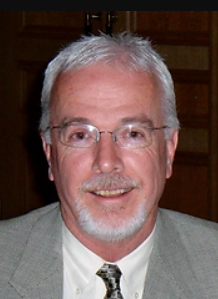
Ted Fines is Executive Director of Habitat for Humanity Northeast Michigan, serving Alcona, Alpena, Montmorency, Oscoda, and Presque Isle Counties.