
Trending
I used to like my job. Now I love it.
When I first became a collections manager five years ago, I was fresh out of college with a bachelor's degree in history and eager for any opportunity to work in a museum. Despite having zero museum experience and only a vague idea of what the job actually entailed, I accepted the position at my hometown museum without hesitation. All I knew was I'd have behind-the-scenes access to a museum, and as someone who grew up as a history-obsessed kid that watched Night at the Museum way too many times, there was no way I was going to pass up an opportunity like this.
It didn't take me very long to realize working in a museum means every day brings something unexpected. You never know what donation, research questions, or conversation will come through the front door.
Recently, a family stopped by the museum and paused in front of a photo in the museum's Besser Company exhibit. They pointed to a man in one of the photos and said, “That’s our relative”. His name was Harry Smith, and I learned he was one of the longest-serving employees of Besser Company. He worked there for more than fifty consecutive years, starting in 1904, the same year the company began. That's an incredible legacy and I’d walked past that photo countless times over the years oblivious to the important story behind it.
Interactions like this is what turned a job I liked into a job I love. Even if it has taken me five years to finally accept it. At first, the introvert in me celebrated the fact that the majority of my workday was spent behind closed doors, with just me and the artifacts. But now I am surprised to admit my favorite moments at work happen when I take a break from hiding in my office or the museum's basement and get some human interaction like with Harry Smith's family.
So, why the change? I think it all goes back to that movie I loved so much as a kid. As much as I wish the objects in the museum came to life at night like in the movie, they don't. Or at least not at the Besser Museum. A sad truth I've had to share with many field trip kids (and even some adult chaperones) every field trip season. But I think they still come to life, just in a different way. They come to life through their stories and Harry Smith's family is the perfect example of what it means to bring items in a museum to life. Before them, that photograph was just an unidentified face in the collection. I didn't know it was Harry Smith or anything about his connection to Besser Company. His family gave his face a name and helped bring a story that might otherwise have been forgotten back to life.
These encounters aren't just fun but also make me better at my job. They remind me that the work we do behind the scenes isn't just about keeping track of objects or making sure photographs are properly cataloged. It's about preserving information that might help someone connect with their own history someday. The more stories and information we can uncover and make available, the more useful our collections become to the people who have a personal connection to it.
That is one of the reasons I've become so interested in making more of our collections accessible to the public. For example, we recently added our entire collection of Besser Company newsletters. These newsletters contain names, photographs, employee information, and stories from the people who worked there, Harry Smith included. To someone casually browsing the collection, they might just look like old newsletters. But to a former Besser employee's family, they could contain a name they recognize, a photograph of a relative, or a story that gives them another piece of their family's history. I hope that by putting more of these materials online, more families will have the same experience Harry Smith's family had when they walked into the museum. Maybe someone will recognize a face in a photograph. Those are the moments that make all the behind-the-scenes work feel worthwhile.
When I first started this job, I thought the behind-the-scenes part was the best part because it meant I could quietly work with history without having to interact with too many people. Five years later, I've realized that the two parts really aren't separate. The research, cataloging, preservation, and digitization we do behind the scenes are what allow people to make those connections when they walk through the museum doors.
The objects may belong to the museum, but the stories belong to the people. My job, in part, is to make sure those stories have a place to be found. And now, I look forward to seeing what story might walk through the museum doors next. Maybe it's yours.
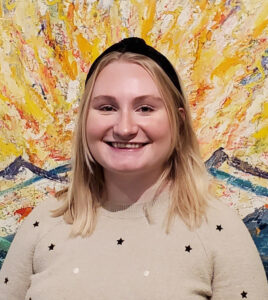
Sarah Honeycutt is the collections manager at the Besser Museum for Northeast Michigan, where she cares for a collection of more than 40,000 artifacts. She enjoys sharing the stories behind the collection and offering readers a glimpse into the work of preserving Northeast Michigan's history.