
Religious freedom means freedom for Muslim and Jewish Americans, too
Trending
Faith, Citizenship and Equal Dignity
As a second-generation American, a Christian and a member of Lebanon Lutheran Church who also attends St. James Catholic Church with my husband in the White Lake area of Muskegon County Michigan, I reject attacks on anyone because of faith. My 55 years in public service taught me what religious bigotry looks like. The attacks against U.S. Senator Carl Levin during his first term in office were attacks based on his Judaism religion; I witnessed them first-hand for the six years I was on his staff. He was a Michigan-born public servant whose Jewish faith made him no less a Michigander or American. Today, similar prejudice is aimed at Muslim Americans, including Michigan-born and raised U.S. Senate candidate Abdul El-Sayed. No American's patriotism, dignity or belonging should be measured by how that person worships.
Calling a Muslim "foreign," disloyal or un-American is religious bigotry. It can also be racialized prejudice when "Muslim" is treated as a race or used as a proxy for Arab, Middle Eastern, South Asian, African or immigrant ancestry. A person's American birthplace does not excuse such attacks; it reveals the false assumption that Islam cannot belong in America.
The prejudice is measurable on both sides. A 2024 Pew Research Center survey found that about eight in ten U.S. adults perceived at least some discrimination against both Muslims and Jews; 44% said Muslims face religious discrimination and 40% said the same of Jews (Alper et al., 2024). Federal data recorded 1,832 anti-Jewish and 236 anti-Muslim hate-crime incidents in 2023, with both categories rising from the previous year (U.S. Department of Justice, 2025).
Recent tensions in the Middle East have heightened both antisemitism and anti-Muslim bigotry in the United States. The histories and stereotypes differ: antisemitism may portray Jews as collectively responsible for the actions of Israel, while anti-Muslim prejudice may portray Muslims as collectively responsible for Hamas or the actions of governments and armed groups. Yet the moral error is the same. Jewish Americans cannot fairly be blamed for the Israeli government, and Muslim Americans cannot be blamed for Hamas, other armed groups or any foreign government. Criticism of Israeli or Palestinian leaders and policies is legitimate; collective blame, dehumanization and threats against Jews or Muslims are not.
A Shared Moral and Constitutional Duty
Our traditions are not identical, yet each offers resources for rejecting hatred. Christianity teaches love of neighbor and care for the stranger. Islam calls people to know one another and to act justly. Judaism commands love for the stranger. Buddhism emphasizes compassion, right speech and non-harm. Hindu traditions teach ahimsa and respect across difference. Zoroastrianism urges "good thoughts, good words, good deeds." The shared civic conclusion is clear: theological disagreement never gives us permission to demean, threaten or exclude another person.
The First Amendment protects religious exercise and bars government establishment of religion. Those protections belong equally to Muslims, Christians, Jews, Hindus, Buddhists, Zoroastrians, people of other faiths and people of no faith. Threats, violence, vandalism and unlawful discrimination are not transformed into constitutional virtues merely by calling them speech.
How to Answer Bigotry
We can be direct without answering bigotry with more bigotry: "That statement stereotypes Muslims (or Jews) and is not acceptable." We can correct the premise: "Muslim (Jew) and American are not opposites." We can appeal to principle: "You do not have to share someone's religion to defend that person's dignity and freedom." And we can set a boundary: "We can discuss beliefs or policies, but I will not participate in insults, collective blame or threats."
Calm specificity, firm boundaries and human connection are more effective than humiliation. A meta-analysis of 515 studies found that intergroup contact generally reduces prejudice, especially when people meet as equals and work toward common goals (Pettigrew & Tropp, 2006). That is why sustained interfaith partnerships and shared community service matter--not only gatherings after a crisis.
I choose truth, courage, enlightenment and neighbor-love. When Muslim or Jewish Americans are told to "go back," my answer is simple: this is their country, too. Our faiths need not be identical for our dignity and constitutional freedoms to be equal. We can disagree without contempt, worship without fear and stand together against hatred.
Sources
Alper, B. A., Silver, L., & Mohamed, B. (2024, April 2). Rising numbers of Americans say Jews and Muslims face a lot of discrimination. Pew Research Center. Pettigrew, T. F., & Tropp, L. R. (2006). A meta-analytic test of intergroup contact theory. Journal of Personality and Social Psychology, 90(5), 751-783. https://doi.org/10.1037/0022-3514.90.5.751. U.S. Department of Justice. (2025, January 29).2023 FBI hate crimes statistics. The U.S. Constitution.
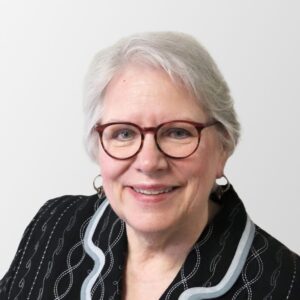
About the author: Kathy G. Pelleran-Mahoney, ABD, M.P.A., is a writer and advocate from Montague, Michigan. A native of Alpena, her career in public service spans five decades.