
Characteristics of strong public-school boards and understanding nonpartisan governance
Fielder
Over the last 5+ years, public school boards have come under scrutiny around the nation as parents and ordinary citizens have, in part, sought more accountability for how tax dollars and school administration are managed. Many questions come with this critical new eye on our schools; one of which is “what makes a strong board of education?”
There is no doubt that a healthy board is essential for ensuring that all schools serve students, families, and communities effectively and responsibly. The most successful boards are ones that demonstrate strong leadership, transparency, collaboration, and a commitment to student-centered decision-making. So, what does this look like in practice?
Healthy boards prioritize the academic and social success of all students while recognizing success looks different for each student. Healthy boards focus on state-supported and data-driven policies designed to uplift academic achievement, equity, safe learning environments, and diverse opportunities. A robust board of education is also one that respects the needs of the community at-large, addresses community goals openly and with transparency, and adheres to student/family confidentiality. Above all else, a healthy board is one where members communicate effectively and work together as a team, even when they disagree with each other.
While healthy communication may be the foundation upon which all boards become strong, poor communication is the crack that leads districts to crumble. When board members seek partisan-based training, when educational goals are spotted with partisan language, when personal ideals are prioritized over state-sanctioned data, when boards lack transparency, when in-fighting occurs, and when culture wars are pursued over student-centered policies, it is the community and our youth who suffer.
Historically, where many districts once had to cajole a voter to run for a seat on their local school board, communities are now seeing a plethora of candidates vying for seats. This is not a random trend, but possibly a result of the COVID era. Citizens have come to understand that school board seats are more important and more winnable than they used to be. Decisions about curriculum, books, safety, student identity and rights are issues that people feel strongly about. Citizens see school board involvement as a larger movement while national political parties debate about how educational policies should be managed and governed.
Public school boards weren’t always nonpartisan. We can trace this history back to the turn of the 20th century and the corrupt political activity of William Tweed’s Tammany Hall organization. Reformers believed communities should remove party labels from elected positions, which at that time were mainly organizational or technical, and away from the innocence of childhood. Reformers pushed for nonpartisan ballots and credentialed school administrators while focusing on student-centered education, local issues, and families.
While all individuals are political to some degree, reformers believed it was inappropriate to instill complicated political ideals upon the children of our communities. General curricular concepts, such as Civics and Government, were developed and accepted as sufficient for children under the age of 18. It made sense, therefore, that board members should be elected based on character, community experience, and commitment to public education. Citizens elected to boards of education were expected to leave their politics at the door of their board rooms to focus on all families, all citizens, and local issues. By the mid 20th century, this nonpartisan re-organization became the accepted norm for communities across the nation.
Avoiding partisan concepts keeps a board’s focus on what matters most–the success of our future generations. Public schools are the heartbeat of our communities. They are where we send our 5-year-olds for their first structured opportunity to grow and learn. Public schools are where we sit in bleachers, hoping our child gets the winning goal, the pat on the back by the coach, or the leading cheer. It’s where we meet new neighbors and eat cold hot dogs and over-salted popcorn. Public schools are where parents and children meet different friends and experience diverse ideas, cultures, and learning methods. It’s where our students experience the failures and successes that help build the adults they become. Who remembers the awkward, hormonal moments of your own school years, and who can forget the teacher or moment that positively challenged your thinking, putting you on a road to betterment?
Public schools are the one community institution that we entrust to help our children become the adults we dream they will be. Let’s treat them as such by keeping them nonpartisan. But let’s also be willing to work for change when change is warranted. Our children are our future generation. Aren’t they worth it?
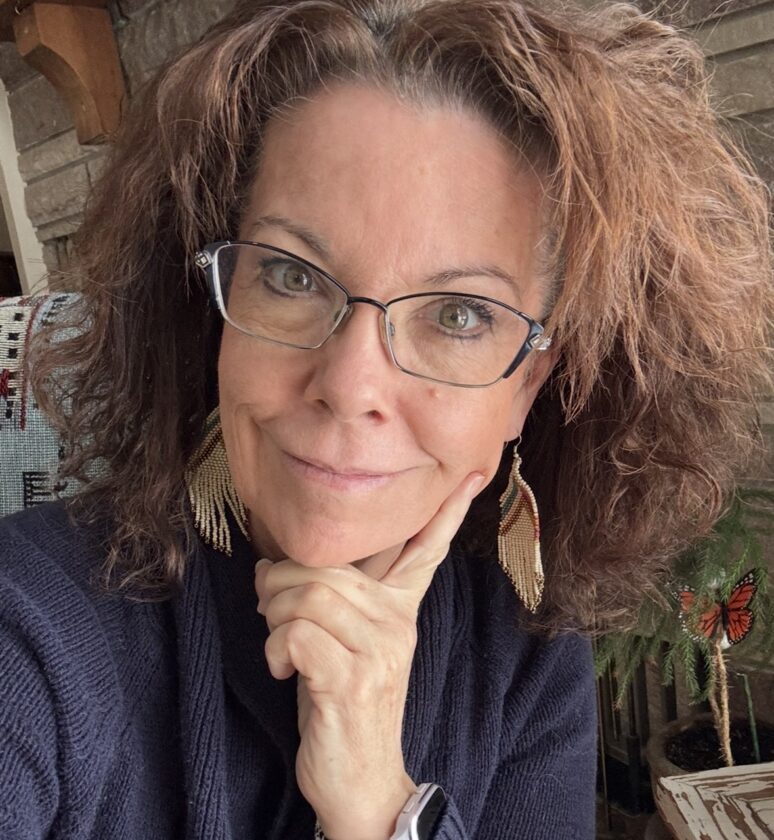
Marie Fielder is a retired special needs educator or infants and toddlers. She is also a community organizer in the Alpena Area.
Editorials and columns
Characteristics of strong public-school boards and understanding nonpartisan governance

Success is more than a word at ACC

Political battles aplenty

Let’s talk about names

Dealing with naivety
The boomerang presidency
My first thought when sitting down to write this column was that Donald Trump is his own worst enemy. However, ...