Forests and winter
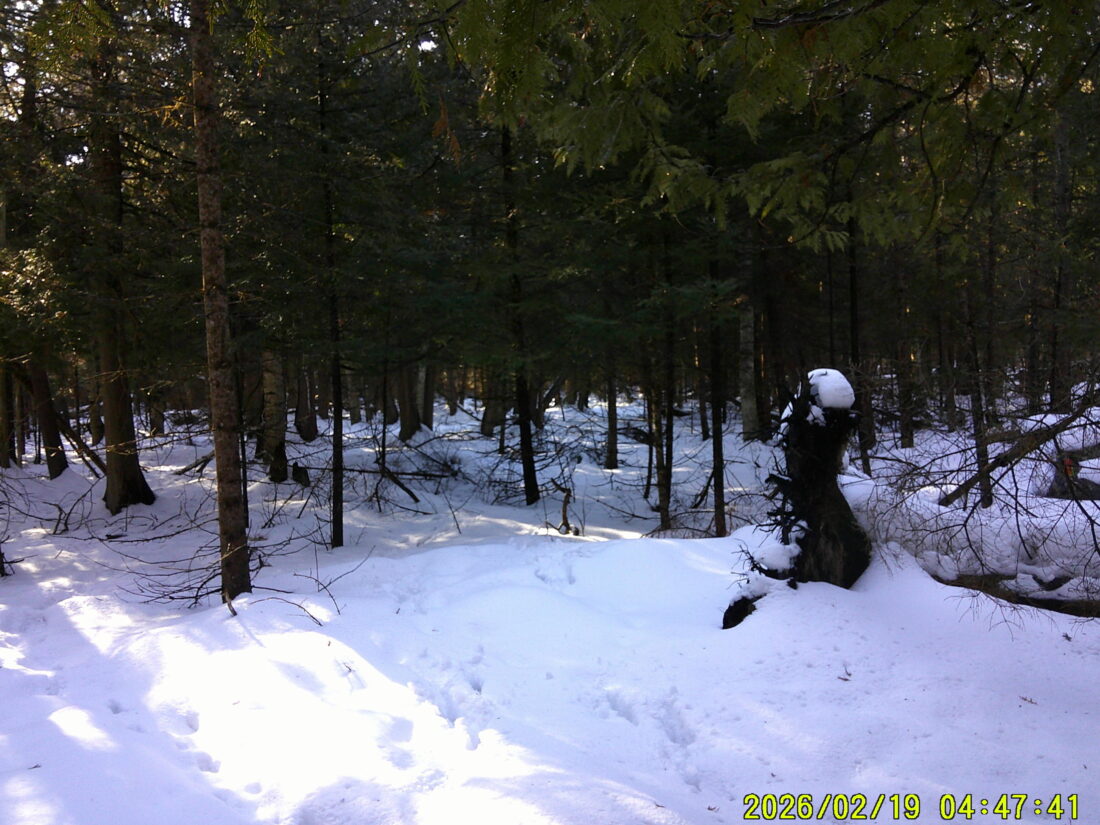
Courtesy photo Snow covers the forest floor on northern Michigan.
Winter weather of cold air and abundant snowfall is appreciated by many of us. Those that enjoy alpine or Nordic skiing, snowmobiling, hockey, ice skating, and ice fishing have likely appreciated this winter.
In our forests, winter weather impacts plants and animals in different ways. For instance, deep, fluffy snow allows ruffed grouse to bury themselves and use the snow as insulation from the cold. This conserves energy and reduces the amount of food birds must find, thereby reducing the risk of predation. Crusty snow resulting from freeze-thaw cycles, on the other hand, hinders grouse from burying themselves and correspondingly increases predation risk.
In a similar way, many small rodents, such as meadow voles, are subnivean; they live in a network of tunnels in the snow and out of the view of predators like the snowy owl or rough-legged hawk. Anyone who has had a fruit tree girdled along the length of its main stem understands how active rodents can be under the snow and how high up deep snow allows them to feed.
For white-tailed deer, deep snow can hinder their movements and cold can increase metabolic demands. In fact, some wildlife agencies use a combination of temperature and snow depth to calculate a winter severity index and then compare values year-to-year as they evaluate deer populations. One theory suggests deer use of wintering yards of lowland conifers is an evolutionary response to their main predators, wolves. Trees in the closed canopies of these swamps intercept the falling snow, reducing snow depth on the forest floor. Less snow means easier escape from wolves; closed-canopy conditions also mean warmer temperatures (see figure).
Snow also impacts plants by insulating their fine roots from cold weather. Fine roots are those that are involved in water and nutrient movement. Fine roots can become susceptible to freezing when cold weather occurs without an existing snowpack.
Heavy snow can also impact the downed debris produced in the March 2025 ice storm. The weight of the snow can crush this material and put it in contact with the forest floor. Microorganisms in the soil
can then facilitate decomposition when warmer spring weather comes. Moisture from melting snow assists in the process.
Cold weather can also benefit our forests by keeping insect pests at bay. For instance, the southern pine beetle is found in pine forests in the southern states, and its distribution northward has been expanding for years. Cold weather (-10 degrees Fahrenheit) causes mortality in populations of this species. The non-native hemlock woody adelgid, a species already in Michigan, is limited by cold weather as well.
Changes in winter weather can impact all the above and other aspects of our forests. One just needs to see a snowshoe hare in its winter white coat (pelage) without snow on the ground to understand how a mismatch between winter weather (or climate) and a species can be impactful; the all-white hare sticks out from the brown of its background habitat like a sore thumb, and predators notice.
In a paper from the journal Ecological Applications (2019, v.29) 100 years of winter climate data from across the Upper Midwest and the Northeast were analyzed. Data indicated that a general decline in coldness and snow have occurred and changes to our forests are likely occurring. Creating forest conditions that can adapt to these changes is our 21st century challenge. Managing for complexity in forest ecosystems is a first step, but this requires thoughtful approaches that may differ from those more traditional.
Dr. Greg Corace is the forest and wildlife ecologist for the Alpena-Montmorency Conservation District. For more information, including assistance with the Qualified Forest Program and related forest planning and management, email Greg at greg.corace@macd.org.
Editorials and columns
Forests and winter

The importance of community theaters in rural areas

Graves into gardens

Highs and lows of being a high school athlete

The 3 big lies about the Iran War