
Grief is love spelled differently
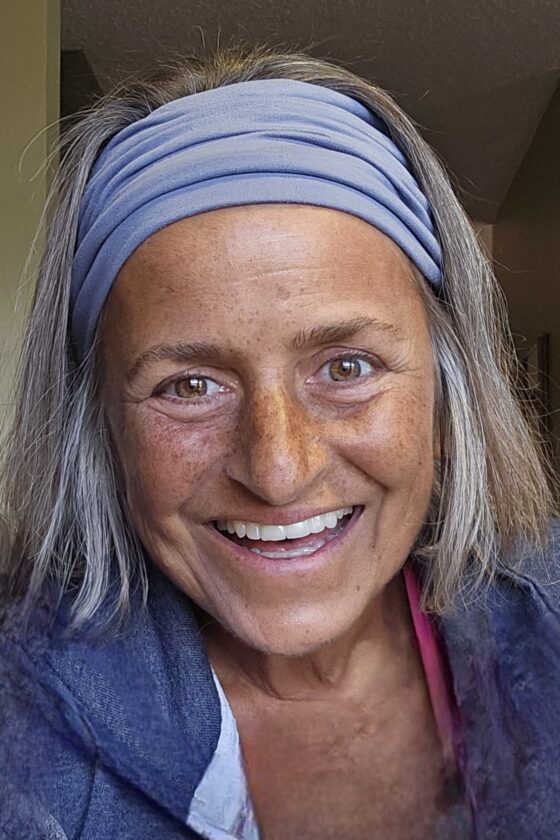
Lesslee Dort
Love can raise us higher than we ever imagined. It can sneak in and give us a warm hug at just the right moment. Whether it’s love of a partner, family member, or friend, the deep emotional attachment that accompanies love fills us up and holds us together.
But love can also plunge us deep into valleys of sorrow we never would have thought possible. Therefore, embracing love fully, without condition or reservation, means accepting the risk that accompanies love. To love is to agree, silently, to one day grieve. You see, grief is not the opposite of love. Grief is love that has lost its physical address.
I understood the mechanics of death and grieving long before I experienced it up close. My educational background is rooted in psychology and counseling. I knew the stages of grief – denial, anger, bargaining, depression, and acceptance. I understood the framework. Intellectually, I could explain grief with tidy competence.
And then life required more than intellect.
It was painful when my Dad died, of course. He was the silent, steady force in our lives. His death was sudden and wholly unexpected. But when my Mom died, my adventure buddy, I was somewhat prepared. Or at least that’s what I told myself. You see, dementia was slowly removing pieces of her before my eyes. To love and care for her at the same time, I needed to apply a good measure of emotional repositioning. I incorrectly believed this distancing would make the grieving process smoother. Afterall, dementia is considered the long goodbye.
I was wrong.
There is a profound difference between slowly saying goodbye to the essence of a person and facing the physical absence of someone who once filled a room. Emotional distancing is not the same as loss. When death finally arrived, it did not ask whether I had studied enough or braced sufficiently.
Each of us will likely lose someone we love. The idea that grief moves neatly from denial to acceptance sounds good, in theory. In practice, it’s more like wandering through a maze. We bump into walls. Circle back. Revisit familiar places. We think we’re steady, and then a scent, a song, or a Tuesday afternoon undoes us.
Sometimes, there is no orderly line to follow, no rhyme or reason. But that is ok. Once we acknowledge that grief isn’t a five-step program to ‘get through,’ we can truly begin to function within our new reality.
During my career, I facilitated support groups. One of these groups was a grief group. I often referred to the book, How to Carry What Can’t Be Fixed, by Megan Devine. One theme settled into me: “Some things cannot be fixed. They can only be carried. Grief,” she writes, “is not a problem to solve. It is love with nowhere to go.”
Understanding and accepting that grief is love spelled differently changed my paradigm. And that helped me guide group members to continue living their lives.
We can all get trapped into believing that strong, difficult emotions – anger, sorrow, frustration – are proof of devotion. And for a time, they may be. But I’ve learned we should not be passive passengers on the grief journey. We each have agency over what we do next. As quickly as death turns love into grief and sorrow, we must manage our power to turn grief back into love and laughter. When a wave of sadness lingers longer than it needs to, we can gently and purposefully shift our thinking. Reminisce. Remember something ridiculous or tender. Say aloud the deceased loved one’s name and recall the way they laughed.
It’s remarkable how quickly sorrow softens when memory is allowed to breathe.
Mind you, grief doesn’t disappear. It becomes like a stone smoothed from being handled so often. Still weighty, but easier to hold.
Let’s not turn away from grief. Don’t try to outrun it or intellectualize it. When it surfaces, let it sit beside you. Try to stop asking when it will be over. Instead, try asking, “What it is teaching me about love, about presence, about the fragile gift of being here at all?”
In the end, our lives remain ours to live. We do not honor those we’ve lost by allowing our steps to stop. We can carry them with us without letting the weight anchor us in place. The people we love shape us, influence us, and continue on in the stories we tell and the choices we make.
Grief is not the opposite of love. It is love, still.
And life – however altered, however tender – is meant to be lived.
Editorials and columns

Trump stops race to save the creation

Eileen Gu’s terrible choice

The MSU shooting anniversary

Grief is love spelled differently
Plant in your own life and we all reap the rewards
There's a 36-year-old song that talks about the value of hard work. "I gotta get out of bed and get a hammer and ...
Pam Bondi shows loyalty to her audience of one
Let's hear a word of praise for the ordinary citizens who have called for an end to the too-often reckless ...