
Eyes wide open
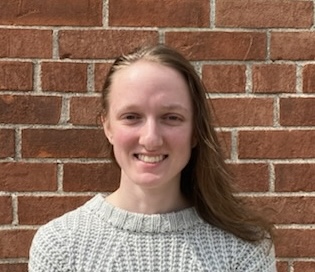
REAGAN VOETBERG
Mom said I was born with my eyes wide open–as if already searching for something bigger than myself.
My parents are non-denominational Christians, and that’s how they raised me. I don’t remember a time where we did not attend church regularly on Sundays.
They were not the kind to show up at church, brush off the Bible once a week, and call it good. Faith was, and still is, instilled in everything they do. My mom used her accounting skills and volunteered as the treasurer at the community church we attended. She also works as the accountant for a non-profit focused on supporting women and families facing unexpected pregnancies. My dad has been involved in church leadership for many years as an elder.
Their model of the faith impacted me at a young age. I recall praying “the prayer” probably around six years old, where I told God that I believed that he sent his son, Jesus, to save me. I chose to be baptized at eight years old.
Since then, by the grace of God, my faith has been unwavering. And when I say grace I really mean it. The Lord has made his presence known to me in every phase of my life, the good and the bad. I would be a total wretch–more than I already am–without His grace.
College changed my faith in a way I never expected, although when I look back, the real change began subtly my sophomore year of high school. It was “Great Expectations” by Charles Dickens that started me on the path to Catholic Christianity, as strange as that may sound.
The book begins with introductions to a variety of characters that by the end are all revealed to be tied to each other in some way. The network created by the end of the novel was satisfying to me, and offered a sense of near perfection. I began searching for other books that would give me that same satisfaction. I started reading all those books that your English teacher forces you to read, everything from “Jane Eyre” to the works of Shakespeare, believing I would find what I was looking for in that type of literature.
“Jane Eyre” was an instant favorite and has been ever since. That one was satisfying at a personal and emotional level, rather than analytical like in “Great Expectations.”
My love for literature that grew out of “Great Expectations” led to my decision to study English in college, and philosophy and theology from there.
It wasn’t the theology courses that directly influenced the beginning of my conversion, but a graphic I stumbled across on social media showing a timeline of Church history from the very beginning, as in just after Jesus’s ascension beginning. This particular graphic explained how the Eastern Orthodox Church was the one true church Jesus founded, not the Catholic Church which I would come to believe later, but either way, it made me ask questions I’d never thought to ask before.
The timeline made perfect sense. Was it really true? And what was I supposed to do about that if it was? I couldn’t take social media graphics from some rando too seriously so I figured someday I would look into it if I had time. Like, after I was done with college kind of time. But the idea hung in the back of my mind and never let go, and so of course it all happened much quicker than what I planned.
A theology course about early church history led to conversations with my Catholic friends, and the next semester they invited me to attend Mass for the first time.
As I continued to learn about the Mass and Catholic theology, ask questions, and read articles and books, what did I begin to feel but a sense of satisfaction–yes, the same satisfaction I had felt reading “Great Expectations.” Although in this case, a better phrase to describe what I felt is a sense of beauty. I understood for what felt like the first time that God is beautiful, although I’d heard the phrase so often repeated.
All my preconceived notions about life, morality, the character of God, politics, etc. that I had tried for years to fit inside the non-denominational Christianity box fit inside the Catholic box effortlessly. I never knew what I was missing until I saw the intellectual and spiritual combined so perfectly. The Catholic faith satisfied my personal, emotional, and analytical faculties.
My conversion was unexpected. The church environment I grew up in influenced me to believe that most Catholics probably are not saved, born-again Christians, for a number of reasons. Personally, I was unsure about whether this was the case, and I flip flopped on the idea throughout my teenage years. I think it made me uncomfortable to point to one group of Christians, the largest denomination at that, and claim that none of them are saved, full stop.
So it was a surprise, because becoming Catholic would mean losing my faith and losing my relationship with Jesus, according to what I was taught. As it turns out, the opposite was true.
Becoming Catholic was the step God knew I needed to take to deepen my faith in Him. It’s been nearly two years since I received the sacraments of confirmation and first communion, and I have no regrets. It is in many ways a much more difficult path to walk than the Christianity I grew up knowing, but I will continue to walk it–by the grace of God–with my eyes wide open.
Editorials and columns

Can You Relate?
Growth is forever project

The reading wars

Legislation to ban salary history could reduce pay discrimination in Michigan
America has her swagger back
In 2020, Chinese President Xi Jinping declared, "The east is rising, and the west is declining." It certainly ...
