
Carbon monoxide safety month highlights invisible threat
Trending
ALPENA TOWNSHIP - Michigan officials are urging residents to take carbon monoxide risks seriously during Carbon Monoxide Safety and Awareness Month, as local firefighters report a dozen responses this year.
Gov. Gretchen Whitmer proclaimed November 2026 as Carbon Monoxide Safety and Awareness Month. The Michigan Department of Health and Human Services (MDHHS), the Michigan Department of Licensing and Regulatory Affairs, and the Michigan State Police (MSP) joined in reminding residents that the gas can be deadly when inhaled.
"Carbon monoxide is a poisonous gas that you cannot see, taste or smell -- but it can be deadly when you breathe it in," Dr. Natasha Bagdasarian, MDHHS chief medical executive, said in a press release. "Symptoms of carbon monoxide poisoning include headache, fatigue, dizziness, nausea, confusion and shortness of breath. I urge families to have working carbon monoxide detectors in their homes to help prevent tragedies."
Statewide, unintentional carbon monoxide poisonings led to 608 cases of illness in 2024, including 42 deaths, according to the 2024 Michigan Carbon Monoxide Surveillance Report. Developing babies, children, and older adults face higher risks because of how their bodies process the gas or because of underlying health conditions. Symptoms worsen the longer someone is exposed.
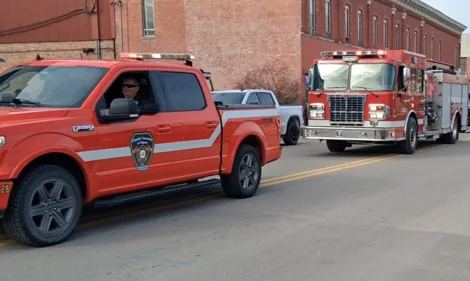
In Alpena Township, the fire department has responded to 12 reports of carbon monoxide concerns so far this year.
"Many of them are due to old or malfunctions of CO detectors," Fire Chief Tim Baker said.
Common homeowner and tenant mistakes that contribute to problems include failing to have furnaces inspected and serviced annually by a qualified technician, neglecting to replace dirty air filters, and burning treated wood, trash, cardboard, or other inappropriate materials. Residents also fail to clean chimneys and flues regularly, which can lead to creosote buildup. Operating generators inside homes, garages, basements, crawl spaces, sheds, or near windows and doors is another frequent error, as is running generators in attached garages even with the doors open.
The township department can help residents obtain protection at no cost.
"As part of a state supported program we can provide CO detectors to residents of the township at no cost," Baker said. "Residents need to contact the fire department and set up an appointment for the detectors to be installed by firefighters."
If a carbon monoxide alarm sounds, Baker said residents should move everyone outside immediately, including pets, and get into fresh air. Do not ignore the alarm or assume it is malfunctioning. Do not silence the alarm and remain inside. Call 911 from outside or from a neighboring location, report that a carbon monoxide alarm has activated, and tell dispatch if anyone is experiencing symptoms such as headache, dizziness, nausea, weakness, confusion, shortness of breath or loss of consciousness. Seek medical attention if symptoms are present. Do not re-enter the building until emergency responders determine it is safe.
Residents should not open windows and remain inside, reset the alarm and continue normal activities, attempt to locate the source alone, or re-enter the home to retrieve belongings, Baker said.
When the department is dispatched, crews first ensure occupant safety by making contact with residents and checking for signs of exposure. They then use a properly calibrated monitor to check carbon monoxide levels throughout the home and identify possible sources such as furnaces, boilers, water heaters, fireplaces, and gas appliances. If levels indicate, they may ventilate by opening doors and windows to see if concentrations drop.
Crews advise residents of the findings and recommend that a licensed contractor inspect HVAC systems or chimneys. If dangerous levels are found, residents are instructed not to occupy the home until repairs are completed.
State Fire Marshal Tom Hughes emphasized prevention.
"Carbon monoxide exposure is preventable, but you have to take action before there is an emergency," Hughes said. "Have working carbon monoxide alarms, maintain fuel-burning appliances and use generators and other equipment safely. If an alarm sounds or you think carbon monoxide may be present, get outside into fresh air and call 911. Don't try to find the source or wait to see if the alarm stops."
Carbon monoxide is produced wherever carbon-based fuels (including natural gas, kerosene, gasoline, propane, charcoal, oil, and wood) are burned. All fuel-burning items, including vehicles and portable generators, release the gas. It can build up in enclosed or partially enclosed spaces, and simply opening windows or doors does not stop the accumulation.
Prevention tips include installing 10-year lithium battery detectors on every level of the home and near all sleeping areas. Smoke detectors do not alert you to carbon monoxide. Vehicles should be inspected yearly, with any exhaust leaks repaired immediately. Never run a vehicle inside a garage or any enclosed space, even with doors open. Heating systems, water heaters, and all fuel-burning appliances should be professionally inspected annually.
Outdoor equipment such as grills, generators, and gas-powered tools should never be used inside a home, basement, tent, garage or camper, and living spaces should not be heated with a gas oven. Portable generators should be operated at least 20 feet from enclosed structures, using extra-long grounded extension cords if needed.
"Carbon monoxide is often called the 'invisible killer' because it cannot be seen, smelled, or tasted," Baker said. "Every home should have working carbon monoxide alarms installed outside sleeping areas and on every level of the home. Test alarms monthly, replace batteries as needed, and replace the entire alarm according to the manufacturer's recommendations."
MSP Col. James F. Grady II noted that the agency works with partners to ensure first responders are trained for such emergencies, particularly during the winter months when fuel-burning heating equipment is in heavy use.
Josh Jambor can be reached at jjambor@thealpenanews.com.