
Alpena County approves data center moratorium resolution
Encourages local governments to enact ordinances
Trending
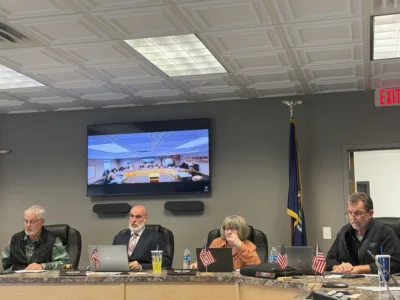
ALPENA -- Alpena County Board of Commissioners approved a resolution encouraging local units of government to enact ordinances, restricting the development of data centers in Northeast Michigan.
According to County Administrator Jesse Osmer, the commissioners had been approached by community members regarding a data center moratorium. Osmer said that the county doesn't have much say in a moratorium, rather the City of Alpena and townships have to set their own ordinances.
"Speaking with the majority of you I found that most of you were opposed (to data centers)," he said.
Osmer added that the county can only encourage local units of government to take certain stances when it comes to data centers and moratoriums.
"We ourselves cannot put much into place as far as any type of ordinances or anything like that," he said.
Osmer explained that the resolution encourages local units of government, townships and the City of Alpena, to create systems that would allow for full transparency in the event that a data center approaches a municipality in the area.
"I don't know of any data centers coming to the area, but basically putting on a pause and putting that framework into place in the coming months," Osmer said.
In September, Osmer explained that townships enforce their own ordinances, planning development, zoning, et cetera. In the case of a data center, it would be up to the local unit of government to set procedures. If a data center company was looking at county land to develop, the county and company would have to comply with whichever municipality it falls under.
He added that in the case of county owned property or in a situation where county property would have to be rezoned, then the county would have an advisory role only though the coordinating zoning committee.
“Local cities, villages, and townships actually have the jurisdiction over planning zoning, site plan reviews, approvals, code enforcement related to data centers and their affiliated uses,” Osmer said. “In accordance with their adopted plans, ordinances and procedures, the county does not have jurisdiction over planning development or approval for those data centers.”
He explained that the county can draft a “nice letter” making recommendations to local municipalities.
“Because it's not really an ordinance or anything. It's a nice letter, basically, to the municipality, it asks, ‘Please refrain from any action that would bring those facilities into our area anytime soon,'" he said.
The Alpena County resolution states that local units of government should adopt a moratorium on the planning, construction, permitting, or expansion of any data center. It also states that in the event that a proposed data center comes to the area, a comprehensive study is done to ensure the local ecosystem is protected from potential pollution and/or damage.
"It is in the best interest of Alpena County residents that any data center development occur within a clear and comprehensive regulatory framework that protects public resources, ensures transparency, and prevents unintended financial or environmental consequences," the resolution stated.
The adopted resolution defines a data center as a specialized facility that houses computing systems and stores large volumes of data. The resolution also notes the rapid growth of cloud storage and artificial intelligence (AI) across the country which places an increased demand on data centers real estate.
The resolution also encourages transparency and public disclosure regarding data center projects, including the following considerations:
- The source of electrical power for the facility;
- The anticipated water usage of the facility and protective measures;
- How electric utilities will meet the increased energy demands;
- Contractual protections, minimum usage requirements, or exit provisions;
- Measures to ensure environmental compliance, equitable cost allocation, and
meaningful community benefit.
Kayla Wikaryasz can be reached at 989-358-5688 or kwikaryasz@TheAlpenaNews.com.