
Alpena council receives final report on tree inventory
Trending
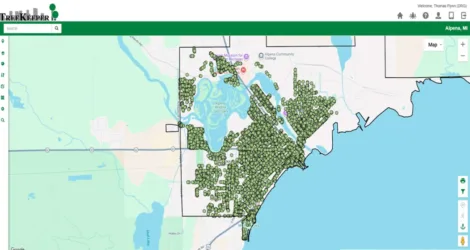
ALPENA - On Monday, the Alpena Municipal Council received its final report on a citywide tree inventory completed thanks to a Michigan Department of Natural Resources Urban and Community Forestry grant. The study documented more than 5,700 trees in Alpena and identified priority maintenance needs, species composition, and long-term management strategies.
Senior Inventory Arborist Tommy Flynn of Davey Resource Group Inc., presented the results to the council.
Flynn, an ISA certified master arborist, led the 2025-2026 inventory with colleagues Peter Murray and Gerritt Moeke. The project recorded trees on streets and in parks and mapped potential planting sites, with data managed in the TreeKeeper system.
The inventory tallied 5,733 trees, according to the report's i-Tree analysis. Of those, roughly 4,865 were street trees and 872 were park trees. Another 551 planting sites were identified. Norway maple trees accounted for 2,400 of the total, or 41.9 percent of the inventoried population and was by far the most common species.
Other significant species included red maple (405 trees), silver maple (323), northern white cedar (305) and littleleaf linden (283). Species with fewer than 10 individuals were excluded from some summary tables, and 456 trees fell into the "other" category.
The report noted that data from the original inventory "may not reflect exact values" because the inventory was partially updated after an ice storm in February and March 2026.
Through an i-Tree Eco analysis, the report quantified the urban forest’s ecological and economic value. All inventoried trees represent a combined replacement value of $13,408,571 (averaging roughly $2,339 per tree) with eastern white pine, silver maple, and northern white cedar delivering the highest annual benefits on a per-tree basis. Norway maple accounted for a substantial share of the overall impact, annually sequestering 1,256 tons of carbon dioxide, preventing 35 tons of air pollution, and intercepting 271,029 gallons of stormwater runoff, with an estimated replacement value of $5,513,099.
The presentation also addressed condition, relative age distribution for street and park trees, pest susceptibility, infrastructure conflicts and growing space. Priority maintenance slides showed high- and moderate-risk trees needing pruning or removal, broken out by diameter class for both streets and parks.
The recommendations establish a comprehensive maintenance strategy focused on long-term forest health and risk mitigation. Key components include assessing species diversity, pest susceptibility, age distribution, structural defects, and growing space constraints, alongside tracking canopy cover, stocking levels, and overall tree benefits.
On the operational side, the plan prioritizes high- and moderate-risk trees while scheduling routine pruning, young tree training, follow-up inspections, inventory updates, planting, and stump removal.
Planting guidance in the report included recommended clearances from intersections, fire hydrants, utility poles, driveways and overhead lines, along with minimum planting-site dimensions for small, medium and large trees. Of the 551 mapped planting sites, 286 were suitable for large-growing species and 326 for medium-sized species, the report stated.
The inventory supports the city's urban forestry program by providing baseline data for risk management, species diversification and future planting. Council members received the final report as part of the regular meeting packet. No formal action was required on the presentation.
The MDNR Urban and Community Forestry grant funded the work, which city officials have described as a tool for maintaining the urban canopy that provides stormwater management, air-quality benefits and aesthetic value.