
Trending
ROGERS CITY -- The recent sentencing of Charles Kamyszek, 47--for charges of child sexually abusive material (CSAM) - aggravated possession and using computers to commit a crime--in the 53rd Circuit Court in Presque Isle County, highlights the increasing prevalence of Artificial Intelligence (AI) generated pornography in criminal cases.
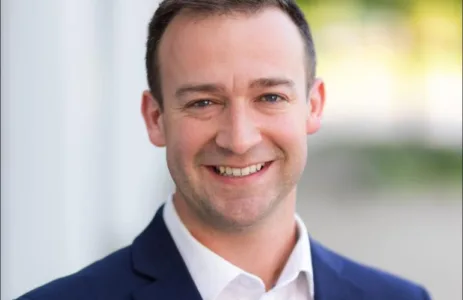
Presque Isle County Prosecuting Attorney Zak McLennan said this is the first case that he has seen in the county of someone being charged with CSAM who possessed AI generated pornography of children.
He said he is aware that similar cases are becoming more prevalent across the state, and predicts he will see more cases of AI generated pornography in Presque Isle County.
"I fully expect that they are going to start increasing in frequency," McLennan said.
Kamyszek pleaded guilty to charges of CSAM - aggravated possession and using computers to commit a crime on July 13, according to court records. He was sentenced on Monday to 80 months to 10 years in prison.
McLennan said that Kamyszek had no prior criminal history.
In court on Monday, Kamyszek's attorney Michael Vogler said that Kamyszek had lived a pretty quiet life until that point and had worked for 23 years at a local potato farm.
The News left a message with Vogler for comment.
McLennan said that Kamyszek was in possession of hundreds of CSAM photos and videos of real children, as well as the AI generated material. Kamyszek used photos of children he personally knew and twisted those images into pornography using AI text prompts.
Nothing will change as far as how CSAM cases are prosecuted, McLennan said.
"If there are real children being exploited...that's going to be prosecuted," he said.
However, he suspects that rulings by federal judges on AI pornography in CSAM cases will eventually come into conflict with state laws.
Already, a federal judge of the United States Court of Appeals for the Seventh Circuit on Aug. 25 ruled that The First Amendment protects an individual's right to privately possess images or videos of child sexual abuse created using artificial intelligence - if the material does not depict a real person and remains in the home.
The case involves Steven Anderegg, who is charged with producing, distributing, and possessing CSAM.
According to the judge's written opinion, the decision of Stanley v. Georgia set the precedent that individuals have a first amendment right to possess obscenity in the privacy of their home.
The decision in Ashcroft v. Free Speech Coalition prohibits the criminalization of CSAM that involves no actual children and that is not obscene. Anderegg is charged with possessing in his home virtual CSAM that does not depict an actual child but that is obscene.
"Indeed, in Free Speech Coalition, the Supreme Court addressed the scope of First Amendment protections for virtual CSAM, but that was nearly twenty-five years ago, and the image-generation technology available today was likely unimaginable back then," the opinion on the Anderegg matter states. "Given the relentless advancement in artificial intelligence models, we have some concerns about the lines these cases draw, but we are not free to redraw them ourselves."
In Michigan, a law created just over a year ago addresses AI-generated deep fakes. Gov. Gretchen Whitmer signed that law on Aug. 26, 2025 that prescribes criminal penalties for the intentional creation or dissemination of deep fakes.
Deep fakes are believably realistic but fake videos, images, or audio clips of individuals created by AI or digital manipulation tools.
A person could be convicted of a misdemeanor or felony for creating a deep fake depending on the circumstances.
If found guilty of a misdemeanor, the maximum penalty is one year in jail. If found guilty of a felony, the maximum charge is three years in prison.
McLennan said he is being trained on more and more AI stuff.
"It will be interesting to see how AI affects the criminal justice system including the laws," McLennan said.