
Local volunteer group working with city to clean storm drains
Trending
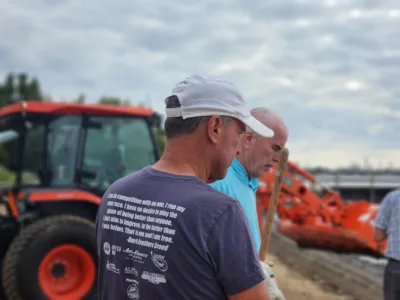
ALPENA--A group of volunteers roam the shores of Lake Huron, on a Wednesday morning, raking in debris in late July.
The men work in silence. They dig their shovels and rakes along the waterline and dump the black sludge in piles along the beach. An orange tractor runs next to them, pacing the beach, backblading gunk from the water and bringing it up on the shore.
The work is neverending.
After two years of cleaning Alpena's beaches, the volunteer group, MIShores is now working with the City to fix part of the problem: fundraising money to regularly clean the storm drains, and raising awareness for stormwater pollution in other towns.
"Our goal is clean water, clean beaches, no more storm sewer runoff into the lake," Jeff Welch, founder of the group said.
The group started in 2024. Welch said after years of walking along the beach and staring at accumulating debris, he was inspired to go to the City and start an initiative to clean the beach.
"My wife and the dog, we walked this beach four times a day," Jeff said. "After living here for five years, I was walking this beach with my wife and I said 'I think I can clean this up,' and her words were, 'you're crazy.'"
Debris has been washing up on the shores of Alpena for decades, Welch said. Depending on the day, beach goers have to jump over areas filled with wood chips, algae and other debris when wading into the water.
Alpena City Manager Rachel Smolinski said the city brings in staff to groom the beaches, but can only do so much.
"The clean up (from MI Shores) really helps when visitors and citizens go down to use the beach, it's a much better experience," Smolinski said.
In 2014, the City of Alpena hired the company Environmental Consulting and Technology Inc. to assess the debris, called the Shoreline Debris Report. According to the report, the debris could be attributed to the old lumbering era and old wood process plants.
"In the lumbering days, the sawmills used to dump all their stuff out in the lakes, and a lot of that returns to the shoreline," Welch said. "My feeling is that every shovel that we pick up off the beach is one less shovel that's going to roll back in with the tide."
Northeast Michigan saw a lumbering boom in the mid-19th century. In Alpena, loggers would float lumber from local woods down the Thunder Bay River into the mouth of the bay that would then be shipped off, according to the Visit Alpena website.
But after cleaning the beaches, Welch said he noticed something different. One of the group's three locations is along the Blair Street Pier, which is a small public beach with a pier going out into Lake Huron between neighborhoods. The pier is built right over top of a storm drain that feeds storm water into the lake.
There are currently 18 large storm water outfalls that feed into the river and Lake Huron, Alpena City Engineer Steve Schultz said.
What feeds through the storm water sewer system is any of the water from rain or snow that collects in the drainage system. When it rains or snow melts, that water picks up other elements from streets and lawns. That includes anything from salt, dirt, oil, fertilizer, litter, grass clippings and more.
Any stormwater that runs through storm drains isn't treated, and instead, runs directly into the river and lake.
In 2022, the city partnered with the environmental organization, Huron Pines, to do a stormwater assessment to understand the impact stormwater could have on the environment.
Huron Pines documented eight storm drains in Alpena that feed directly into Thunder Bay, including one underneath Blair Street Pier and one near Mich-e-ke-wis Park, places where MI Shores cleans.
In the assessment, Huron Pines divided the city into 27 different drainage zones. The group estimated that the zone Blair Street is in has the second highest stormwater runoff during the "first flush" or the initial runoff that happens during a storm. The highest estimated stormwater runoff was along the Thunder Bay River by a roadside park and the Evergreen Cemetery. According to the assessment, climate change could worsen stormwater pollution.
"Climate change is expected to cause an increase in both the frequency and intensity of storm events, which will increase the volume and velocity of runoff and risk for flash floods," the assessment reads.
The assessment also identified "green infrastructure" projects to tame the impacts of stormwater in other ways such as installing rain gardens in areas close to sidewalks and other infrastructure that has a difficult time absorbing water.
Despite this, MI Shores says the storm drains need to be cleaned more often.
"This stuff is so toxic that when we take it out of the storm sewer with a vacuum truck, before we can haul it to a landfill, it has to be tested by a certified lab and in some cases will have to be remediated before it can even go to a landfill," Welch said. "But when it's dumped into the lake, it's not tested, but it's the same stuff."
Smolinski said there are around 1,820 catch basins in the system that work to filter out any pollutants such as oils, silt and other contaminants before it flows back through the storm drain systems.
Although those catch basins are cleaned when issues occur, the city currently does not have the means to clean all of them regularly.
"At the end of the day, we have to expend a lot of resources to clean the catch basins," she said. "So, we thought that would be something that MI Shores and the city could work on together."
"If we had a staff person here that could take as much as 23 work weeks just to clean all the catch basins, it's a big job."
With the help of MI Shores, the city is working to get quotes from contractors on the costs of cleaning the over 1,800 catch basins in the city. After that, Smolinski said a long-term project the city is looking into is installing baffle boxes, or structures with screens and grates that stop debris and allow water to slowly trickle out on the other end, above the storm outfalls.
Smolinski said the city is still trying to understand how much money would be needed to fund the projects.
"Our group MI Shores, we are going to go on a fundraising campaign and see if we can't raise this money for the city to have these cleaned out professionally," Welch said. "And whoever cleans them out will then have them tested. But the day has come where this stuff is no longer going to dump into Lake Huron."
Welch said the volunteer group is also looking to use what they learned as awareness for other cities. Now, the group is looking for extra volunteers such as an attorney and someone to run their online presence as they fundraise.
"At MIShores, we believe other cities have the same problem with their storm water runoff as does Alpena," Welch wrote in an email. "We believe that our clean up model will help other cities move forward to cleaner water."