City of Alpena wild animals ordinance tabled for a second time
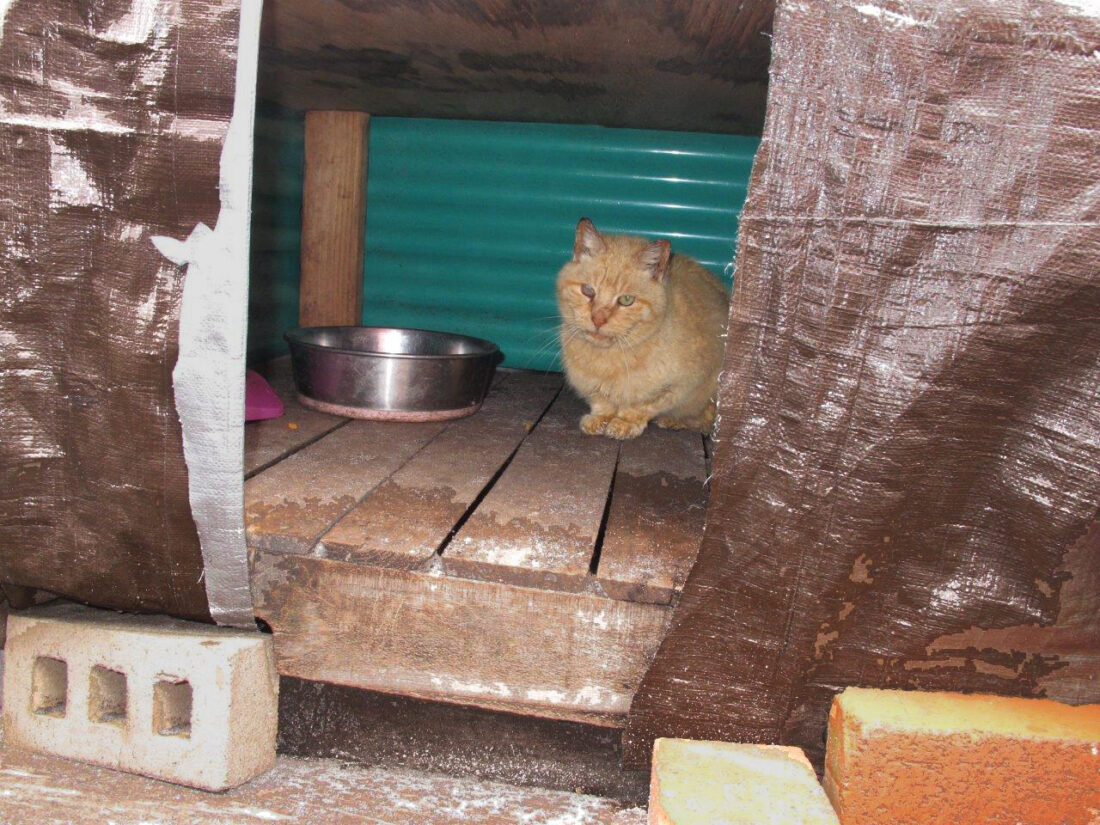
AP file photo A feral cat hunkers down in a make-shift shelter.
ALPENA – At Monday’s City of Alpena Municipal Council meeting the proposed modifications to an ordinance making it illegal to feed feral cats was tabled for a second time since November of last year.
Prior to public comments, Mayor Cindy Johnson said that the ordinance would be delayed.
“If you are here to talk about the ordinance, you can come up and talk about it,” Johnson said. “However, I am asking the council to postpone it until April 20 because we have had some meetings on the topic, and we have a meeting with the county at the end of the month.”
“With everyone’s schedules, it has been difficult to get groups together,” Johnson said.
Chapter 10 of the City of Alpena’s ordinances governs animals, and the modifications would prohibit the feeding of feral cats, deer, raccoons, and other wild animals.
Alpena resident Nancy McSwain voiced her concerns over the ordinance during the public comment portion of the meeting.
“Feral cats are not a political issue, they are living creatures,” McSwain said. “When feeding is banned, cats don’t just vanish, they spread out searching for food, they become weaker, more desperate, and more likely to get into trash, wander into traffic, and hunt other wildlife.”
McSwain also discussed the Trap-Neuter-Return (TNR) method and how it helps with the ever-growing cat population.
“The most effective and humane approach is Trap-Neuter-Return,” McSwain said. “Communities across the country that implement TNR programs have documented population declines of 30 to 50 percent over several years.”
The mission of Northeast Michigan TNR is to humanely manage and reduce the population of free-roaming, feral, and stray cats in the region by trapping, neutering, vaccinating, and returning them to their original locations. This method stabilizes colonies, prevents the birth of more kittens, reduces shelter overcrowding, and improves the overall health and lives of community cats
Rebecca Witt, president of Northeast Michigan TNR, shared the following told The News that feeding feral cats is not the sole cause of overpopulation.
“The act of feeding community cats is not the root cause of an unstable feral cat population,” Witt said. “Rather than focus on feeding bans, which are proven to be ineffective, the city should focus on more effective and humane solutions that actually address the root cause, which is intact cats in general, both owned and unowned. These solutions include encompassing and supporting Trap Neuter Return (TNR) and working with local vets to bring periodic low cost spay neuter clinics to the area for pet owners”
Alpena resident Julie Gandulla also discussed her opposition to the ordinance and why she opposes it.
“I think we should use caution when creating ordinances when it is instigated off of complaints,” Gandulla said. “There is a fine line between realizing there might be something we need to address by a code, and allowing the squeaky wheel to define social structure, there is a big difference.”
Alley Cat Allies, an advocacy organization dedicated to protecting and improving the lives of cats, recently started a campaign in opposition to the Alpena feeding ban.
An email from the organization on the proposed Alpena ordinance stated the following:
“Ordinance 25-514 would make it unlawful to feed any community cat in the city and classify them as ‘wildlife.’ This cruel, ineffective measure would cut cats off from the resources they have come to depend on, causing the cats to suffer all while offering no benefit to the community. Furthermore, it would penalize community cat caregivers for simply being compassionate and providing a community service.”
The ordinance was proposed to address public health, safety, and welfare concerns related to a growing population of free-roaming, un-domesticated cats.
Josh Jambor can be reached at jjambor@thealpenanews.com.
Local News

Horsemen’s Club to host mom-to-mom sale

Neon Nights at Art in the Loft
Turkey Trackers supports youth with scholarships and sports
ALPENA — Presque Isle Turkey Trackers will host their 2026 banquet to support youth interested in shooting ...

Alpena Sheriff’s Office implements scam information web page
City of Alpena wild animals ordinance tabled for a second time