
Lake Huron acidification research to continue this spring
Trending
ALPENA -- Acidification is happening in the Great Lakes, and new research right here in Lake Huron will continue to provide insight into what that means for plants, wildlife, and humans.
"This is a project in partnership with (the National Oceanic and Atmospheric Administration's) acidification program," said Stephanie Gandulla, resource protection coordinator for the Thunder Bay National Marine Sanctuary. "They, for years, have been working on studying acidification in our ocean. However, we have a bunch of water here, of course, that is experiencing similar warming trends as are happening around the planet. So, we have partnered with NOAA's Great Lakes Environmental Research Laboratory to undertake a baseline study of acidification in freshwater."
The project started in 2022 and will continue for several years, Gandulla said.
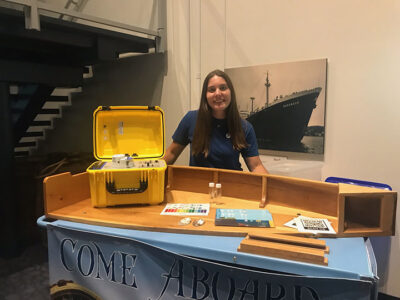
Alpena native Cassidy Beach is a University of Michigan junior majoring in environmental science. She worked on a Michigan Sea Grant internship at the Thunder Bay National Marine Sanctuary this past summer.
Gandulla said Beach launched and led the project for the first several months, leading the sampling and the outreach program for it.
"There's a lot of acidification research done in the oceans, but there's really none in the Great Lakes, so we teamed up with GLERL in Ann Arbor and we wanted to be the first to actually do it, because there are ph readings done, but there has never been freshwater acidification research done in the Great Lakes," Beach said.
She said they took a peristaltic pump out on a vessel and took samples from Lake Huron. The samples are then sent to Ann Arbor for data collection and analysis.
"It's very relevant to climate change," Beach said of the acidification levels. "Climate change is directly related to acidification, because, when we burn fossil fuels, carbon dioxide is emitted into the atmosphere, and then, over time ... the oceans and lakes, we're finding, are actually absorbing it, and then it creates some type of acid in the water, which creates a lot of issues for all the organisms."
She added that the sanctuary provides resources to visitors who would like more information about the ongoing research.
"We're always looking to facilitate science in the sanctuary," Gandulla added. "Not just looking for shipwrecks and understanding our history, but also facilitating this kind of science -- ecosystem management, ecosystem studies."