
HOPE & HEROES: Medical caregivers provide support, joy to cancer patients

News Photo by Julie Riddle Stephanie McNeil, radiation technician at the MyMichigan Medical Center Alpena Cancer Center, displays a table used by medical staff at the center to prepare patients to receive radiation therapy.
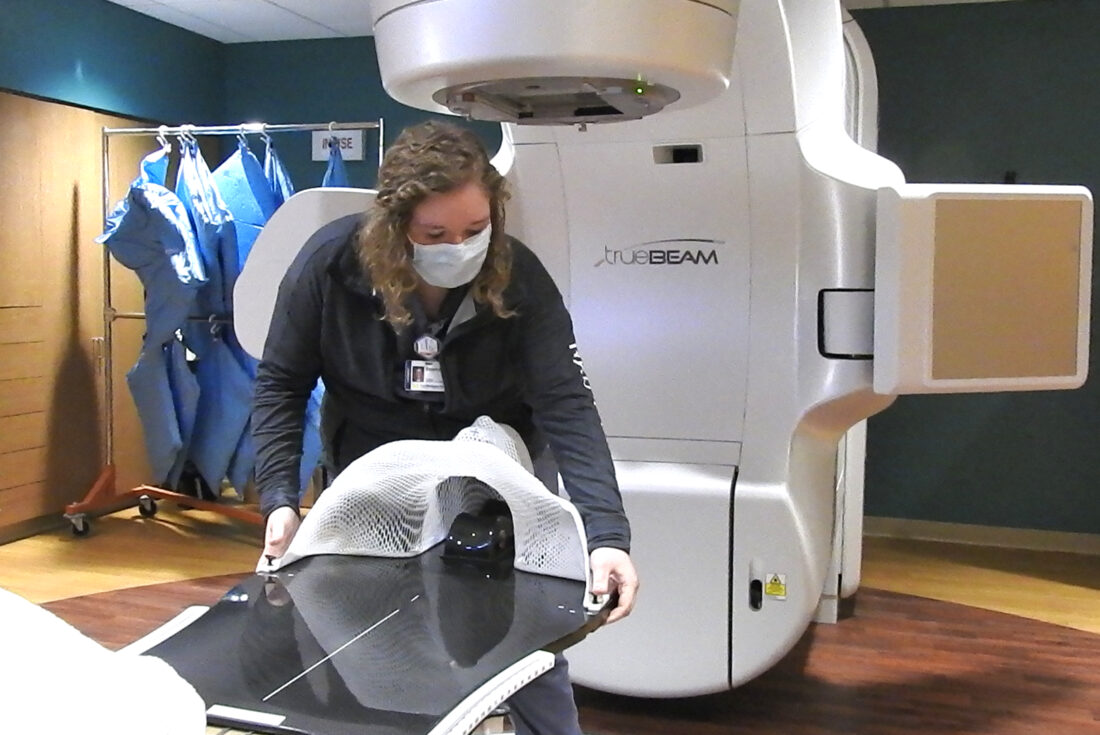
News Photo by Julie Riddle Stephanie McNeil, radiation technician at the MyMichigan Medical Center Alpena Cancer Center, fits a mask to a table used by radiation patients at the center. The hospital’s linear accelerator, which delivers radiation, appears behind her.
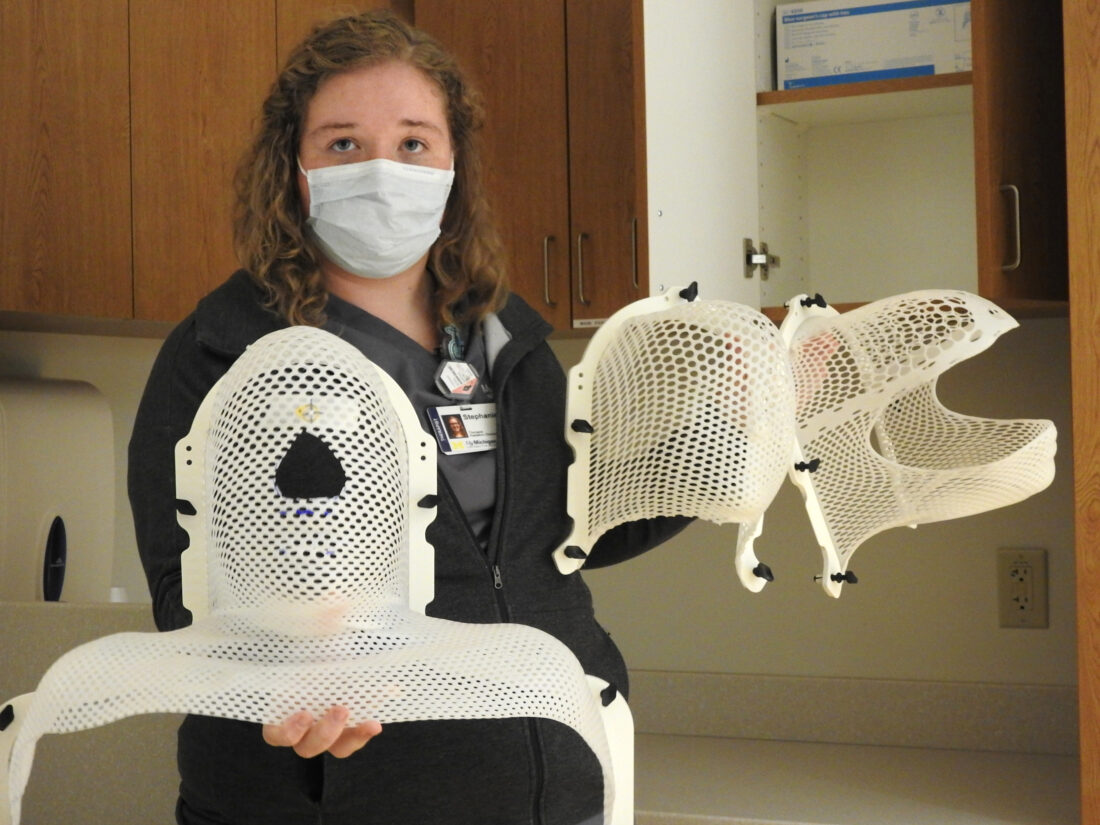
News Photo by Julie Riddle At the MyMichigan Medical Center Alpena Cancer Center recently, radiation technician Stephanie McNeil holds masks custom-made for radiation patients using plastic molded to their faces.
News Photo by Julie Riddle Stephanie McNeil, radiation technician at the MyMichigan Medical Center Alpena Cancer Center, displays a table used by medical staff at the center to prepare patients to receive radiation therapy.
News Photo by Julie Riddle Stephanie McNeil, radiation technician at the MyMichigan Medical Center Alpena Cancer Center, fits a mask to a table used by radiation patients at the center. The hospital’s linear accelerator, which delivers radiation, appears behind her.
News Photo by Julie Riddle At the MyMichigan Medical Center Alpena Cancer Center recently, radiation technician Stephanie McNeil holds masks custom-made for radiation patients using plastic molded to their faces.
Trending
ALPENA -- A cancer diagnosis can wreak emotional, financial, and practical havoc on a patient's life, but a family of medical workers stand ready to help.
In the Cancer Center at MyMichigan Medical Center Alpena, social workers, radiation technicians, and chemotherapy nurses offer encouragement and practical assistance to the patients with whom they form connections during weekly or daily visits.
Though swept up in a whirlwind of appointments, tests, and, sometimes, debilitating sickness, patients face both their diagnosis and the ensuing treatment with courage and gratitude toward the people trying to restore their health, Cancer Center workers said.
Helping patients through a frightening and painful time gives cancer-care workers purpose and joy, despite the emotional toll of providing that care, said Amy Dacey, medical oncology physician practice manager at the Alpena hospital.
"People ask me how I can work in a cancer center," Dacey said. "And I say, 'How can you not?'"
A breast cancer survivor herself, Jennifer Schuch, clinical social worker at the Cancer Center, knows about the emotional and mental struggles that accompany a cancer diagnosis.
Patients already reeling from learning about the sickness inside their bodies also have to grapple with the upheaval it forces into their lives.
Insurance may leave them with payments of thousands of dollars for high-tech treatments.
Patients may have to step away from their jobs, hoping employers will understand as they adjust schedules around sometimes daily medical appointments and as treatments make them too tired to work or even stand.
For many, treatments require drives from an hour or more away. Friends and family sometimes have to make room in their schedules, too, because patients can't drive themselves to appointments that could eat up a full work day.
Patients may have to change their diets, cutting out favorites and ingesting food they don't like on diminished appetites to give their bodies the best fighting chance. They may have to avoid sunlight or even human contact during certain points of their treatment.
Those challenges layer on top of the shock and emotional battle that accompany frightening medical news and the fear of not knowing the path that lies ahead, Schuch said.
In her role, she makes sure patients and their families know they can get help with transportation, gas money, and housing. She connects them to food sources and insurance options.
She gives them rational ways of processing what can be an overwhelming segment of their lives so they can push past their emotions and take ownership of decisions made about their bodies.
And, Schuch said, she listens to the questions that have no answers -- the "Why me?" questions when a cancer diagnosis strikes a person who has followed all the rules for healthy living.
In her experience, family support and spiritual faith play significant roles in a cancer patient's ability to handle the emotional toll exacted by their diagnosis and treatment.
Though decades of medical research make a cancer diagnosis no longer an automatic death sentence, patients often don't want to talk about the possibility that they may die because of their cancer, fearing talking about death may hasten it, Schuch said.
Patients feel that, if they make end-of-life decisions, they're giving up, she said.
Schuch encourages patients to have that difficult conversation early, getting heavy conversations out of the way, "and then live your life, and, if something goes bad, you're ready," she tells them.
Patients celebrate their last radiation or chemotherapy treatment by ringing brass bells, a bittersweet moment for many, for whom doctors and nurses have become family, Schuch said.
In the radiation department, workers love it when former patients stop by with progress updates, said Stephanie McNeil, radiation technician at the Cancer Center.
Patients undergoing radiation come for treatment five days a week for up to two months. Though those treatments only take minutes, that daily interaction turns patients into family, McNeil said.
Working in a small community means she sometimes bumps into former patients at the grocery store, where she delights in getting updates from the people she comes to know and care about as they lie on a hard table in the radiation room.
Some patients struggle emotionally as they come for treatment, but most arrive with a positive attitude, even as treatments make them increasingly exhausted.
She tries to prepare patients for the toll the treatment will take on their body and encourages them to nap, rest, and give themselves the best fighting chance by easing up on their regular activities for a time.
"It will go away," she tells them. "You will get better. But you've got to help your body take care of itself."
The hospital's bulky-yet-graceful linear accelerator machine that delivers radiation in an airy, calming room can treat any body part, from esophagus to brain to lung to septum.
McNeil most often treats breast and prostate cancer patients, but the hospital is seeing a lot of head and neck cancer recently, too, she said.
Each patient gets customized treatment specific to what their body needs -- including, for some, masks formed to their faces to ensure the radiation hits the same spot at each treatment session.
Some patients take those masks home when they complete treatment. While patients may turn the mask into a creative craft project, "some people take an ax to it or run it over with a car," McNeil said.
Most patients, even those facing a grim prognosis, enter with cheerfulness and gratitude toward their caregivers, McNeil said.
She told of one patient so cheerful that McNeil asked why the woman radiated such positivity when the treatments were making her so tired.
"Because you guys are saving my life," the patient told her. "How can I not be ecstatic?"
Joy keeps both patients and medical workers going, said Registered Nurse Chelle Thomas, who administers chemotherapy at the cancer center.
Patients spend hours in chemo chairs as poison creeps into their bodies, attacking the cancer but also subjecting patients to frightening and sometimes debilitating side effects.
In such an environment, medical staff have to leave their own burdens at home and do what they can to infuse the room with positivity, Thomas said.
She and her co-workers joke and sing, play music and tease patients, keeping the mood light for patients facing heavy days.
"The patients are just shaking their heads and laughing at us," she said. "And that's a good thing."
The staff grieves when a patient stops their treatment with a poor prognosis, but medical advances continue to provide new drugs that give patients the chance to live longer after a cancer diagnosis, Thomas said.
Despite her levity, she knows cancer is a serious matter for those experiencing it. She encourages patients to mend rifts, engage in life, and live such that, if life ends abruptly, they will be glad of how they spent it.
Medical staff can't spare patients from the tough parts of having cancer.
But, Thomas said, they can walk beside them, cheer them on, and, as much as possible, lift them up in the middle of their trials.
"It’s hard for them. It's hard for us," Thomas said. "But you've just gotta be positive."