
Alpena County agencies: More can be done to support people in need
Trending
ALPENA -- A community's leaders need to know about efforts to support its residents, speakers told the Alpena County Board of Commissioners on Tuesday.
At the commissioners' regular meeting, representatives of several agencies described new and ongoing programs designed to fight addiction, unemployment, and other challenges faced by Alpena-area residents.
As leaders make financial and policy decisions for the community, an understanding of the resources and efforts around them will make those decisions all the more effective, the speakers said.
"And," said Larry LaCross of Catholic Human Services, speaking for those making such efforts, "we'd like to have a seat at the table."
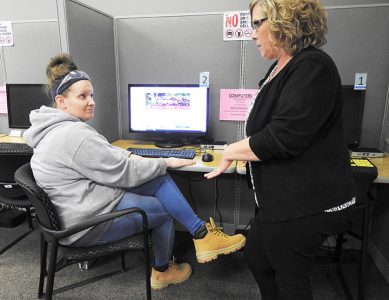
Many people steer away from the Michigan Works! Northeast Consortium office on Chisholm Street in Alpena, thinking it's the unemployment office, said Marisue Moreau, director for the consortium.
"We are not the unemployment agency," Moreau told the commissioners. "We are the employment agency."
Michigan Works! connects workers to employers and employers to workers, providing services to anyone in the community, not just those in financial straits, she said.
From student programs that give career boosts to hundreds of young people, to resume and job search assistance, to in-house copiers and fax machines available to job seekers, the agency helps not just those seeking work but also those desperate for employees, Moreau said.
In an unprecedented environment in which a job fair might mean 35 employers vying for the attention of 10 people seeking jobs, she told the commissioners, many people believe a current universal employee shortage stems from laziness on the part of people not willing to work.
That perspective overlooks the fact that, as most counties' population decreases, their number of people aging out of the workforce is growing, narrowing the pool of potential workers, she said.
Some people without jobs want to work but can't, limited by sparse public transportation options or a recent scarcity of child care availability.
Others can't afford to work because jobs they could get would put them above the threshold at which they can receive public assistance but would not give them enough to pay the bills, she said.
Knowing Michigan Works! is available to help residents overcome those challenges could help community leaders know how to craft policies that will add to the solution, Moreau told the commissioners.
Another speaker, Chet Spencer of Up North Prevention, wanted the county leaders to know that kids need help resisting dangerous influences.
A former Alpena Police Department officer and Alpena High School liaison officer, Spencer now talks to students in schools about vaping, marijuana, and alcohol, making sure kids know facts about ingesting such substances.
Such conversations help, but young people need more, he told the commissioners.
Many of the students he talks to don't have support at home. They need someone to take time with them, listen to them, and tell them the truth, Spencer said.
When commissioners mull over changes for the county, he hopes they make decisions that further such efforts.
"We have an opportunity to do great things," Spencer said. "Not just good things."
LaCross, clinical supervisor for Catholic Human Services, reminded the commissioners of many addiction-fighting efforts in the community, from placement of addiction recovery coaches in the hospital's emergency room to teams of trained people ready to respond to overdoses or support families of people battling addiction.
Even with many such efforts in place, Alpena has room to do more, LaCross said.
The region is set to receive $2 million from a settlement in a lawsuit against pharmaceutical companies accused of furthering the opioid crisis.
That money should arrive late this spring or in early summer, according to the Michigan Attorney General's office.
When the money reaches the Alpena area, as the commissioners decide what to do with their chunk, he hopes they let the people already working hard to fight addiction be a part of that conversation, LaCross said.
Julie Riddle can be reached at 989-358-5693 or jriddle@thealpenanews.com. Follow her on Twitter @jriddleX.