
Junior high students learn to be lifesavers
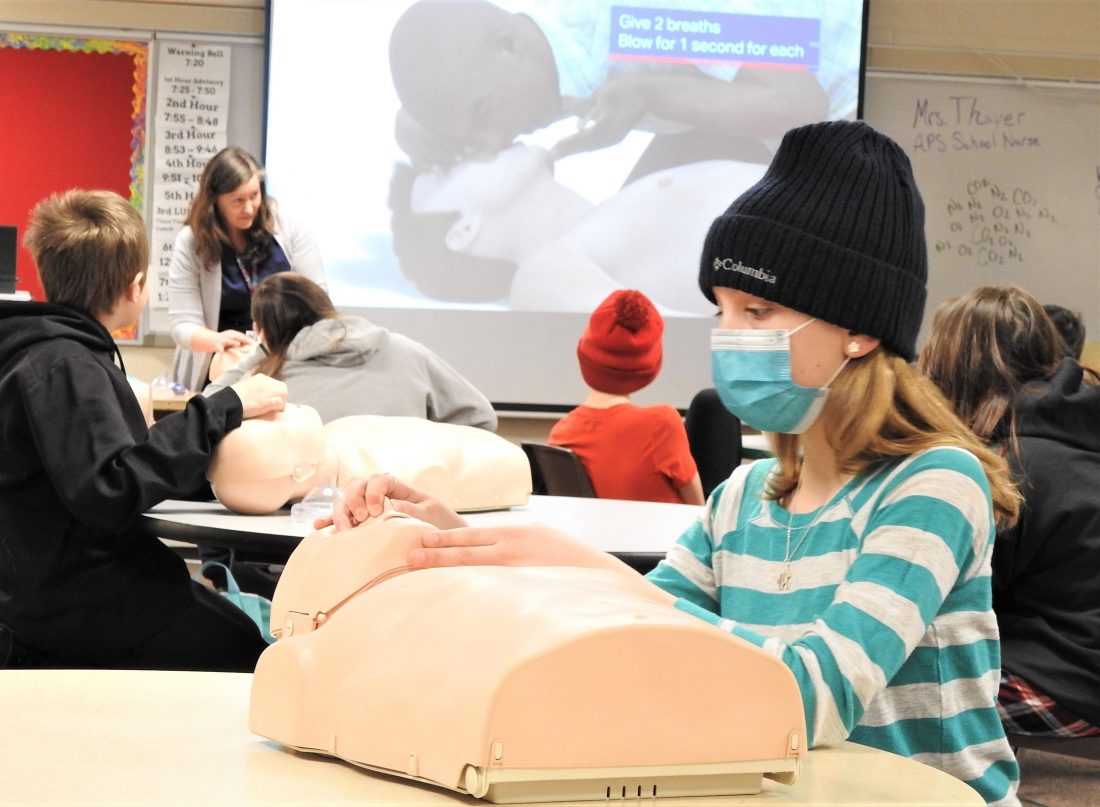
News Photo by Julie Riddle Anna Sheridan practices the steps for mouth-to-mouth resuscitation during a training at Thunder Bay Junior High School on Tuesday.

News Photo by Julie Riddle With a masked mannequin in the foreground, Thunder Bay Junior High School students Vyctor Rozdowske and Katelynn Thomas practice life-saving techniques at the school on Tuesday.
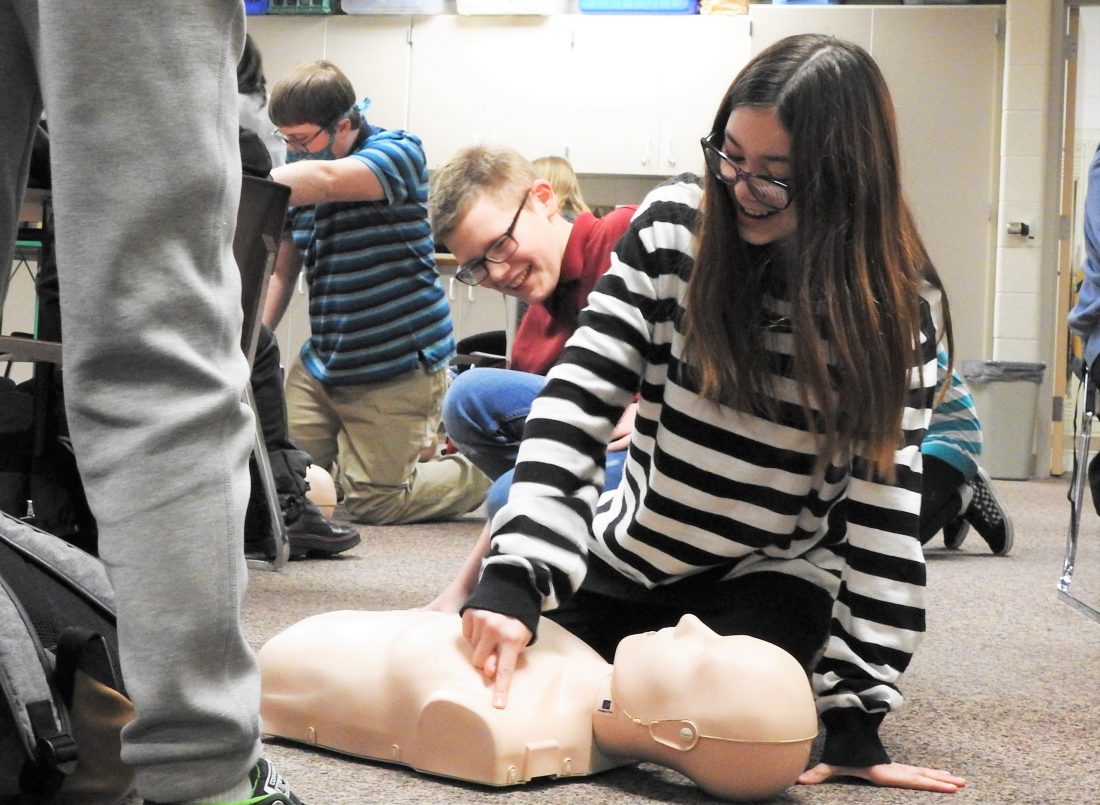
News Photo by Julie Riddle Mia Ross, foreground, laughs with a classmate as she attempts to practice CPR on a mannequin in a classroom at Thunder Bay Junior High School on Tuesday.
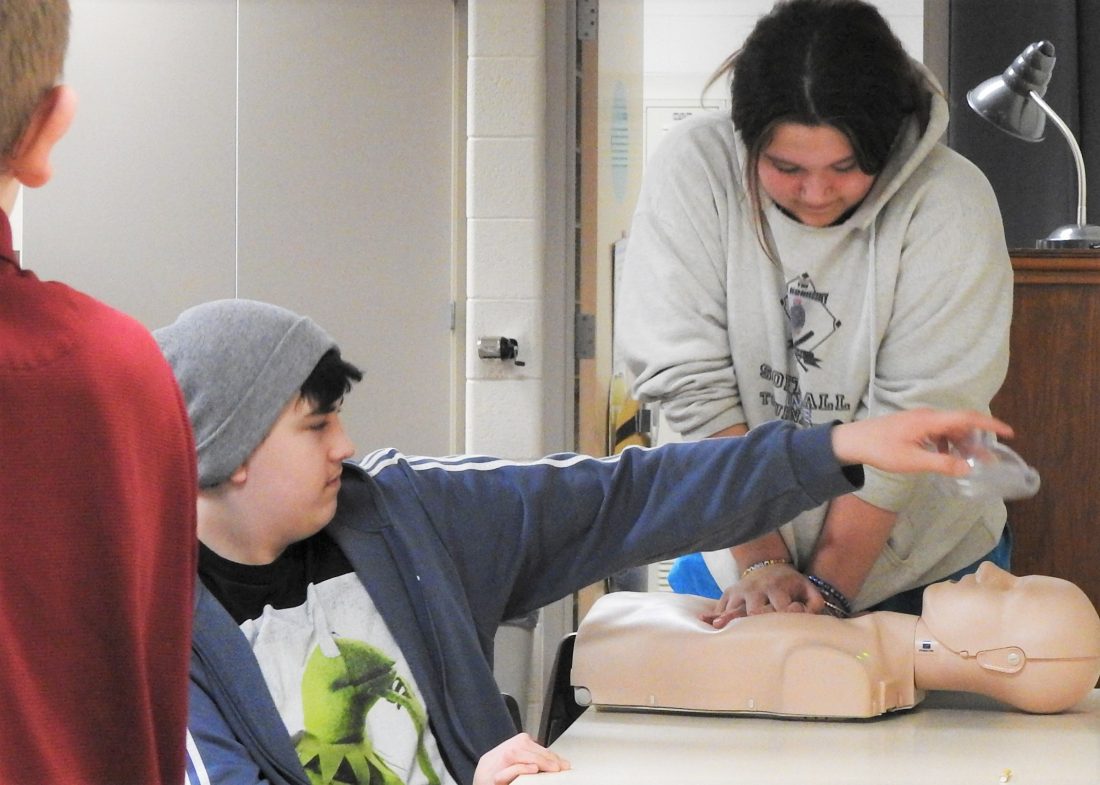
News Photo by Julie Riddle Thunder Bay Junior High School students Lucas Galarza, left, and Emma Farnum practice CPR at the school on Tuesday.
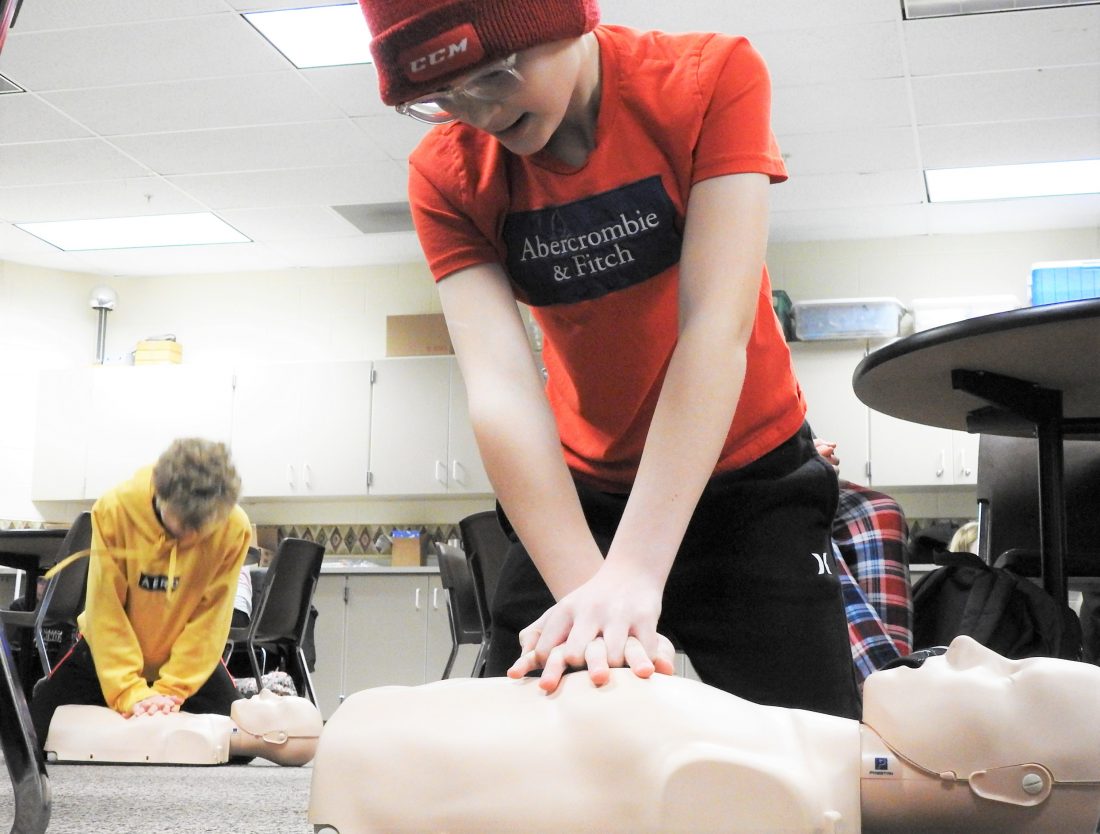
News Photo by Julie Riddle Hunter Poll, left, and Noah Modrzynski practice CPR on mannequins at Thunder Bay Junior High School on Tuesday.
News Photo by Julie Riddle Anna Sheridan practices the steps for mouth-to-mouth resuscitation during a training at Thunder Bay Junior High School on Tuesday.
News Photo by Julie Riddle With a masked mannequin in the foreground, Thunder Bay Junior High School students Vyctor Rozdowske and Katelynn Thomas practice life-saving techniques at the school on Tuesday.
News Photo by Julie Riddle Mia Ross, foreground, laughs with a classmate as she attempts to practice CPR on a mannequin in a classroom at Thunder Bay Junior High School on Tuesday.
News Photo by Julie Riddle Thunder Bay Junior High School students Lucas Galarza, left, and Emma Farnum practice CPR at the school on Tuesday.
News Photo by Julie Riddle Hunter Poll, left, and Noah Modrzynski practice CPR on mannequins at Thunder Bay Junior High School on Tuesday.
Trending
ALPENA ― Sixth grader Mia Ross's long hair flew into her face as she pumped vigorously on a mannequin's chest.
"Ah, ah, ah, ah, stayin' alive," her classmates hummed, dancing a little as they took turns practicing a skill they could someday use to save a life.
In coming days, after hands-on training in the classroom, the students in the Medical Detectives elective class at Thunder Bay Junior High School will earn cards certifying them as Heartsavers through the American Heart Association.
Sixth- through eighth-grade students are not too young to learn CPR, defibrillation, first aid, and other medical emergency skills, teacher Jonathan Bradley thinks ― especially after he's watched young people unexpectedly confronted with the need to help someone in distress.
"They panic," he said. "Having a sense of confidence, a sense of knowledge, gives them that ability to take action in an emergency."
On Tuesday, Alpena Public Schools school nurse Lisa Thayer told the junior high students that performing life-saving techniques might mean moving or removing someone's clothing.
If she were the person they saved, she'd be embarrassed about the missing clothes, Thayer told the blushing students, "and that's a good thing, because it means I lived."
Using a video and a stack of mannequins, Thayer talked the students through the basics of CPR: hand over hand on the center of the chest, arms straight and elbows locked, two-inch compressions, 100 to 120 beats per minute.
Pump to the beat of Bee Gees song, "Stayin' Alive," she told them, sparking a hum that buzzed through the classroom as the students compressed their mannequins' chests.
Some tentatively, some plunging into the task with gusto, the young people laid their hands on the fake bodies and pumped, green lights on the mannequins telling students when they were doing a good job.
"It's harder than it looks," Thayer encouraged as students took deep breaths and tried to keep up with the Bee Gees.
""If you're a Queen fan, 'Another One Bites the Dust' also works, but that's not quite as appropriate," she said, earning grins from the students.
Bradley decided to provide the training to his class after he attended a recertification offered for APS staff, and Thayer was quick to agree to lead the training, he said.
At their tables, the students absorbed Thayer's instruction on mouth-to-mouth resuscitation.
Tilt the head, lift the chin, pinch the nose, breathe out, and watch for the chest to rise, she told them as the students listened and nodded.
They couldn't practice actually blowing into the mannequins' mouths, even using the provided face masks. Pandemic rules changed that, she told them.
The students snappily provided correct answers to a pop quiz, then tried their hands at resuscitating mannequins, saying, "Blow, blow" in place of actual breaths.
An official certification card in their pockets at the end of their training could help the junior highers be heroes, the students realized.
"Somebody you know may need you," said sixth-grader Kiara Reed. "It'll be easier to help them if you know how to do this kind of stuff."
The junior high students will be certified for two years following the training, a good first exposure to the CPR graduation requirement for all APS students, Thayer said.
Nobody is too young to learn to save a life, the students said.
"If there's no adults around, then we'll know how to do it," said eighth-grader Kaylynn Peterson. Kids can absolutely be lifesavers, she said, "If they know how."