
Icebreaker shortage slows deliveries to Alpena, other ports
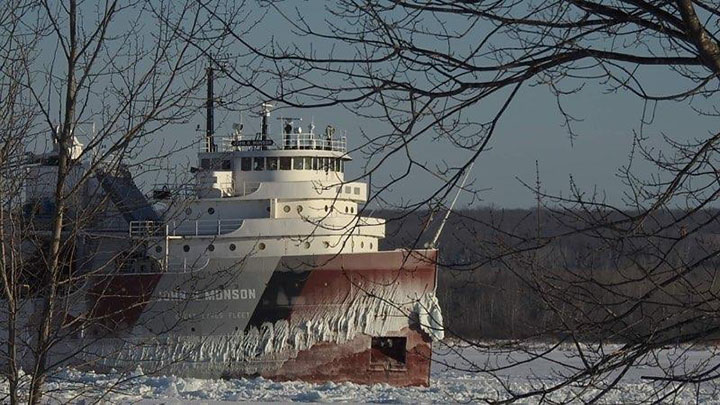
Courtesy Photo The John G. Munson, with sailors from Northeast Michigan aboard, is pictured in January surrounded by ice in the St. Mary’s River in this courtesy photo taken by Joy Fett. The ship stopped in the river to wait for traffic ahead and became stuck briefly until freed by a U.S. Coast Guard icebreaker.

Courtesy Photo A U.S. Coast Guard icebreaker operates in the St. Mary’s River in this courtesy photo taken by Joy Fett.
Courtesy Photo The John G. Munson, with sailors from Northeast Michigan aboard, is pictured in January surrounded by ice in the St. Mary’s River in this courtesy photo taken by Joy Fett. The ship stopped in the river to wait for traffic ahead and became stuck briefly until freed by a U.S. Coast Guard icebreaker.
Courtesy Photo A U.S. Coast Guard icebreaker operates in the St. Mary’s River in this courtesy photo taken by Joy Fett.
Trending
ALPENA -- A shortage of U.S. Coast Guard icebreakers slowed cargo destined for Great Lakes ports last month.
January ice trapped sailors on freighters trying to get through the Soo Locks - including crew members from Alpena, Rogers City, and the surrounding area - as breakdowns forced the Coast Guard to remove icebreakers from service, according to Eric Peace, secretary of the Great Lakes Maritime Task Force.
Every ship delayed in the Soo, the Sault Ste. Marie passage between Lake Superior and the lower Great Lakes, means a delay for those waiting for the goods onboard the freighters, from salt for slippery roads to raw materials to build infrastructure, Peace said.
A provision in the federal Build Back Better Act, which passed the House but has stalled in the Senate, would allocate $350 million for the construction of a new Coast Guard icebreaker for the Great Lakes.
Meanwhile, 20 voyages and 750,000 tons of carrying capacity for iron ore, coal, and cement were delayed in January because the Coast Guard lacked the capacity to keep up with Great Lakes ice, Peace said.
Coast Guard cutters lost a total of 68 icebreaking days in the first weeks of January because of equipment fires or engine breakdowns, in addition to scheduled maintenance.
At one point in January, five of eight Coast Guard icebreakers were simultaneously unavailable because of mechanical failures.
Icebreakers were unable to dislodge the freighter American Century, the last upbound ship of the season, when it got stuck in ice in the St. Mary's River on its way to the Soo Locks, delaying three ships trying to leave Lake Superior before the locks closed for winter maintenance on Jan. 15.
That forced the U.S. Army Corps of Engineers to begin draining the locks for maintenance a day later than planned, and, "a day late to the Army Corps is a big deal," Peace said.
The Army Corps closes the locks from Jan. 15 until March 25 each year, performing needed maintenance on the locks in a tight timeframe so shipping operations can resume as quickly as possible to keep the country's flow of commerce moving.
Tugboats like the tug Manitou, which frequents Thunder Bay to break ice for vessels headed for the Lafarge Alpena harbor, ensure freighters and barges reach small piers, docks, and harbors but are not built to withstand the heavier ice in the middle of Great Lakes and in federal navigational channels, Peace said.
In addition to slowing the transportation of cargo and potentially threatening dock workers' jobs, lack of icebreakers can endanger vessels and the people aboard them. In past years, ice has sliced ships open and caused collisions, Peace reported.
One Canadian vessel was nearly forced aground in the Straits of Mackinac by ice this year, with the closest Coast Guard icebreaker more than 12 hours away.
The freighter Alpena, too, struggled in ice near the end of the season as it tried to get through the Straits of Mackinac on its way to Thunder Bay, according to Peace.
With Great Lakes temperatures at record-breaking warmth this fall, ice breaking did not begin until December 29 this season, two weeks later than usual.
Julie Riddle can be reached at 989-358-5693 or jriddle@thealpenanews.com. Follow her on Twitter @jriddleX.