
Officials: High Lake Huron temps may mean less ice this winter
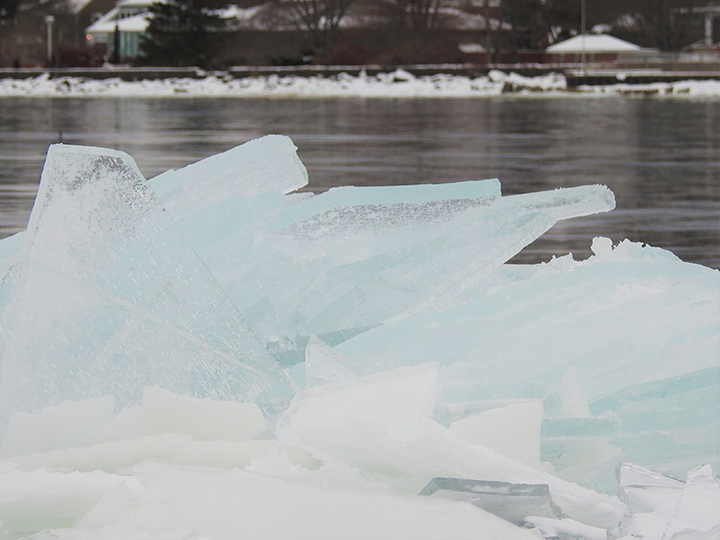
Ice buildup in Alpena
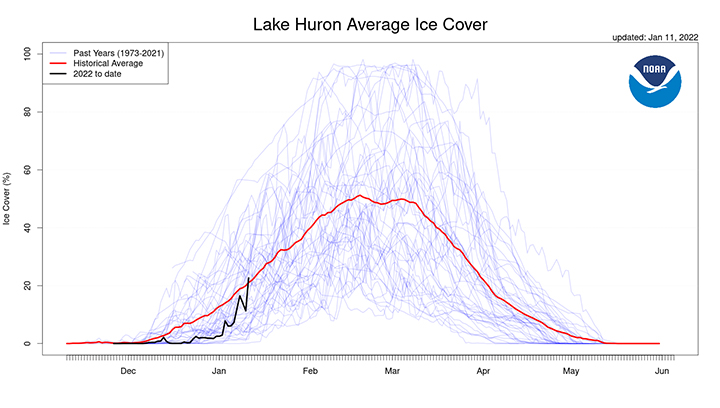
Courtesy Art A graphic shared by the National Oceanic and Atmospheric Administration’s Great Lakes Environmental Research Laboratory shows average ice cover on Lake Huron since 1973.
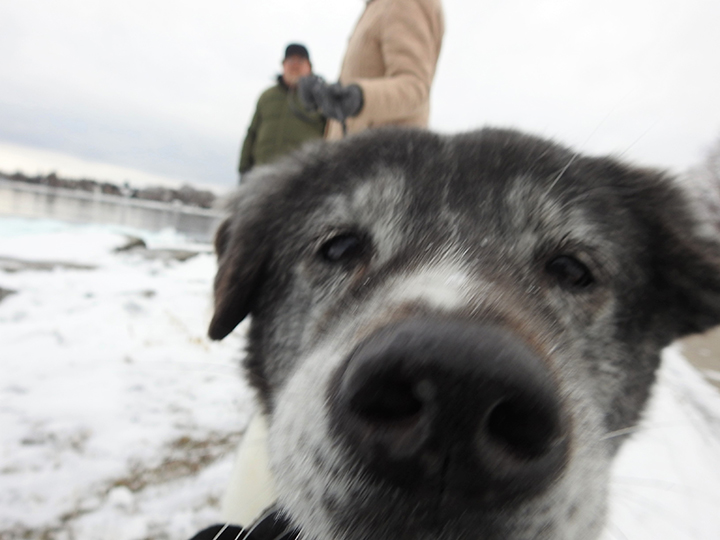
News Photo by Julie Riddle Rose, a 10-year-old Akita, greets the photographer during a walk at Bay View Park on Wednesday.
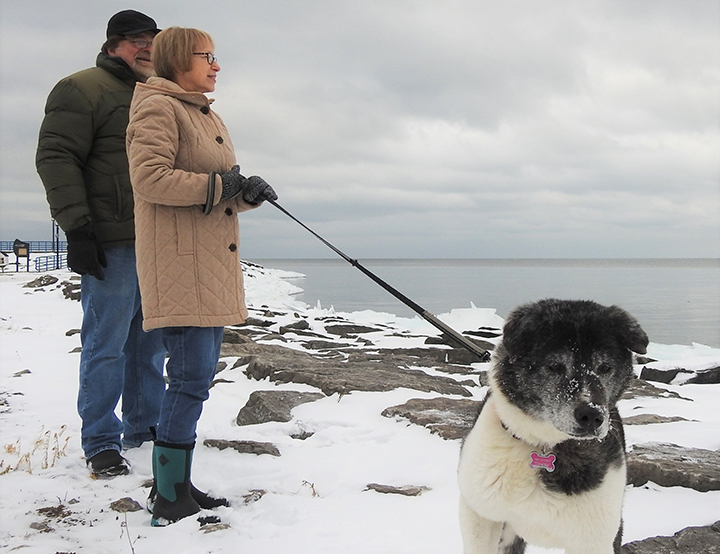
News Photo by Julie Riddle Frankenmuth residents Nancy, right, and Gerry Mueller on Wednesday walk their 10-year-old Akita, Rose, at Bay View Park in Alpena, where blue-tinged ice shards rimmed the mostly ice-free water of Thunder Bay.
Ice buildup in Alpena
Courtesy Art A graphic shared by the National Oceanic and Atmospheric Administration’s Great Lakes Environmental Research Laboratory shows average ice cover on Lake Huron since 1973.
News Photo by Julie Riddle Rose, a 10-year-old Akita, greets the photographer during a walk at Bay View Park on Wednesday.
News Photo by Julie Riddle Frankenmuth residents Nancy, right, and Gerry Mueller on Wednesday walk their 10-year-old Akita, Rose, at Bay View Park in Alpena, where blue-tinged ice shards rimmed the mostly ice-free water of Thunder Bay.
Trending
ALPENA -- With water temperatures about as high as they've ever been, Lake Huron may not sport much ice this winter, Great Lake researchers think.
In November, Lake Michigan-Huron registered record-high water temperatures after spending several months significantly warmer than usual.
Water temperatures continue to hover several degrees above average, according to the National Oceanic and Atmospheric Administration's Great Lakes Environmental Research Laboratory.
Those warm waters probably mean a low-ice-cover winter for those living on the lake's shoreline, though not as strikingly ice-free as officials once thought, said James Kessler, a physical scientist for the NOAA branch.
Low-ice winters mean less ice breaking and a safer shipping season for freighters, but less ice can mean more dangerous outdoor recreation and more lake-effect snow to slow drivers' commutes, Kessler said.
In December, an experimental model that draws data from weather phenomena in the Pacific Ocean projected that ice cover for Lake Huron could top out at a scant 12%.
Lake Huron ice cover has already exceeded that amount, and the maximum ice pack of the year is not expected until February or March, the scientist said.
The experimental model projects lower-than-average ice cover for the Great Lakes overall this year, although ice cover can fluctuate widely from year to year, with anywhere from 25% to 75% coverage not surprising scientists, Kessler said.
After warmer-than-average weather in December, the lake chilled slightly but still hovers at 38 degrees, or about a degree and a half above average, as of Tuesday.
The Great Lakes Environmental Research Laboratory measured almost no ice on Lake Huron in December, with ice levels approaching normal only this week.
On Tuesday, when air temperatures bottomed out at zero degrees in Alpena according to the National Weather Service, 22% of Lake Huron was covered by ice, twice as much as the day before.
As of Friday, Lake Michigan-Huron sat 13 inches higher than the long-term monthly average for January, according to the U.S. Army Corps of Engineers.
The lake reached its highest recorded level - two feet above the current level - in 2020, with a low recorded in 2013.
Officials expect the lake to drop by about one inch in the next month.