Michigan Supreme Court denies Alpena Township water appeal
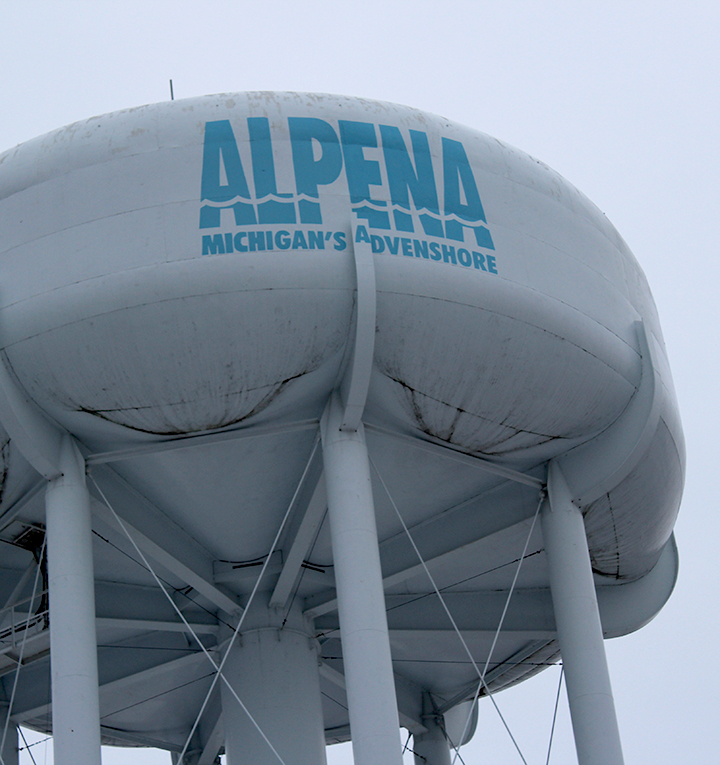
News File Photo The Alpena water tower is seen in this November 2018 photo.
ALPENA — The Michigan Supreme Court on Tuesday denied Alpena Township’s appeal in the ongoing water and sewer litigation with Alpena.
The township filed the request in August, after the state’s Court of Appeals sent the case back to the local court.
The news sets the stage for a new trial — with a new judge in Alpena’s 26th Circuit Court — if a compromise isn’t reached beforehand.
Township attorney Bill Fahey, of the firm Fahey Schultz Burzych Rhodes in Okemos, said he wasn’t surprised by the verdict and suspects the local court will schedule a status conference in the coming weeks to bring both parties together to discuss the path forward.
“We could pick up the trial where it left off when (a) potential agreement (was being discussed),” Fahey said. “I’m sure the court will want to bring both sides together soon, to hash out what happens next.”
Since a new judge will hear the case, it is possible the trial could begin anew.
In 2014, the city sued after the township refused to pay a rate increase. Township officials believed the township should be considered a wholesale customer, entitled to lower fees because of the volume of water it purchases from the city for township residents.
More than $2 million sits in an escrow account that the court needs to rule on how to distribute.
In December, the city and township issued a joint letter informing residents they are negotiating to form a new authority to oversee water and sewer services to both communities. No further details have been released since.
Fahey said the state’s ruling should not impact ongoing negotiation about a possible water authority.
City Attorney Bill Pfeifer said he wasn’t at liberty to discuss the talks between the two sides, but did say action’s happening behind the scenes.
“Discussions are ongoing and attempts are being made to find an amicable resolution at this point,” he said.
The idea of a water authority was proposed early on in the dispute, but was quashed by the township at a joint meeting between the two governing boards.
In 2017, the Circuit Court ordered the two sides into mediation. That lasted only a day, however, as city officials didn’t see enough progress being made to continue.
A settlement appeared imminent early in 2018, however, when both governing boards voted to approve “principle terms” for an agreement. That vote wasn’t a deal on rates, but on seeking a process for establishing rates that could end the dispute.
However, after continuing negotiations failed to yield a deal, the local court essentially ordered the two sides to adhere to the “principle terms” they’d reached earlier in the year.
Shortly afterward, however, the township appealed a portion of that ruling to the Michigan Court of Appeals, and the city filed a cross appeal. The appellate court also ordered mediation, which yielded no agreement.
The appeals court ruled that the proposed agreement considered earlier was non-binding, which the township appealed to the state Supreme Court, which decided not to go against the lower court’s opinion.
More than $2 million in attorney and consultant fees have been spent by the municipalities thus far.
Local News

Northland secures $10,000 for Bay Athletic via elevate program
Alpena County personnel committee meets Tuesday
ALPENA - The Alpena County Personnel Committee will meet on Tuesday at 10 a.m. in the Howard Male Conference ...

Michigan mulls changes in elk hunt regulations
Harmful algae bloom awareness program in Harrisville

You Are Loved Women’s Conference