Programs educate teens on dangers of drug and alcohol abuse during National Drug and Alcohol Facts Week
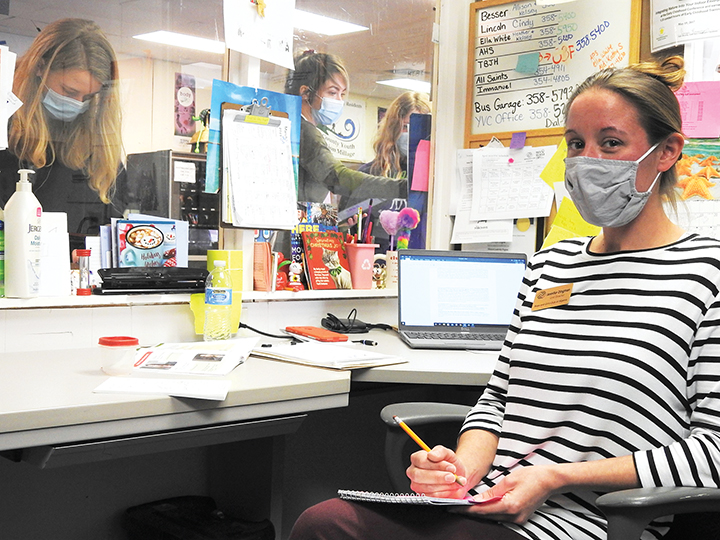
News Photo by Julie Riddle With teenage members of the Boys and Girls Club of Alpena in the background, Unit Director Jennifer Dingman talks about the need to arm young people with facts about substance abuse on Thursday.
ALPENA — March 22-28 is National Drug and Alcohol Facts Week, an annual observance to counteract myths about substance abuse and connect teenagers with resources to make good choices.
To make those good choices, kids need sources of information other than social media, according to Jennifer Dingman, unit director for the Boys and Girls Club of Alpena.
At the club, a six-session program walks teens through choices they may face when tempted to use drugs or alcohol.
Teens are sometimes uncomfortable with the topic, and the conversation might be difficult. It’s an essential part of preparing them for the future, though, Dingman said.
In a room nearby, a group of teenagers sat around tables with pencils and paper, creating illustrations for a children’s book they are writing and hoping to publish as a gift for local schoolchildren.
Dingman pointed to the enthusiastic book designers as an example of young people’s capacity for doing the right thing. Teens are extremely capable of making good decisions, she said.
They just need the facts to do so.
Sharing vital knowledge about the effects of substance abuse is more than a one-week-per-year effort, according to Mike Maturen, prevention specialist with Up North Prevention, a branch of Catholic Human Services.
The organization works aggressively to get addiction prevention tools into schools and homes, working to stop addiction before it starts.
While the organization’s usual in-school efforts — assemblies, classes, teacher trainings, and presence at school events — have been suspended because of coronavirus-related restrictions, the effort to teach what drugs and alcohol can do to a life can’t stop, Maturen said.
Taking advantage of technology to share their message, Maturen and a co-worker produced a series of YouTube videos teaching caregivers how to talk to children about substance abuse.
From the time a child is in diapers, parents can teach simple lessons — people don’t eat candy before dinner so they can have healthy bodies, for example — to lay a foundation for reasonable and informed decision-making skills, Maturen said.
In another digital avenue into youths’ lives, podcasts with a talk-show format allow Maturen and his colleague to share digital content on topics pertinent to teens, such as the increase in vaping that local schools have reported since the beginning of the pandemic.
Stopping addictions and dangerous behavior before they start takes more than teaching young people the facts about drug and alcohol use. Teens need to learn the power of their choices, Maturen said.
In a two-session class taught by Maturen, teens list what they value most — loved ones, job, freedom, respect — and then evaluate what decisions now will ensure those things are still in their lives in 20 years.
Teens want to talk, ask questions, and be respected for their viewpoints, Maturen said.
He encourages parents and grandparents to share his videos and podcasts with the teenagers in their lives as opportunities to start discussion and ask a young person’s opinion.
“Open that door,” Maturen said. “Say, ‘I want to hear what you have to say, and then, let’s talk about it.'”
Local News

Candidate for governor to speak at RC Regan Day Dinner

Local golf courses deal with flooding headaches

Happy dog, happy human
A helping hand
Alpena County approves entertainment complex at fairgrounds