
Maple farmers reap benefits of March syrup-making scramble
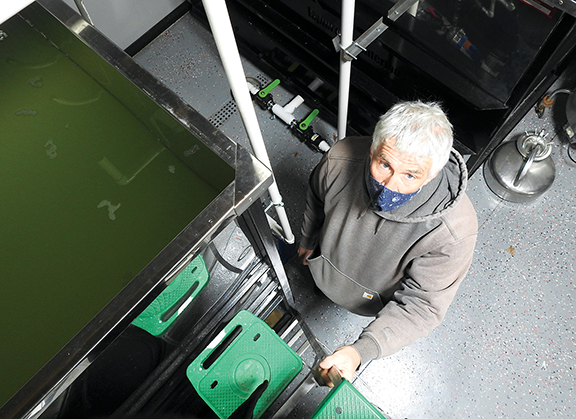
News Photo by Julie Riddle Dwarfed by his product, syrup farmer Gary Shepherd stands next to a vat of 5,000 gallons of pure maple sap at Bonz Beach Farms near Onaway recently.
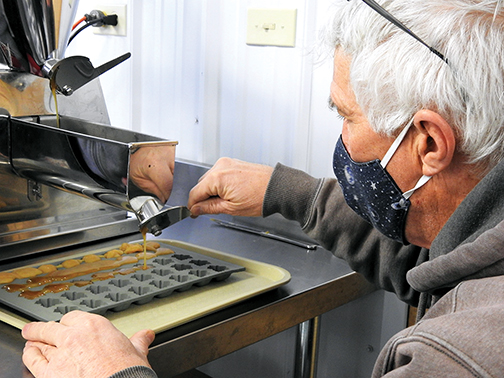
News Photo by Julie Riddle Owner Gary Shepherd coaxes thickened syrup into candy molds at Bonz Beach Farms near Onaway last week.
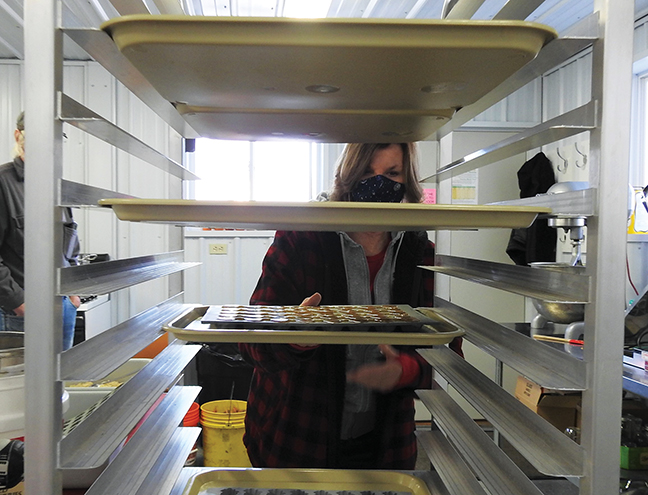
News Photo by Julie Riddle Worker Sue Madden slides a tray of freshly poured maple candies into a rack at Bonz Beach Farms near Onaway recently.
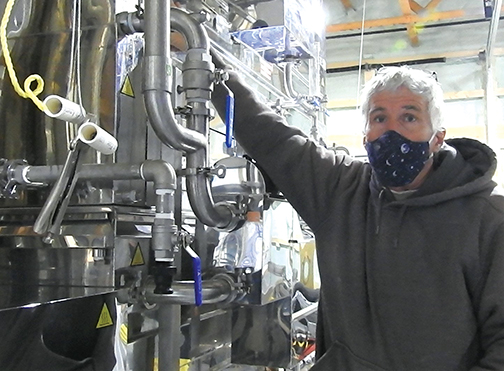
News Photo by Julie Riddle Knobs and tubes lend an air of mystery to an evaporator as owner Gary Shepherd explains how the machine pulls liquid from thousands of gallons of sap each spring at Bonz Beach Farms near Onaway.
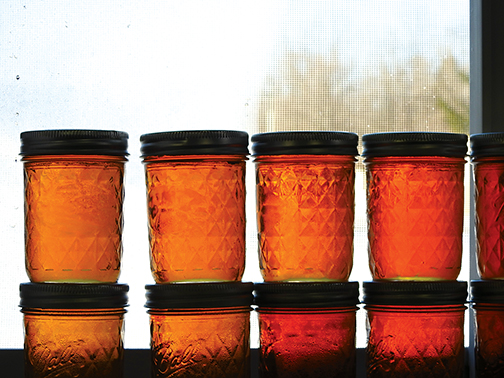
News Photo by Julie Riddle Sunlight brightens rows of syrup jars on a windowsill at Bonz Beach Farms near Onaway.
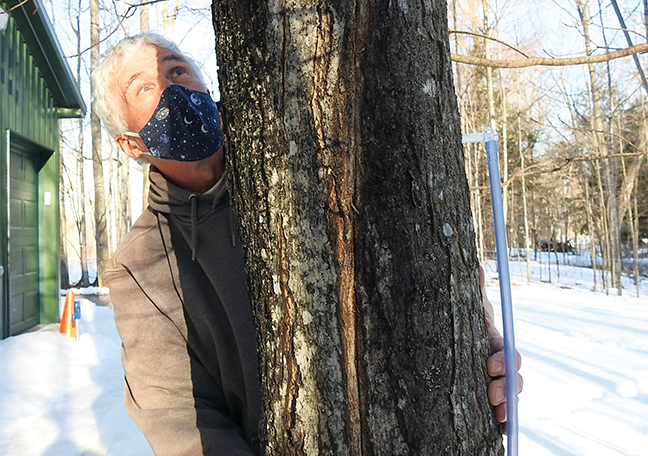
News Photo by Julie Riddle Gary Shepherd inspects a tree for old tapping holes at Bonz Beach Farms near Onaway on a recent March morning.
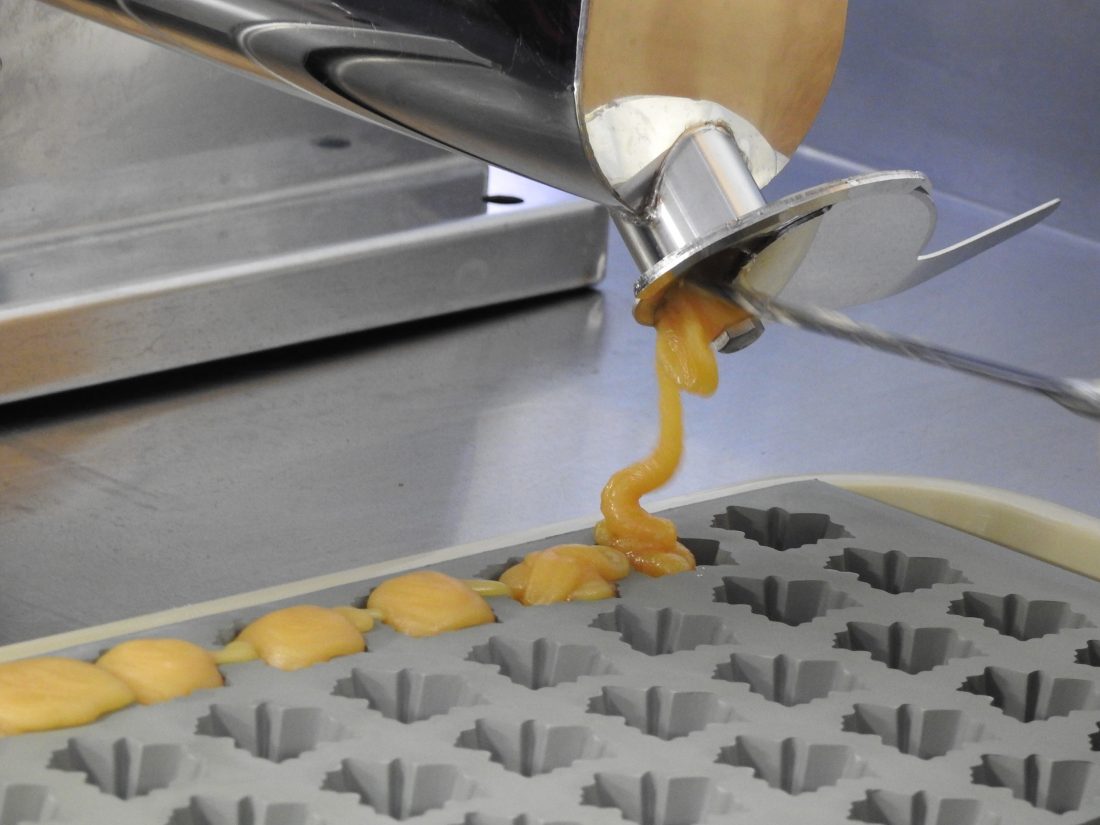
News Photo by Julie Riddle Warmed syrup squirts into candy molds at Bonz Beach Farms near Onaway during maple syrup season.
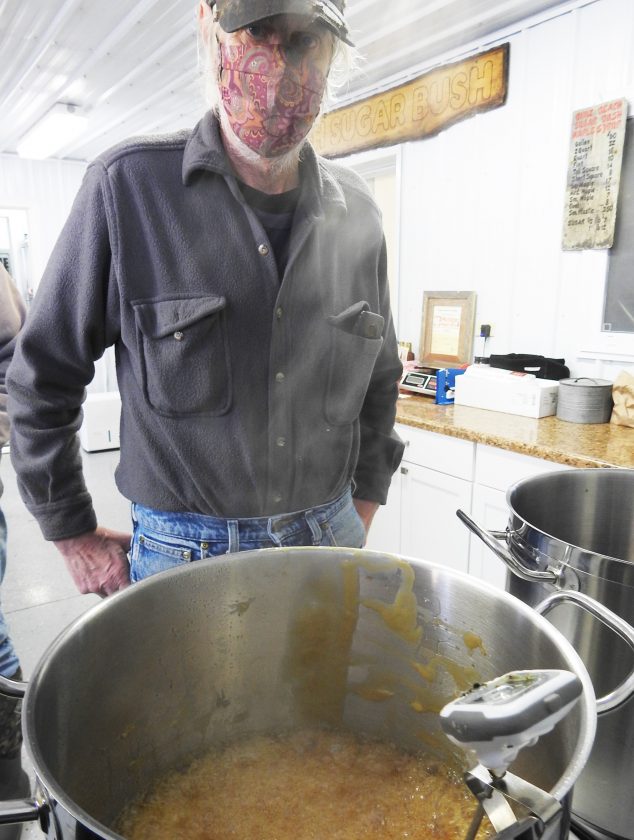
News Photo by Julie Riddle Disproving the theory that a watched pot never boils, Dave Morgan supervises a one-gallon batch of syrup destined to be made into maple candy at Bonz Beach Farms near Onaway on a recent March morning.
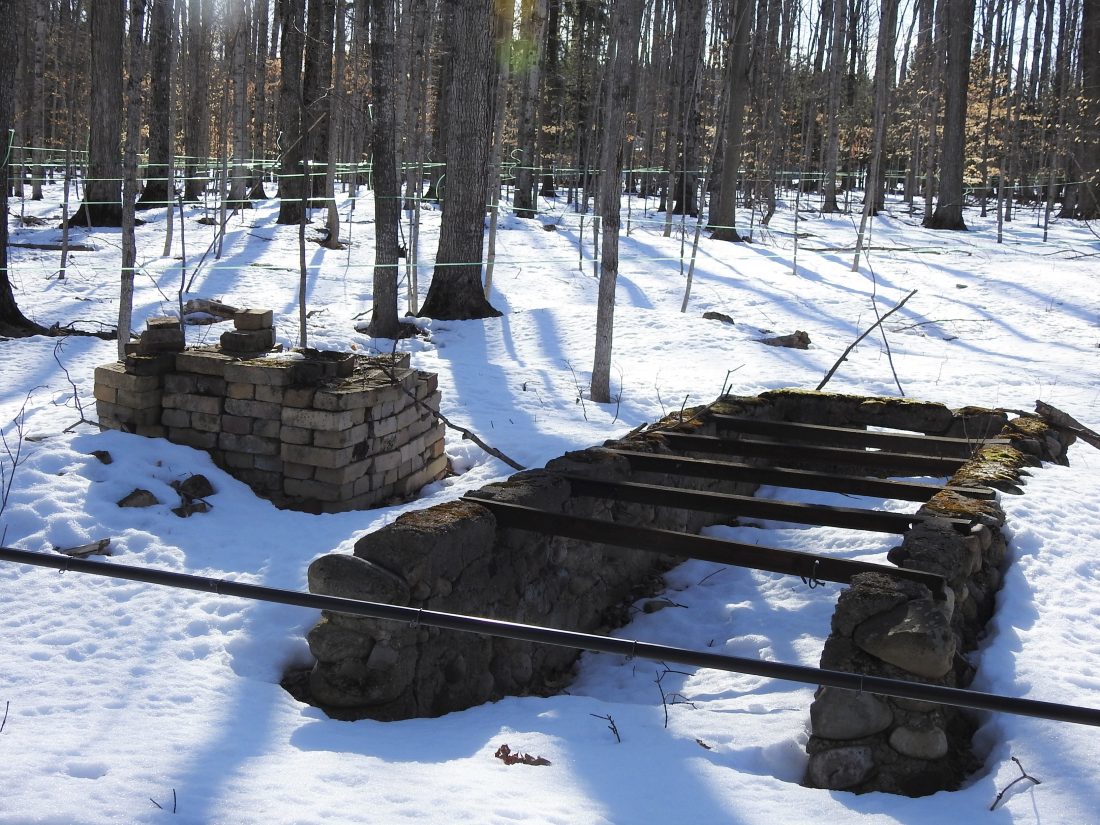
News Photo by Julie Riddle The remains of old syrup-making equipment still sit among maple trees on the Presque Isle County property of Dave Morgan, whose grandfather once tapped northern Michigan trees.
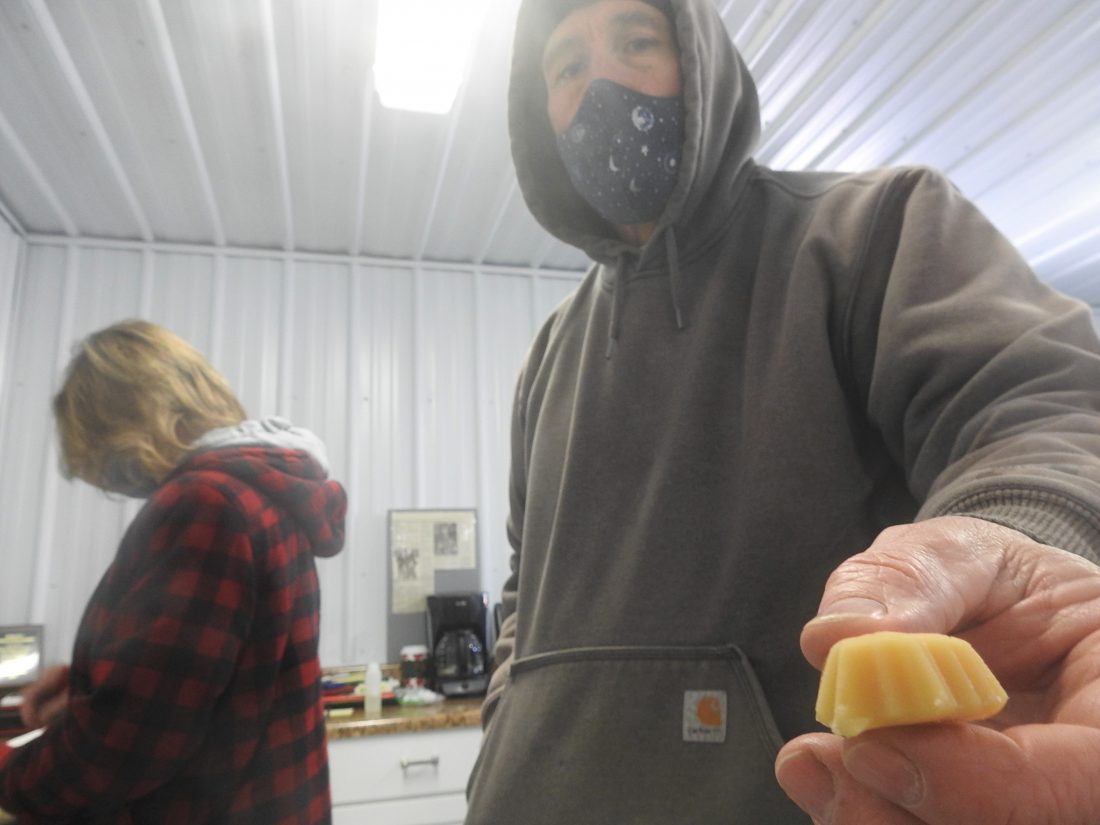
News Photo by Julie Riddle Dave Shepherd offers a firmed piece of maple candy at Bonz Beach Farms near Onaway last week.
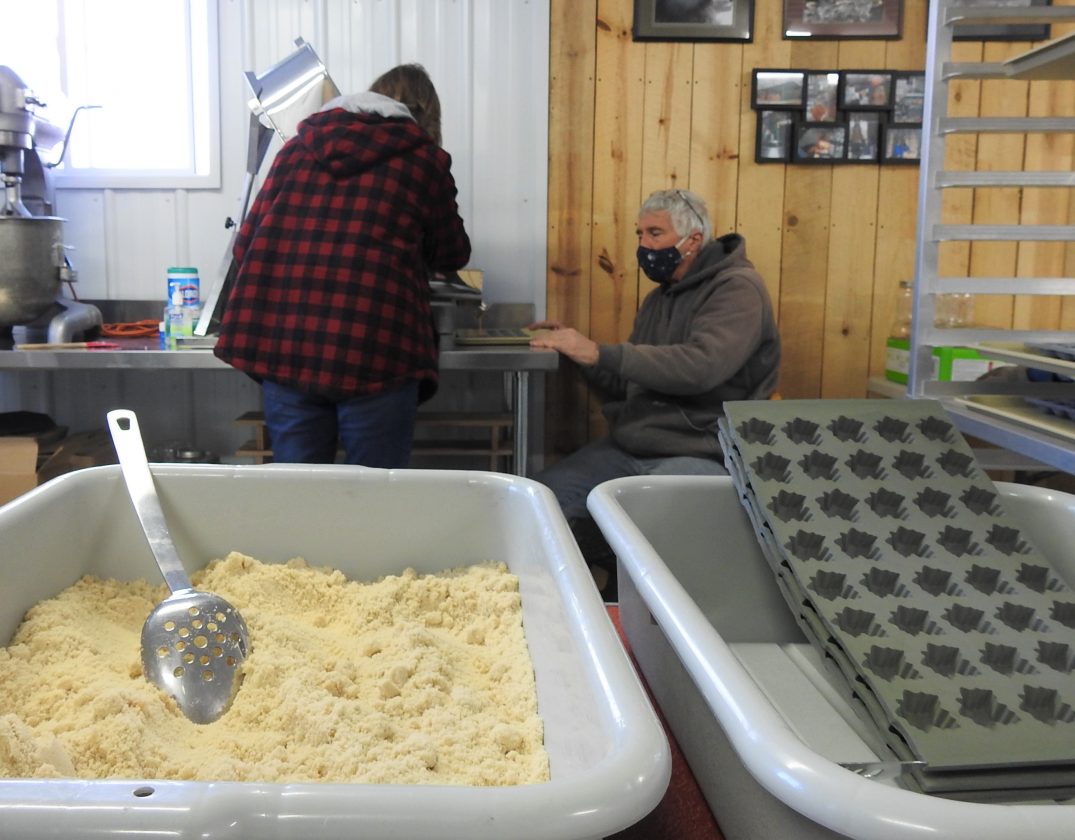
News Photo by Julie Riddle Golden maple sugar waits to be scooped into containers for sale as Dave Shepherd and Sue Madden pour syrup into candy molds at Bonz Beach Farms near Onaway recently.
News Photo by Julie Riddle Dwarfed by his product, syrup farmer Gary Shepherd stands next to a vat of 5,000 gallons of pure maple sap at Bonz Beach Farms near Onaway recently.
News Photo by Julie Riddle Owner Gary Shepherd coaxes thickened syrup into candy molds at Bonz Beach Farms near Onaway last week.
News Photo by Julie Riddle Worker Sue Madden slides a tray of freshly poured maple candies into a rack at Bonz Beach Farms near Onaway recently.
News Photo by Julie Riddle Knobs and tubes lend an air of mystery to an evaporator as owner Gary Shepherd explains how the machine pulls liquid from thousands of gallons of sap each spring at Bonz Beach Farms near Onaway.
News Photo by Julie Riddle Sunlight brightens rows of syrup jars on a windowsill at Bonz Beach Farms near Onaway.
News Photo by Julie Riddle Gary Shepherd inspects a tree for old tapping holes at Bonz Beach Farms near Onaway on a recent March morning.
News Photo by Julie Riddle Warmed syrup squirts into candy molds at Bonz Beach Farms near Onaway during maple syrup season.
News Photo by Julie Riddle Disproving the theory that a watched pot never boils, Dave Morgan supervises a one-gallon batch of syrup destined to be made into maple candy at Bonz Beach Farms near Onaway on a recent March morning.
News Photo by Julie Riddle The remains of old syrup-making equipment still sit among maple trees on the Presque Isle County property of Dave Morgan, whose grandfather once tapped northern Michigan trees.
News Photo by Julie Riddle Dave Shepherd offers a firmed piece of maple candy at Bonz Beach Farms near Onaway last week.
News Photo by Julie Riddle Golden maple sugar waits to be scooped into containers for sale as Dave Shepherd and Sue Madden pour syrup into candy molds at Bonz Beach Farms near Onaway recently.
Trending
ONAWAY -- Northern Michigan trees offer a rich bounty to those willing to tap into their potential.
To Up North maple farmers like Gary Shepherd, March means a mad, syrup-making scramble before spring fully arrives and the sap stops flowing.
Inspecting what he calls his favorite tree on a recent, chilly March morning, Shepherd pointed to small scars where the tree was tapped in recent years.
In a decade, the scars will be gone, but the tree will remain -- one of hundreds of thousands of maple trees that dot northern Michigan woods, proffering their amber riches to breakfast plates in Michigan and across the country.
On Shepherd's property, 4,500 trees are linked by miles of blue tubing that transport 80,000 gallons of sap each year.
Sap from one tree may flow two miles before it reaches the sugar shack at Shepherd's Bonz Beach Farms, north of Onaway on a country road that, in summer, bustles with campers from nearby Onaway State Park on Black Lake.
A full 40 gallons of sap are required to make one gallon of syrup, according to Shepherd. A vast vat, holding sap as deep as he is tall, spans the length of one room of the sugar shack.
In sap season, the trees fill the 5,000-gallon tank twice a day, Shepherd said.
A second vat, nearly as large, holds pure, tasteless water drawn from the sap through reverse osmosis, repurposed to wash the sugar shack's equipment.
A gleaming, Willy Wonka-style contraption -- full of knobs and levers and taking up most of a room -- extracts still more water from the sap, until the thickened liquid dribbles into barrels.
From there, the sap-turned-syrup can be jarred or jugged for sale or boiled in oversized pots until it's ready to be turned into candy or maple sugar.
Nothing is ever added to the pure sap, other than a few drops of oil to keep the pots from boiling over.
Some heated syrup is poured into a study mixer and agitated until it becomes seven pounds of golden-brown, melt-on-your-tongue sugar that can be added to baked goodies or sprinkled on ice cream.
Another bubbling batch of syrup on the sugar shack stove is destined to become candy, oozed into leaf-shape molds and sold at the farm's small store or delivered to several local confectionaries for resale.
Anything that isn't sold -- or snitched as a midnight snack -- can be dumped back into a pot and reused, wasting none of the trees' efforts, Shepherd said.
Softly grainy and mild in flavor, the farm's leaf-shaped maple candies would lend elegance atop a bowl of steaming oatmeal, Shepherd suggested.
The chocolate-covered version of the candies, found at an Alpena candy shop, is extraordinary when dropped into a cup of hot coffee, said Dave Morgan, supervising a bubbling pot at the sugar shack.
Morgan's grandfather was a sapper, too, working the trees adjacent to Shepherd's property decades ago. A simple stone structure, like the miniature footprint of an old homestead, still nestles in the woods where sap used to be turned to syrup over a fire.
The syrup offered up by the Up North woods in his grandfather's time tasted every bit as good as that produced on Shepherd's modern equipment, according to Morgan.
Back in the day, syrup-making required a horse and cart and bucksaws in a process that produced 300 gallons of syrup a year -- a far cry from Shepherd's 100-plus gallons on a good day.
When children visit the sugar shack, Shepherd sometimes gives them a tiny bottle of syrup to take home. It gets them addicted to real Michigan syrup, and then they won't settle for what's on grocery store shelves, he said conspiratorially.
Syrup farmers in the region are supportive of each others' part in tapping the potential of the northern woods, Shepherd said.
Of course, every maple producer believes they make the best syrup, he added.
"The only difference between me and them," he said, a twinkle in his eye, "is they're lying."
Syrup-making isn't Shepherd's only pastime. A side hustle growing lettuce in a pop-up greenhouse that smells faintly of Dairy-doo brings in customers who will clamor for his greens come spring.
In an open space in the woods, a grove of skinny, white tubes protects baby maple trees he planted using a government grant.
He'll never tap those trees, Shepherd knows. But, his grandkids might.
For now, like on other local syrup farms, March keeps Shepherd hopping as sunlight warms trunks and coaxes out the sap that is one of the gifts of northern Michigan woods.
A year ago, Shepherd was recuperating from a near-deadly attack of West Nile virus. Not many people as seriously sick as Shepherd live through the illness, doctors told him.
Not surviving wasn't an option, Shepherd said.
"I've got to be in Onaway on the 14th of February," Shepherd told his therapist. "I've got to tap trees."