
Funds could help with high-water cleanup
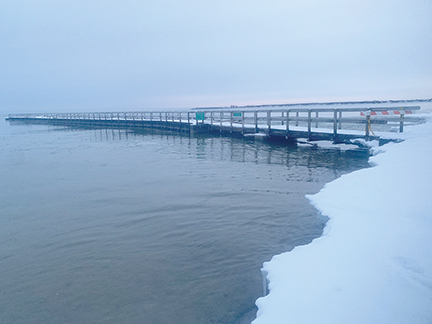
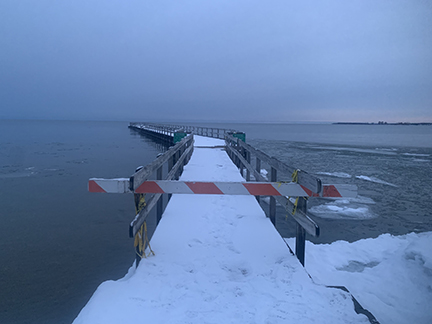
News Photo by Steve Schulwitz The Blair Street bridge in Alpena, seen here on Tuesday, has suffered significant damage from wind and waves that were more damaging because of record-high water levels on Lake Huron the last few years. Repairs could be made if the city qualifies for federal funding through the Great Lakes Restoration Initiative.
News Photo by Steve Schulwitz Barriers are seen in place on Tuesday on the sidewalk at Starlite Beach, warning people of debris in the walkway. The driftwood and mud were pushed up the beach because of high water levels on Lake Huron.
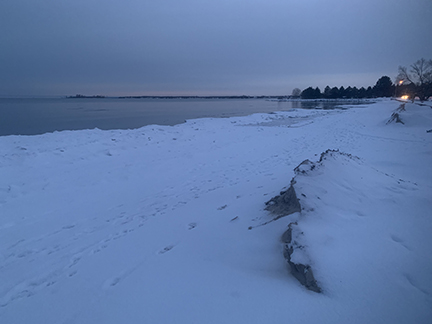
News Photo by Steve Schulwitz Piles of dirt run along the shore at Starlite Beach on Tuesday after wind and waves pushed it far up onto land. Record-high Lake Huron water levels have caused erosion in many coastal communities, but federal funding is becoming available to help some of the damage.
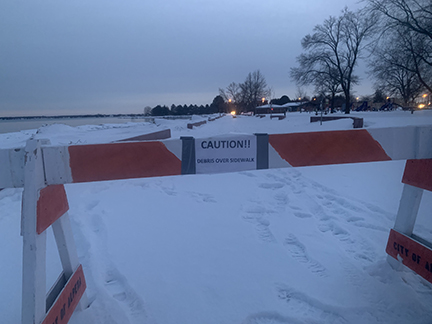
News Photo by Steve Schulwitz Barriers are seen in place on Tuesday on the sidewalk at Starlite Beach, warning people of debris in the walkway. The driftwood and mud were pushed up the beach because of high water levels on Lake Huron.
News Photo by Steve Schulwitz The Blair Street bridge in Alpena, seen here on Tuesday, has suffered significant damage from wind and waves that were more damaging because of record-high water levels on Lake Huron the last few years. Repairs could be made if the city qualifies for federal funding through the Great Lakes Restoration Initiative.
News Photo by Steve Schulwitz Barriers are seen in place on Tuesday on the sidewalk at Starlite Beach, warning people of debris in the walkway. The driftwood and mud were pushed up the beach because of high water levels on Lake Huron.
News Photo by Steve Schulwitz Piles of dirt run along the shore at Starlite Beach on Tuesday after wind and waves pushed it far up onto land. Record-high Lake Huron water levels have caused erosion in many coastal communities, but federal funding is becoming available to help some of the damage.
News Photo by Steve Schulwitz Barriers are seen in place on Tuesday on the sidewalk at Starlite Beach, warning people of debris in the walkway. The driftwood and mud were pushed up the beach because of high water levels on Lake Huron.
Trending
ALPENA -- The federal government has committed more funding for the Great Lakes Restoration Initiative over the next five years, and Northeast Michigan will benefit.
The money will be used for repairing and maintaining shorelines and infrastructure damaged by record-high water levels on Lake Huron, local officials said. The money also will help eradicate invasive species and fund important studies geared toward protecting and preserving the Great Lakes and shores around them.
Funding for the initiative was slated to expire at the end of the 2021 fiscal year, but both chambers of Congress and President Donald Trump have signed off on not only continuing but increasing funding for the lakes.
Congress allocated $300 million for lake-related projects next year. That amount escalates each year until it peaks at $475 million in 2026.
No funding is planned beyond that, although it is possible funding at some level will continue.
Alpena Harbormaster Don Gilmet said much of the money -- which goes to eight states bordering the lakes -- is given to the state governments, which in turn distribute the funds via grants.
Gilmet said Northeast Michigan, including Alpena, should benefit both directly and indirectly.
He suspects Lansing will invest a lot of money into repairing damage done from record-high water levels that have caused eroded shorelines and destroyed infrastructure. He also expects the state to invest in studies to determine how to react when it happens again.
Water levels in the Great Lakes have stabilized and even subsided some in the second half of this year.
Gilmet said projects in Alpena that could receive funding include repairing the Blair Street pier, which was battered by large waves and winds associated with the high water.
"I'm sure there will be studies done to learn what we could have done differently and find out what we should do next time," Gilmet said. "We want to be able to prevent damage, opposed to having to fix it."
In a joint press release on Dec. 20, Michigan's U.S. Sens. Debbie Stabenow and Gary Peters, both Democrats, expressed pleasure that the funding will continue and increase.
They touted the successes of the program and what has been done since its inception in 2010, but stress much more work is needed in coming years.
"In Michigan, this program has helped clean up contamination, restore wetlands, and fight invasive species, but there is much more to be done," Stabenow said in the statement. "The good news is that Republicans and Democrats have come together in a bipartisan way to reinvest in this important program."
Peters said the Great Lakes are critical to shoreline communities, and for recreation and tourism. He said making sure they remain clean and healthy has to continue to be a high priority for all Michiganders and legislatures in Lansing and the nation's capital.
"We must protect the Great Lakes for future generations," he said. "It's not only a source of drinking water for millions but an economic driver for our country."
U.S. Rep. Jack Bergman, R-Watersmeet, who represents Michigan's 1st Congressional District covering the Upper Peninsula and northern Lower Peninsula, has supported the Great Lakes Restoration Initiative since he was elected in 2016. He explained to Trump how important the money was during a ride in the presidential limousine on the way to a rally two years ago.
Bergman said the funds do more than just improve and preserve the lakes. He said they are vital to small economies that depend on the lakes for commerce and tourism, which are the two primary economic drivers for small, rural municipalities along the lakeshore.
"The Great Lakes are the lifeblood of the First District and the entire state of Michigan," Bergman said in a statement. "This is why I have been so focused on ensuring the Lakes are preserved for generations to come. Since my first interaction directly with President Trump I have been pushing for more funding and we accomplished that again this year. These dollars go right into our community to ensure our kids and grandkids can work, live, and play in this great place we call home."
------
Great Lakes Restoration Initiative
Federal money allocated to the Great Lakes Restoration Initiative in future years:
2021: $300 million
2022: $375 million
2023: $400 million
2024: $425 million
2025: $450 million
2026: $475 million