
Coronavirus pandemic means extra responsibilities for teachers
Trending
HILLMAN -- Teaching during the coronavirus pandemic has proven challenging for teachers, who have been forced to adapt lesson plans and teaching strategies to the times and take on additional responsibilities.
At Hillman Elementary School, teachers spent the first semester assessing students to find out where their kids fell academically after the virus forced schools to close months early in the spring.
They've had to reinforce lessons from the previous school year while following new protocols to keep kids safe and preparing students for the event the school transitioned to remote learning.
That happened last month, after Kari Sobey spoke to The News. The coronavirus has surged and all Hillman students, like most across Northeast Michigan, are now learning remotely until the new year.
Sobey, who teaches a fourth- and fifth-grade split class, said elementary staff knew they'd be required to follow certain protocols because of COVID-19, the disease caused by the coronavirus.
"It's been a challenge, but we are 100% committed to doing whatever it takes to meet the needs of our students," she said.
Before the resurgence of the virus, Hillman Elementary parents had the choice of face-to-face instruction, learning online, or learning via a paper packet. Sobey has 20 students in her classroom, one of whom learned online before the decision to move all kids online. That means that, in addition to teaching class in-person, she had to develop lesson plans for her online student to access from home.
Before the pandemic, Sobey said, she had only dabbled in Seesaw, the online platform on which students complete lessons and activities. Now, she has to either find premade online content or develop the content herself.
Sobey said she doesn't know how many videos she has made for students, although it's "more than I ever thought I would have to make." In making video lessons, she tries to think about any questions a student might have when viewing the lesson.
"It's a whole shift in thinking … because we want to do our best to reach those learners, just as if they were sitting right in front of us," she said.
In the classroom, Sobey had to teach students new rules on handwashing, sanitizing, and wearing masks. She said she even had to include time in her daily schedule for "mask breaks," during which students went outside to remove their masks for a breather.
Sobey said she tried to keep her class structure similar to previous years, but some things were more challenging because of the new protocols.
Sobey said she likes students to do group work, but had to keep the desks as far apart as possible. She also used to keep a pencil bucket from which students could grab a pencil for the day, but, this year, students had to keep the pencil if they took one.
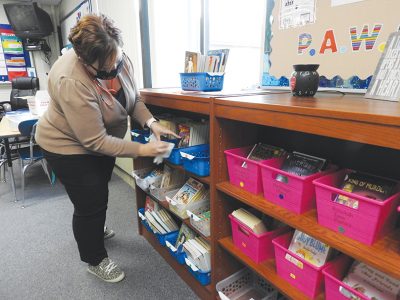
Additionally, students were allowed to borrow books from the classroom library, but Sobey had to wait 96 hours after they were returned before those books could be returned to the classroom library's shelves, to make sure no germs were spread.
But Sobey said teachers were able to take their classes outside to utilize the courtyard area to teach their lessons.
"We're trying to be creative in ways that we're adjusting to what is becoming the new norm," she said.
Sobey said teachers focused on preparing students to transition to online learning on Seesaw and Google Classroom. She said district administrators told staff they wanted kids learning the technology early so they could work out the kinks.
She said teachers had to demonstrate how they would communicate with students if the school were to transition to remote learning. Sobey has made videos for her students that let them know what to do for a day.
Students also had to learn how to troubleshoot problems she or her students might encounter online, such as what happens if content doesn't load onto the computer right away. Sobey said they had to teach students they may need to hit the refresh button or close out of the program and go back to it.
"That's the stuff they need to know and be able to tackle, because, if that happens at home and they're working with Grandma or Grandpa, Grandma or Grandpa may not know how to fix the issue," she said.