
HUNTING GUIDE 2020: Responsible hunters help DNR catch poachers
Trending
ALPENA — Shooting game animals just because they’re there is a growing problem in northern Michigan — and it isn’t OK, a Michigan Department of Natural Resources officer said.
Following a DNR investigation and the arrest of two Rogers City men accused of poaching elk, owls, and other animals, Sgt. Mike Mshar — DNR Law Enforcement Division supervisor for Northeast Michigan — explained that illegal hunting doesn’t just take animals out of the woods. It also wastes the money of people who spend all year looking forward to hunting season.
The highly wooded areas of Northeast Michigan, remote and sparsely populated, are particularly susceptible to poaching.
In those regions, too, large parcels of land are owned by private families or groups. Many people think it’s acceptable to hunt without a license or out of season on private land, Mshar said — or, at least, they think they won’t get caught.
It’s the DNR’s job to stop people who refuse to follow the hunting laws of the state — a job made easier by the alert eyes of residents who don’t put up with poachers and, instead, report them.
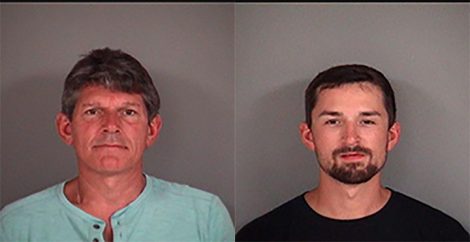
A father and son in Rogers City, Val and Josh Vogelheim, are accused of illegally hunting elk, deer, and turkey, as well as owls and a hawk. Investigation produced evidence the two had been engaging in illegal activity for several years, police say.
Other arrests are expected related to the case.
DNR officers were led to the pair by an anonymous tip, Mshar said.
Most of the time, DNR officers learn about poachers by word of mouth. Observant passersby hear gunshots or see lights in a field at night and report the possible illegal hunting to the DNR’s poaching hotline.
Social media posts, showing off an illegal kill, also lead DNR officers to poaching investigations.
After receiving a tip, officers examine the location of the possible poaching, sometimes finding shell casings left behind.
Often, they find a dead animal, too, Mshar said.
Opportunistic hunters shooting on a whim kill deer and other animals at night as they are frozen in a spotlight, then leave them lying in the woods, their meat wasted.
“That could have been a legally taken deer,” Mshar said. “Someone could have filled their freezer with that meat.”
Officers develop suspects and pursue poachers through a variety of methods, including using cell phone tracking technology to figure out who was in the area when an animal was illegally killed.
If caught and convicted, a poacher could be fined up to $1,500 and have to pay restitution to the state for each animal killed, from $10 per pound of poached fish to tens of thousands of dollars for big game animals.
Hunters caught poaching can also lose their hunting license, for a year or for a lifetime.
Of the three kinds of poachers — those who want a set of antlers or other trophies on their wall, those who need extra food, and those with an itchy trigger finger — people who shoot purely because they want to are by far the most common, the officer said.
He’s seen an increase in people who feel entitled to take whatever game they want, killing out of season or without a license, or taking more than their license allows.
Some poaching is spawned by “antler envy,” he said — an ego-driven belief that a person’s value can be measured by the size of their rack.
Magazine covers, YouTube videos, and television shows like “Duck Dynasty” glamorize the big haul and put hunters on a pedestal if they shoot big animals, egging poachers on, Mshar said.
Others claim they need to hunt out of season or without a license because they can’t afford food.
With the amount of food assistance available from a wide range of sources, that’s not a valid excuse, Mshar said.
Poachers are rarely women, but they run the gamut from young teens to 80-somethings. Mshar has seen poachers who reside in million-dollar homes and others who live in run-down trailers.
The DNR hears regular complaints that they have too many rules regulating hunting seasons.
Those rules and seasons were created with the help of wildlife biologists who know what is best for the sustaining of each animal, Mshar said. Seasons and restrictions ensure that the animal population stays healthy, protecting the interests of hunters.
Thousands of Michigan hunters each year support the habitats of the animals they hunt by paying for licenses and following laws.
Poachers don’t pay for that upkeep — and, when a poacher shoots illegally, “you just took that animal away from me,” Mshar said.
The DNR officer has tried for an elk tag every year. He hasn’t gotten one yet, and he envies the few hunters who are lucky enough to ever have a chance at an elk.
When a rash of poaching killed at least five elk last fall, that meant five fewer hunters might go home with a prize they waited a lifetime to take legally.
While it’s their job to enforce laws, conservation officers rely on the help of local residents to protect the region’s animal population.
In May, a poacher in the Upper Peninsula was caught having made 49 illegal kills, including 18 wolves, a bobcat, and three bald eagles.
That poacher would never have come to light — and, probably, never have been stopped — if someone hadn’t noticed his activity and reported it to the DNR, Mshar said.
To report possible poaching
Suspicious activity should be reported by calling 800-292-7800. Callers remain anonymous, and a reward may be available if the tip leads to a conviction.