
Rogers City to tackle stormwater runoff pollution

News Photo by Julie Riddle Seagulls keep watch over a pool of standing water at the Rogers City’s public beach on Thursday.
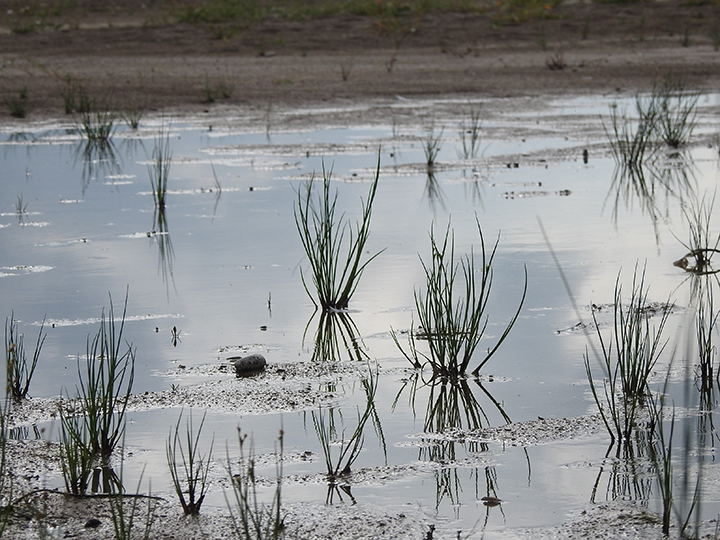
News Archive Photo A portion of the Lake Huron shoreline appears in this August 2020 News archive photo.
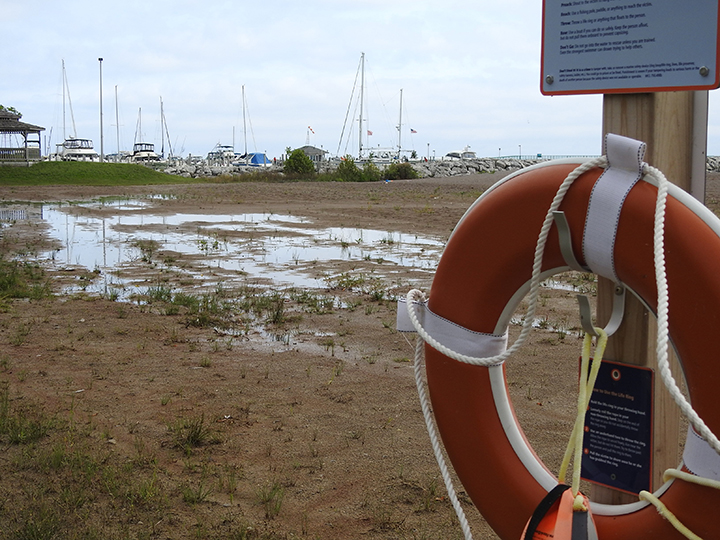
News Photo by Julie Riddle Water rests on sand at Rogers City’s public beach on Thursday morning. Pools of standing water are a health hazard, local officials say.
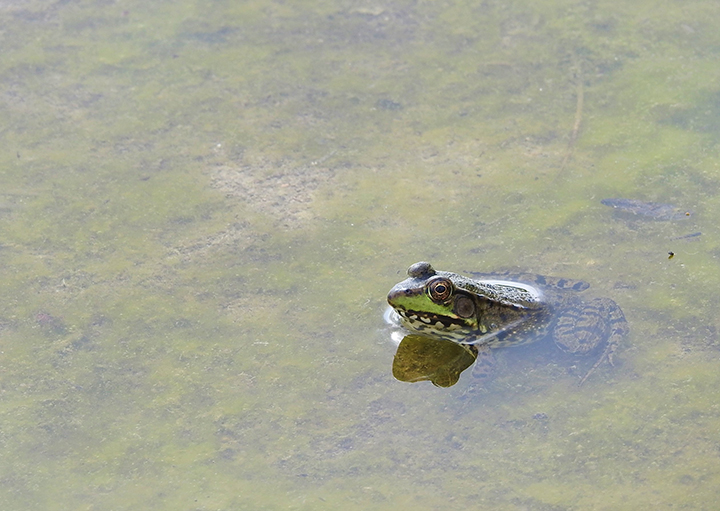
News Photo by Julie Riddle A frog hunkers amid green algae growing in standing water at Rogers City’s public beach on Thursday morning.
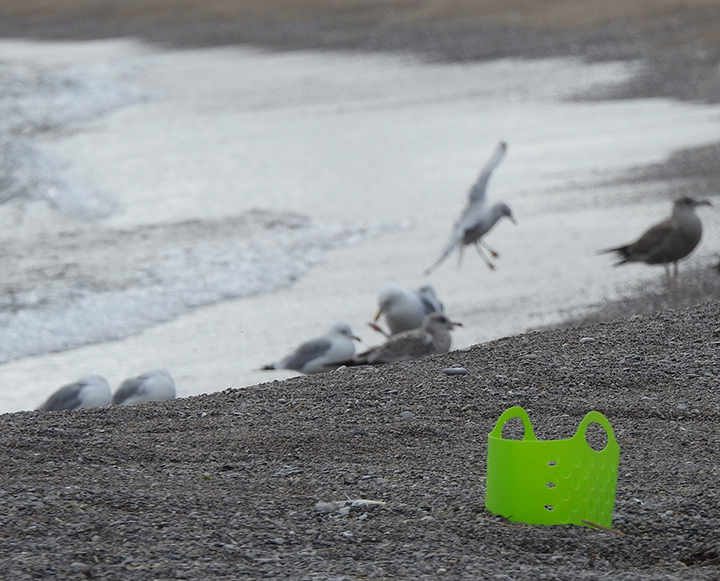
News Photo by Julie Riddle On Thursday, a child’s toy lingers on Rogers City’s public beach, where children playing in standing water is a safety concern for city leaders.
News Photo by Julie Riddle Seagulls keep watch over a pool of standing water at the Rogers City’s public beach on Thursday.
News Archive Photo A portion of the Lake Huron shoreline appears in this August 2020 News archive photo.
News Photo by Julie Riddle Water rests on sand at Rogers City’s public beach on Thursday morning. Pools of standing water are a health hazard, local officials say.
News Photo by Julie Riddle A frog hunkers amid green algae growing in standing water at Rogers City’s public beach on Thursday morning.
News Photo by Julie Riddle On Thursday, a child’s toy lingers on Rogers City’s public beach, where children playing in standing water is a safety concern for city leaders.
Trending
ROGERS CITY -- For almost 100 years, phosphorus, nitrogen, and other chemicals have washed from the lawns, streets, and public areas of Rogers City into the clean waters of Lake Huron.
It's time for the community to do something about that, the town's mayor said.
Stormwater isn't a glamorous subject, Mayor Scott McLennan admitted. But rain and snow, left to its own devices, threatens not only the beauty of Northeast Michigan but also the safety of the people who live there.
The upper Lake Huron region has exceptionally clean water, according to Clare Kucera, who heads up a team of six University of Michigan graduate students who chose Rogers City as the focus of their graduate studies project to help communities improve stormwater runoff systems.
Rain and snowmelt seep into the ground, carrying with them whatever chemicals they encounter.
In the case of Great Lakes-adjacent cities, those chemicals are carried straight to the lakes where people swim, fish, and play.
In small communities, it's easy to shrug off the potential threat of stormwater to the everyday lives of residents, Kucera said. But, in the small town in Southeast Michigan where she grew up, she saw the results of people looking the other way as raindrops carried pollutants from back yards and farmland into the big lake next door.
"Unfortunately, my town is part of the reason Lake Erie has so many pollution problems and toxic algae growing on it," Kucera said.
That's a problem the six grad students want to stop before it starts in other Michigan communities -- starting with Rogers City.
The group has met with at least a dozen Rogers City officials, water experts, and residents since January, learning about what the town is doing -- and not doing -- to protect its water.
This morning, some of the students will meet virtually with a group of Rogers City leaders. Input from participants will help shape a proposal for steps the town could take to improve its water safety.
Recommendations could include anything from installing permeable, water-absorbent paving to planting trees to growing plants on building roofs, Kucera said.
A study of Rogers City's stormwater delivery system conducted in 2006 by the environmental group Huron Pines suggested the community should plant water-absorbing "rain gardens" and install filters on the seven stormwater outlets that dump water into Lake Huron.
Those changes have not been made.
"The monster in the room is, as usual, dollars," said McLennan, who, along with previous city mayors, hasn't been able to secure funding for the proposed fixes.
This summer, that was supposed to change, the mayor said.
A rain garden planned for the boulevard in front of the Presque Isle County Historical Museum was stalled when the coronavirus pandemic slowed operations everywhere, as was an environmentally friendly resurfacing of the parking lot at 4th Street and Erie Street, McLennan said.
Those projects are still on the agenda, and McLennan is in talks with the Michigan Department of Transportation to move a stormwater drain that ends just south of the city's beach.
Water from the drain -- the biggest of seven in town -- used to seep, at least somewhat safely, into the surrounding sand.
Recent record-high water levels have kept the city's drainage on the surface, where it pools, warmed by the sun -- a perfect breeding ground for bacteria.
"That is stormwater," McLennan said. "So, you don't know what's in there, frankly."
Water safety isn't just a theoretical danger, McLennan knows.
When he was in his 20s and an emergency medical technician, McLennan rushed a 6-year-old girl to the hospital after she played at the Rogers City beach. In those days, nobody tested bacteria levels in the water.
The girl died, McLennan said.
District health departments check the lake for safe bacteria levels, but the pooled, algae-filled water is a potentially deadly hazard that won't go away on its own, the mayor said. This year, pooling water forced Rogers City officials to move one portion of the wooden boardwalk that spans the edge of the public beach.
"Shame on us if we don't address it," McLennan said. "And we are."
The city's stormwater issues won't be fixed quickly, he said, but meetings and small steps and education and talking about the problem -- even if it doesn't sound very interesting -- is a good start.
Huron Pines, focusing on stormwater diversion in several shore-area communities, is in conversation with Alpena leaders about how that city can take better care of its precious water resource, according to Huron Pines spokesperson Colby Chilcote.
City leadership is on board with trying some new stormwater cleanliness tactics, and residents may see plants growing on the roof of one of their local buildings as early as this fall, Chilcote said.
Julie Riddle can be reached at 989-358-5693, jriddle@thealpenanews.com or on Twitter @jriddleX.