
Warm, dry summer won’t recede record-high Lake Huron
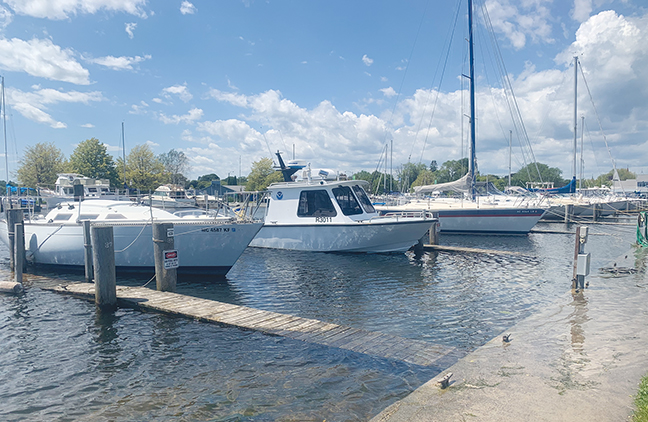
News File Photo Some docks at the harbor in Alpena have boats tied to them as they are overrun with high water in this July 2020 News archive photo.
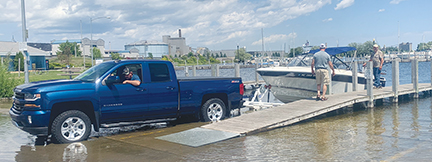
News Photo by Steve Schulwitz Standing water is seen at the boat launch at the Alpena harbor on Friday, forcing boaters to wade through water. Part of the parking lot at the harbor also has standing water.
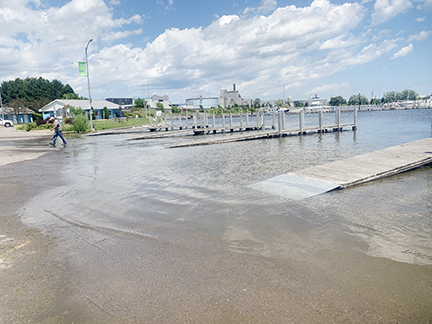
News Photo by Steve Schulwitz All of the boat launch docks at the harbor in Alpena have been overtaken by high water, as seen on Friday.
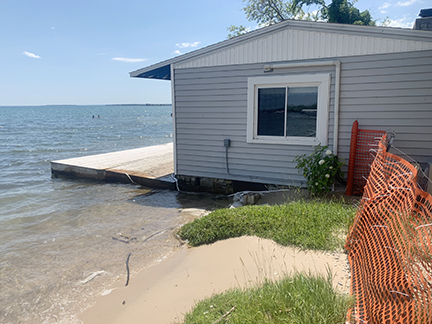
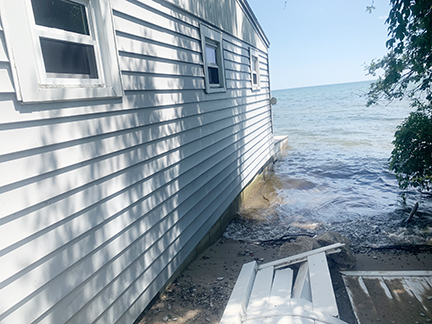
News Photo by Steve Schulwitz A house on State Avenue in Alpena is seen nearly succumbing to high water in Lake Huron on Friday. What used to be a deck now appears to be a dock.
News File Photo Some docks at the harbor in Alpena have boats tied to them as they are overrun with high water in this July 2020 News archive photo.
News Photo by Steve Schulwitz Standing water is seen at the boat launch at the Alpena harbor on Friday, forcing boaters to wade through water. Part of the parking lot at the harbor also has standing water.
News Photo by Steve Schulwitz All of the boat launch docks at the harbor in Alpena have been overtaken by high water, as seen on Friday.
News Photo by Steve Schulwitz A house on State Avenue in Alpena is seen nearly succumbing to high water in Lake Huron on Friday. What used to be a deck now appears to be a dock.
Trending
ALPENA -- The recent heat wave will have little or no impact on high Great Lakes water levels, weather experts and the U.S. Army Corps of Engineers say.
In fact, water continues to rise and cause headaches for coastal communities, property owners, and the state.
The toasty weather has warmed water to above-average temperatures, as much of Lake Huron, including Thunder Bay, is at or above 80 degrees.
Experts say that does little to bring water depths down, however.
Faith Fredrickson, a meteorologist with the National Weather Service in Gaylord, said that, even though temperatures have been on the high side for a month, that's not long enough to cause water to recede noticeably -- if at all.
"You're probably not going to see much of a change, because it would take, at minimum, several months of these temperatures to have any sort of impact," Fredrickson said. "It would take a very sustained period of time to have an affect, but, when you look at the forecast, there are several chances of rain."
Earlier this month, the National Weather Service said Northeast Michigan was on the brink of a moderate drought. Fredrickson said Friday that recent rain and thunderstorms, however, have provided enough moisture to reduce that risk.
Deanna Apps, a scientist tracking Great Lakes water levels for the Army Corps of Engineers, told the Detroit Free Press that the high water record of 583.35 feet for lakes Huron and Michigan established in July 1986, has already been eclipsed. She added that she anticipates the August record will fall, as well. The two lakes are measured as one because they connect in the Straits of Mackinac.
Lakes Michigan and Huron are more than 30 inches above their long-term July average and about three inches above last summer's high level.
Thus far, there has been no change on the Thunder Bay River or Thunder Bay, even with the Ninth Street Dam having all of its chutes closed for some time, Alpena County Emergency Services Coordinator Mark Hall said,
When the area has received rain, he added, it has come in strong waves that have produced amounts negating any loss of water there might have been from the hot temps.
"When we have gotten rain, it seems to be an inch or more at one time, and we have gotten good amounts from the storms we have gotten," Hall said. "I've been checking, and there is still minor flooding behind the Holiday Inn (in downtown Alpena) and a few other locations."
Alpena Building Official and Harbor Master Don Gilmet said the water hasn't retreated at all, and any decline in water depth will happen during the upcoming fall and winter, when evaporation is at its peak.
Currently, there is flooding at the city harbor, where docks are partially underwater, and there's water over Prentiss Street, near the Kiddie Park and breakwall.
The Michigan Department of Transportation has spent about $5 million in emergency repairs statewide related to high water this spring and summer, the Free Press reported, and local governments have also had to reach into savings for needed repairs along their shorelines.
Properties and homes on State Avenue, along the Thunder Bay shore, are being damaged by the high water, and owners would love to see levels retreat, Gilmet said, but that is unlikely anytime soon.
"Most of the evaporation happens in the winter, when the lake doesn't freeze over, so we need a warm, dry winter," he said. "We may not have had a lot of rain this summer, but there has been a lot further inland, and that all runs to the mouth of the river and the levels keep climbing. We are already seeing real damage and there is going to be more."
Steve Schulwitz can be reached at 989-358-5689 at sschulwitz@thealpenanews.com. Follow him on Twitter @ss_alpenanews.com.