
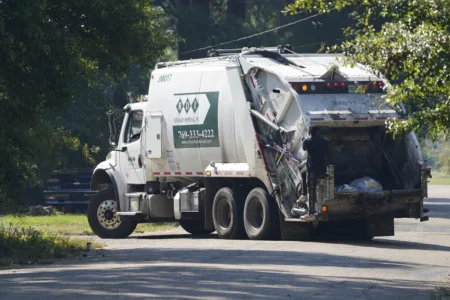
State offers grants for electric-powered garbage trucks
Trending
LANSING - The Department of Environment, Great Lakes and Energy is offering over $4 million in grants for communities to replace diesel-powered garbage trucks with new battery-powered electric trucks.
The grants would cover half the price of a new battery-powered electric refuse truck, with the other half covered by the local government or private company that receives one.
The program supports the state's broader decarbonization goals, according to the department.
Assuming a price of $500,000, with recipients sharing half the cost with the state, the department estimates 20 new vehicles could be bought with the money.
The department cited Macomb, Oakland and Wayne counties as priority areas for grants as they are "where long-standing environmental and public health challenges are most acute."
Some communities have already adopted electric garbage trucks, such as the city of Ann Arbor. According to Simi Barr, a senior analyst for municipal operations, currently four of its 28 trucks are electric.
However, one of the main factors for communities looking to switch to electric garbage trucks remains the infrastructure.
"Charging infrastructure is a main consideration," said Barr. "What does it take to ensure the vehicles are charged and available for their shifts on a daily basis?"
Barr said the kind of route and loading system also contribute to the viability of electric refuse trucks because rear-load and side-load trucks require much more stop-and-go, allowing the batteries to be charged by regenerative braking.
According to California-based company Haaker Refuse, benefits of electric refuse trucks include low costs of energy-per-mile and no tailpipe emissions. The company is a dealer and distributor for Minnesota-based manufacturer McNeilus Refuse.
The planned grants are "designed to reduce diesel emissions, improve air quality, protect public health and support the deployment of advanced heavy-duty vehicle technologies while helping fleets modernize their operations," the Department of Environment, Great Lakes and Energy said.