
Emergency agencies expand options for getting info to the public
Trending
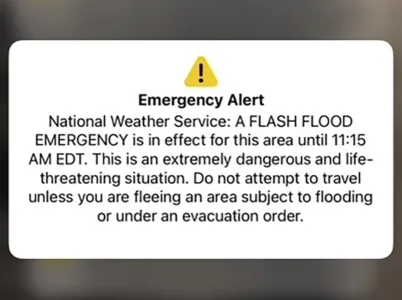
LANSING - Emergency warnings are designed to reach all Michigan residents, whether through a cellphone alert, television broadcast or weather radio.
Ensuring those messages are accessible to people with disabilities, limited English proficiency and limited access to technology, however, often requires additional efforts.
And immigrant-rights advocates say barriers remain for some residents, particularly those with limited English proficiency.
Federal emergency alert systems support multiple communication channels and can accommodate different accessibility needs.
"No single communication system reaches everyone," said Clayton Cummins, the public information officer for the State Police's Emergency Management and Homeland Security Division.
During Northern Michigan's ice storm earlier this year, downed trees and power lines disrupted communications infrastructure across affected communities.
Cummins said emergency responders relied on ham radios and, in some cases, went door-to-door to communicate with residents after power outages impaired traditional communication methods.
The Federal Emergency Management Agency operates the national Integrated Public Alert and Warning System, which allows agencies to distribute emergency information through channels such as Wireless Emergency Alerts, the Emergency Alert System and the National Oceanic and Atmospheric Administration's Weather Radio.
According to FEMA, its integrated warning system supports English- and Spanish-language content and can distribute alerts through multiple communication systems.
Wireless Emergency Alerts also use distinctive sounds and vibrations to help notify people who are blind, have low vision, are deaf or hard of hearing, according to FEMA.
The National Weather Service also relies on multiple methods to distribute warnings.
Public affairs officer and meteorologist John Bateman said the agency coordinates with public safety partners and uses several tools, including NOAA Weather Radio, to help ensure emergency information reaches residents.
Bateman said multiple communication channels remain critical for those in rural communities and areas with limited internet and cellular coverage.
The National Weather Service provides Wireless Emergency Alerts in English and Spanish and is testing automated translation services, with additional language options planned.
At the state level, Michigan officials have made changes to improve accessibility.
Cummins said Michigan has adopted new accessibility guidelines and is updating websites, online documents and social media content to meet federal accessibility requirements.
He said photos now include alternative text descriptions, while videos increasingly include descriptive audio and translation capabilities.
Christine Sauvé, the policy, engagement and communications manager for the Michigan Immigrant Rights Center, said some residents with limited English language skills are at risk of not receiving crucial information.
"It's critically important because getting information is important for every resident in an emergency," said Christine Sauvé, the policy, engagement and communications manager for the Michigan Immigrant Rights Center.
"People with limited English proficiency need to know when a tornado's coming. They need to know if there's a flood watch. They need to know if air quality is poor in the same way that every other resident needs to know that information," Sauvé said.
Sauvé said distrust of government, cultural differences and language barriers can all affect how immigrant communities receive emergency information. She called language access the biggest factor.
"The public alerts that go out - different municipal emergency management systems use different tools, but often they are not translated," Sauvé said.
She pointed to significant flooding in Detroit in 2021 as an example. Sauvé said some immigrant residents did not receive information about the flooding as it happened or learn about relief and cleanup resources afterward.
"When the floods happened in Detroit, a lot of people were getting information from their neighbors and from nonprofits they could walk to," Sauvé said.
Language barriers have also affected more recent emergency communication.
For example, Canadian wildfire smoke contributed to poor air quality across Michigan in 2025 and again in 2026, when the state issued air quality alerts as smoke moved into the Great Lakes region.
During periods of poor air quality, Sauvé said the Immigrant Rights Center kept masks in its office and sometimes had to explain the conditions to clients who did not know what was happening.
"It wasn't being translated and shared in real time," Sauvé said of some information about cooling centers and places to obtain masks.
Sauvé said local governments should build language access into their communication systems before emergencies occur by identifying commonly spoken languages, developing relationships with community organizations and arranging translation services in advance.
"Cities and counties should be looking at language access all the time, not just for emergencies," she said.